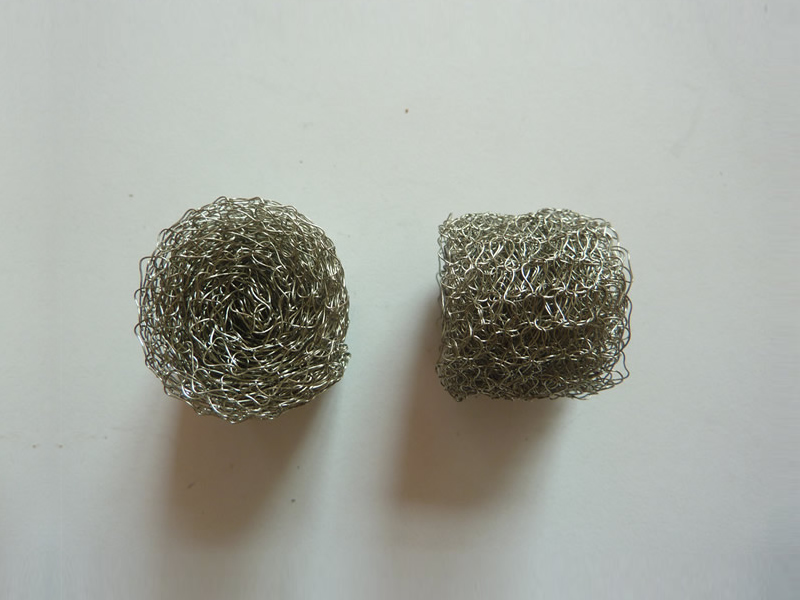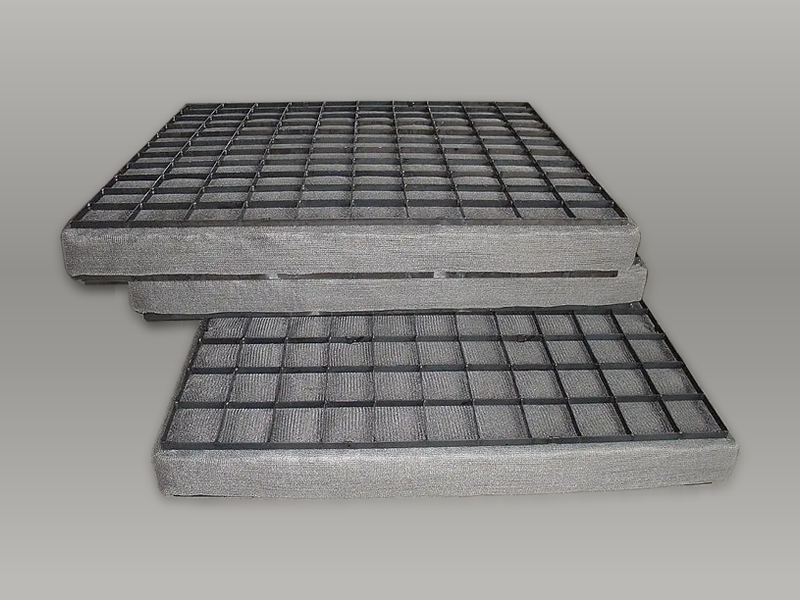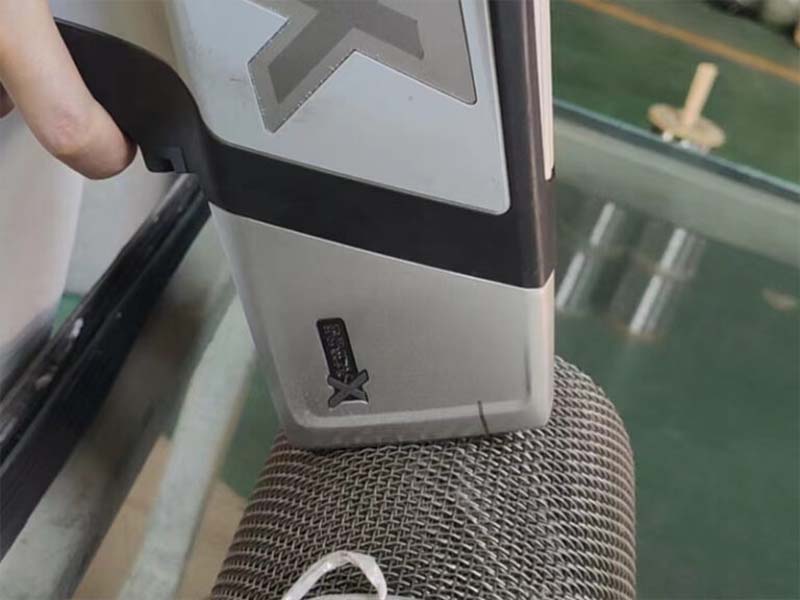
Custom Knitted Wire Mesh Filter Panels for Grease and Oil Mist
Alloyfilter manufactures knitted wire mesh filter panels for grease and oil-mist capture. We supply complete panels, removable cores, fixed assemblies and separate replacement pads to drawings or samples.
Frames, handles, drain holes, mounting features and seals follow the agreed construction. Send dimensions or a drawing to start the discussion.
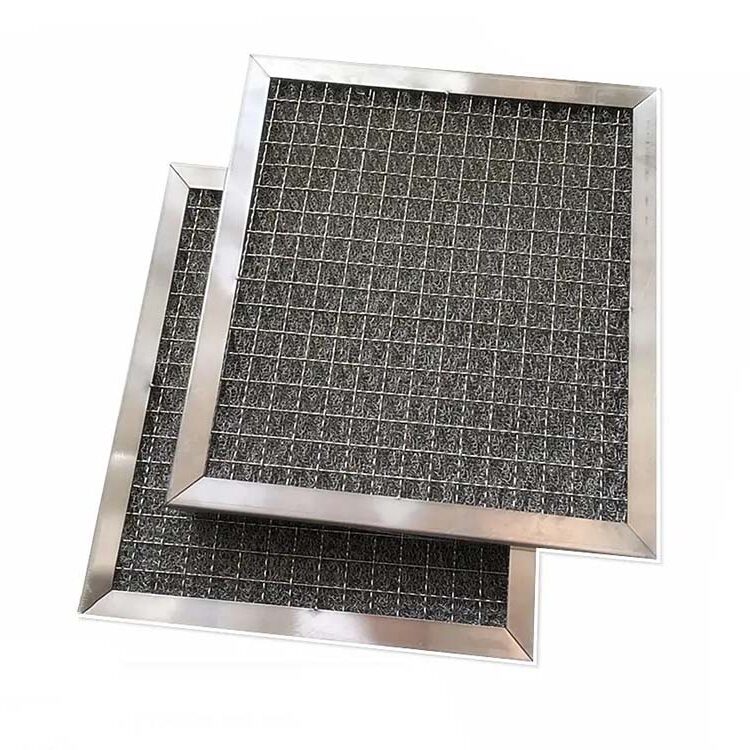
Supply Forms and Product Configurations
The views below show product forms and construction details. Send the drawing or existing specification for the configuration you need.
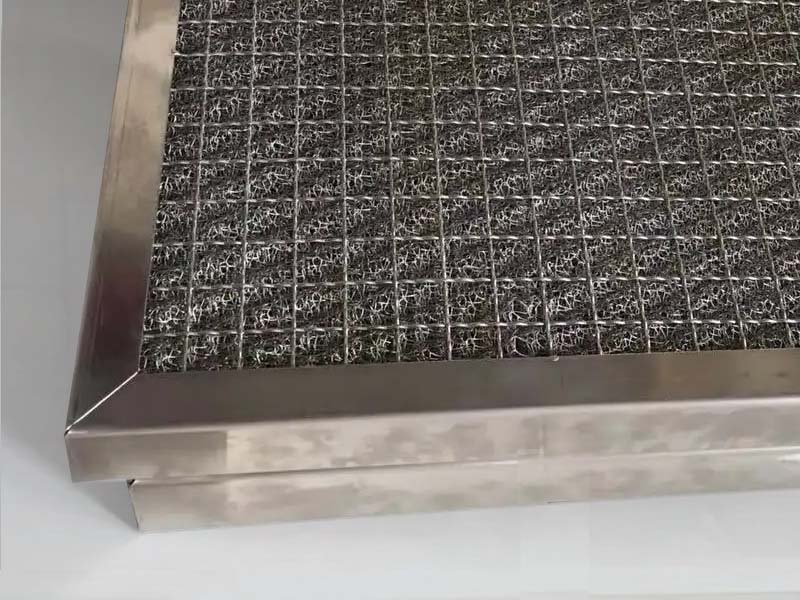
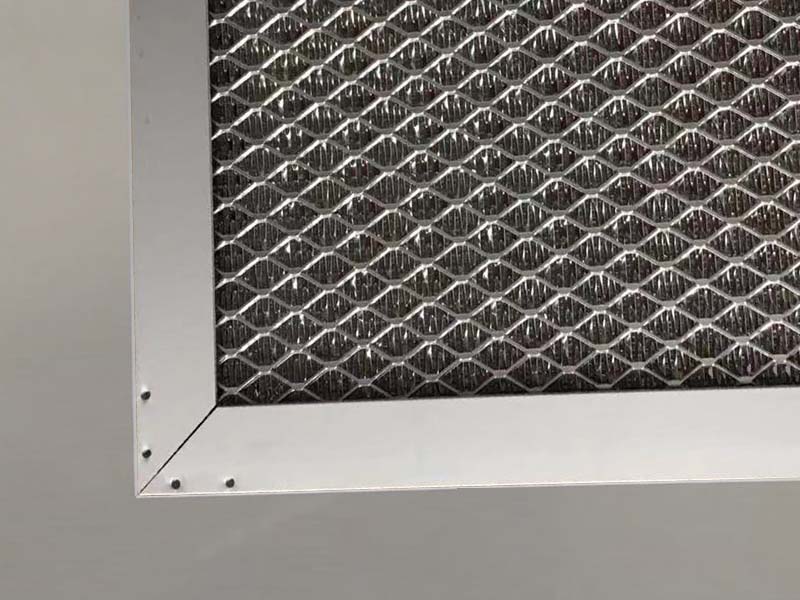
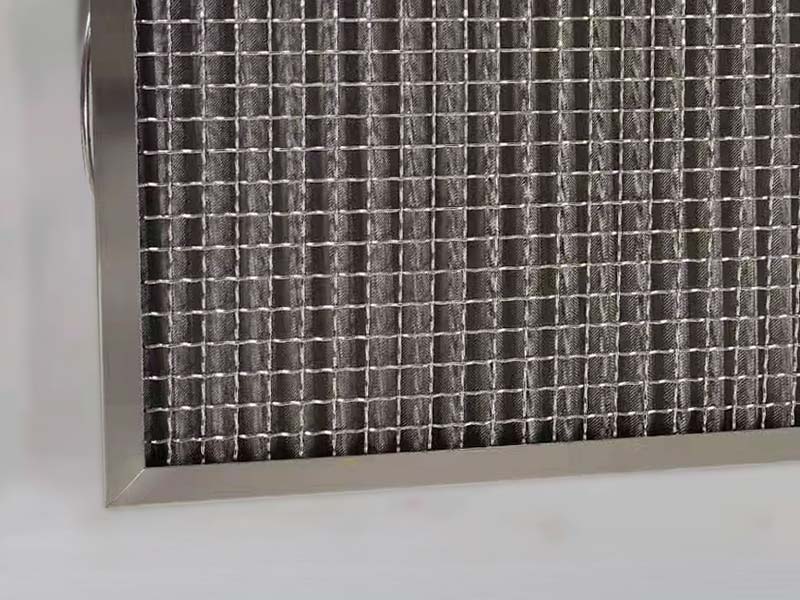
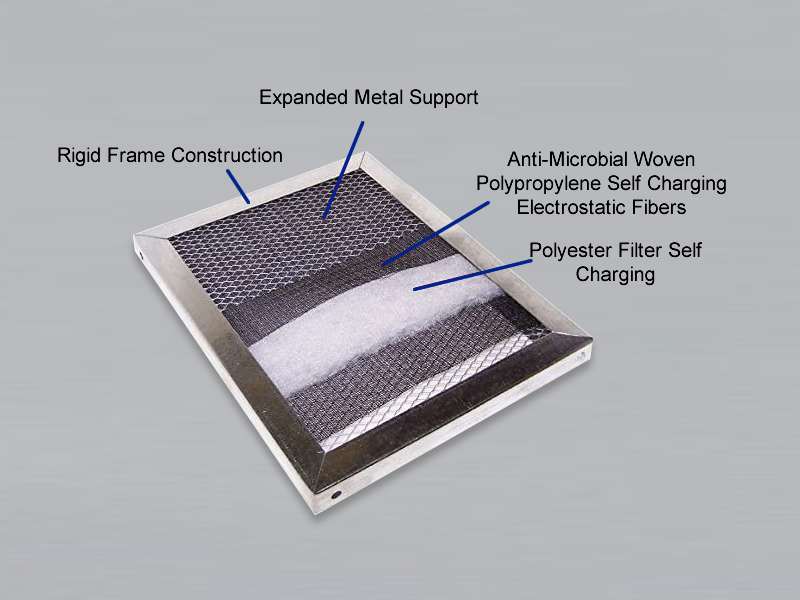
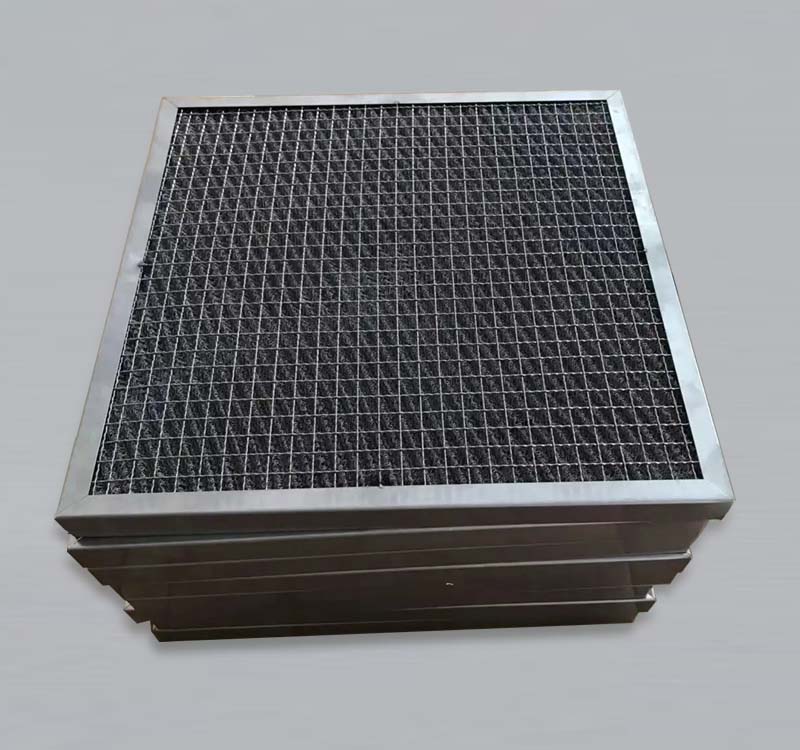
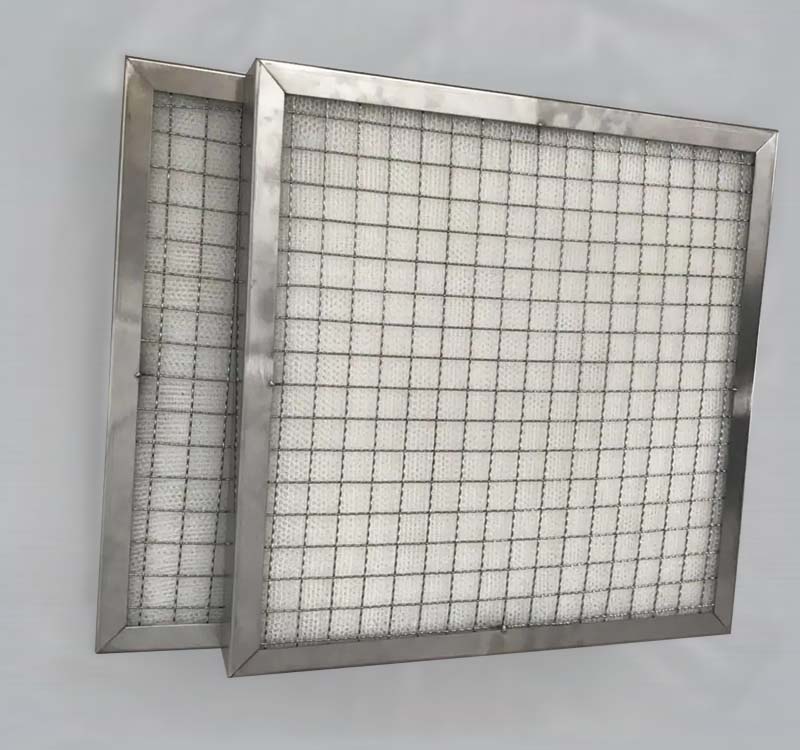
View more product configurations
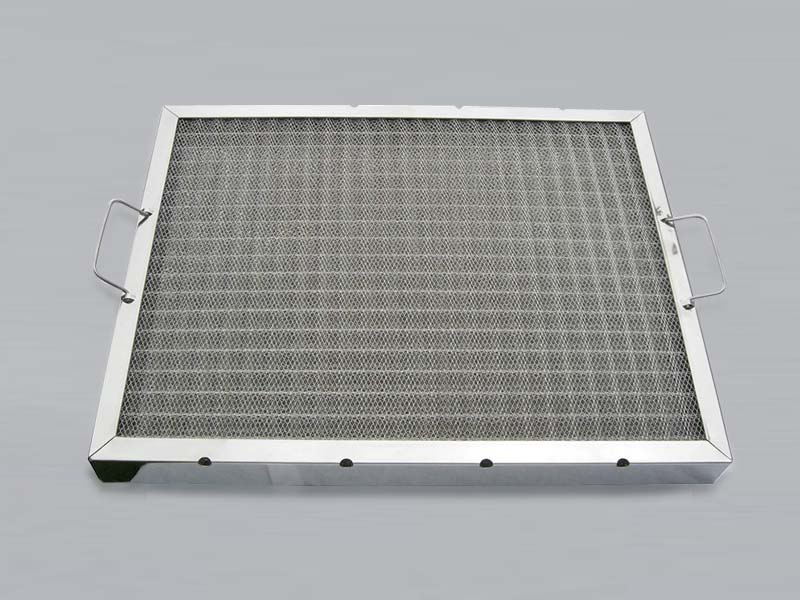
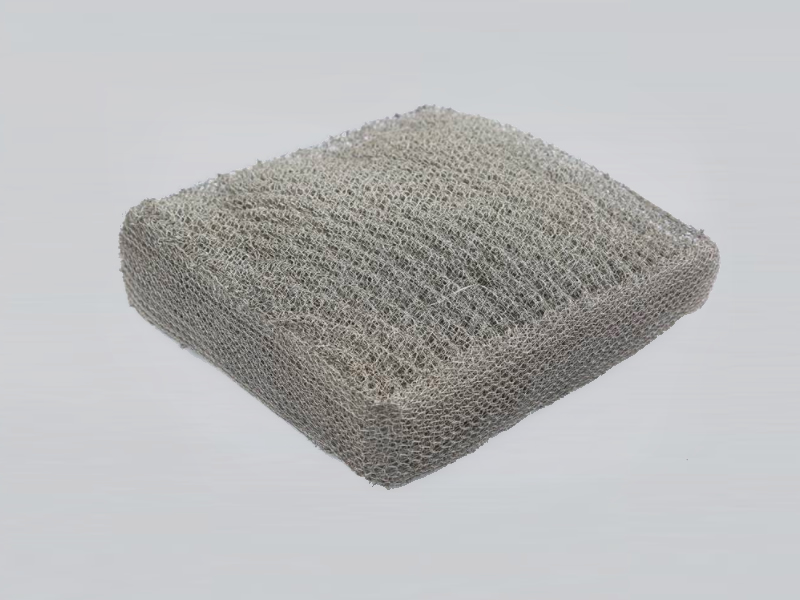
Frame, core and support materials
Available constructions include all materials listed in the table below. Select frame, media, support and seal materials separately for the complete assembly.
Metal grades can include stainless steel 304, 316, 316L, 309, 310S and 321; specified Monel, Hastelloy and Inconel alloys; titanium, nickel, copper, brass, tinned copper, aluminum, galvanized steel and plain steel. Exact grade and component suitability are confirmed with the order.
Use the table to choose a support construction, then specify member size, openings, span and fixing with the panel design. Review the required differential-pressure capacity for that complete arrangement.
| Outer Metal Frame | Galvanized steel Aluminum Stainless steel |
| Inner Filtration Core | Aluminum Galvanized steel Stainless steel knitted mesh (corrugated type) Combination material of PP and stainless steel PP/polyester or synthetic fiber |
| Support Mesh | Stainless steel welded mesh Stainless steel crimped mesh Stainless steel expanded mesh SS perforated plates for the highest support strength |
Panel dimensions, layers and density
- Common width: 200–1200 mm.
- Common length: 200–1500 mm.
- Common thicknesses: 12, 20, 25, 40 and 50 mm.
- Mesh layers: single-layer and 2–4-layer combinations; other arrangements to specification.
- Density: adjusted to the specified construction and duty.
Non-standard dimensions, thicknesses, layers and density can be manufactured to drawing or sample. Oversized panels may require a joined frame; confirm the construction in advance. Common sizes are available as order options, with stock and lead time confirmed per order.
Flat and folded knitted mesh panels
Choose a folded structure when developed media area within the frame is part of the design requirement. To compare it with a flat panel, assess fold pitch, support, airflow distribution, oil loading and drainage under the intended operating conditions.
Flat or folded construction can be specified for kitchen exhaust and industrial oil-mist duties. Confirm dust impact, structural support and cleaning access for the chosen shape.
Removable cores and fixed assemblies
Removable-core panel
A separate frame allows the core to be removed using the specified clips or screws. A serviceable frame may be reused with a matching replacement pad.
Fixed panel
The media is permanently fixed within the frame and cannot be separately replaced on site. A suitable metal assembly may still be cleaned as a complete unit. Replace the complete panel when damaged or unserviceable.
Installation accessories
Flat or flanged frames, mounting-hole positions and dimensions, handles, drain holes and seals can be customized. Frame materials include galvanized steel, aluminum and specified stainless steel such as 304 or 316L.
Silicone, EPDM and rubber-sponge seals are available by specification. Select seals and adhesives for the medium, temperature and cleaning chemicals. Supply can be a fully fitted panel or a bare panel for customer installation.
Airflow, pressure loss and operating temperature
Provide airflow, effective face area, contamination and temperature so the panel construction can be reviewed. Layers, density, thickness, flat/folded geometry and flow all affect pressure loss and capture. Higher density alone does not establish better performance.
More mesh layers within the same panel thickness
Equal frame thickness does not mean an equivalent filter core. Adding layers of the same base mesh over the same area generally adds wire mass; with the same core envelope volume, that raises bulk density. If wire size, mesh weight or layer construction also changes, layer count alone cannot establish the density or performance difference.
| What changes | What to check before substitution |
|---|---|
| Layer arrangement and mass | Define what counts as one layer, especially for flattened tubular mesh. Record base-mesh specification, net core mass, corrugation and layer orientation; do not count support screens as filtration layers. |
| Flow passages and resistance | More mesh packed into the same depth can reduce passage space and increase resistance. Compare complete-panel pressure loss at the same measured airflow and effective face area; frame thickness or fan speed alone is not a common test condition. |
| Capture, oil loading and drainage | Additional wire contacts may change capture, but efficiency does not rise in direct proportion to layer count. Compare the relevant droplet/particle conditions and drainage behavior; retained oil is not automatically useful holding capacity. |
| Fit, retention and cleaning | Check actual core thickness under its specified installed compression, frame seating, supports, seals and drains. A thicker or heavier core must still fit the agreed assembly and cleaning method. |
For example, replacing a two-layer core with four layers inside the same frame does not establish twice the efficiency, half the airflow or the same service interval. Agree the construction change first, then compare initial pressure loss and the required capture/loading result. Keep airflow under review after installation because changing panel resistance can change the system operating point.
The ASHRAE air-cleaner testing overview treats particle-removal efficiency and airflow resistance as separate performance characteristics, with resistance tied to face velocity. General-ventilation particle tests do not automatically provide a grease-capture rating for a kitchen or industrial oil-mist panel.
Initial pressure drop, maintenance-trigger pressure drop and structural allowable differential pressure are separate requirements. Agree them per project. Oil loading, drainage, pressure-loss trend and outlet carryover should be considered together when deciding maintenance; a single pressure-drop value does not define re-entrainment.
Set the required airflow, capture result, allowable differential pressure and temperature for the selected panel. Review temperature suitability across the complete assembly, including media, frame, joints, seals and adhesives.
Cleaning and replacement
Washable metal mesh panels
- Controlled low-pressure water rinsing at ambient temperature.
- Warm water and a compatible neutral degreaser for oily deposits, with gentle brushing where suitable.
- Controlled reverse air cleaning as part of an appropriate cleaning procedure.
- Ultrasonic cleaning only where suitable for the complete component.
Avoid corrosive cleaning agents, open-flame heating and actions that distort fine mesh. Cleaning intervals depend on oil/dust loading and operating conditions. Inspect media, frame, supports, joints, drains and seals after cleaning; no fixed number of reuse cycles is promised. Use the post-cleaning inspection and reinstallation checklist to review reuse, a replacement pad or a complete panel.
PP and synthetic-fiber panels
Recommend gentle washing only for constructions explicitly specified as washable. Otherwise follow the agreed replacement method. The names PP or synthetic fiber alone do not establish washability. Replace media that is damaged, heavily saturated, compacted or shedding fibers.
When to replace
Replace deformed, severely corroded or damaged media and insecure frames/supports. Investigate persistent abnormal pressure drop, drainage or carryover after cleaning. Removable-core panels may accept a new pad; fixed panels are replaced as complete units.
Manufacturing inspection and optional testing
- Finished dimensions and drawing tolerances.
- Frame, welds and connection points.
- Burrs and sharp edges.
- Media type, layer arrangement and integrity.
- Core fixing and retention features.
- Handles and drain openings where included.
- Material grade and agreed material documents.
Routine orders include the agreed manufacturing checks. If you need pressure-drop or capture-efficiency evidence, performance tests can be quoted separately: define the specimen, airflow, contaminant, method, acceptance criteria and report scope. Identify certification or standardized type-testing requirements separately so the test scope matches the intended use.
Custom panels and replacement pads
New application
Discuss the airflow, grease/oil-mist or dust loading, space, temperature and maintenance requirements. We review manufacturing options and confirm the final specification with the customer.
Manufacture to drawing
Provide frame and seal details, dimensions, media, layers, density, supports, accessories and acceptance requirements.
Reproduce from a sample
A sample or old panel helps recover geometry and construction. Used media may be contaminated or deformed; confirm uncertain material and original dimensions before manufacture.
Knitted wire mesh filter panel FAQ
Are all panel filters washable?
No. Suitable metal mesh panels can be cleaned and inspected for reuse. PP and synthetic-fiber constructions are washed only when specifically designed for it.
Can every panel accept a replacement core?
No. Removable-core frames can accept specified replacement pads. Permanently fixed assemblies require complete replacement when unserviceable.
Does a folded panel always have lower pressure drop?
No. Folding increases developed media area, but pressure loss depends on the complete geometry, support and flow conditions.
Is grease capture efficiency the same for every panel?
No universal percentage applies. Capture requirements and any performance test are agreed for the specified panel and operating conditions.
Does a kitchen grease filter provide fire protection?
Grease-capture use alone does not establish flame-arresting performance or kitchen-exhaust certification. Validate any safety or certification requirement separately.
Which knitted mesh product should I specify?
This page covers framed panels. See knitted mesh rolls for base media, compressed knitted filters for die-formed parts and demister pads for vessel/tower droplet separation.
Custom panel inquiry: starting details and specification checklist
- Drawing, sample or old-panel photos and required quantity.
- Length, width, thickness and drawing tolerances.
- Frame, flange, mounting holes, seal and installation dimensions.
- Media, material grades, mesh layers and density.
- Flat/folded shape and removable/fixed construction.
- Support, handles, drains and flow/drainage orientation.
- Airflow and effective face area.
- Grease/oil-mist/dust characteristics and loading.
- Operating temperature and compatible cleaning method.
- Initial pressure-drop target, maintenance trigger and structural differential-pressure requirement.
- Any capture-performance test, inspection or documentation requirements.
Custom knitted wire mesh filter panel construction
- Metal mesh cores for grease/oil-mist capture and compatible cleaning.
- Flat panels or folded mesh structures to specification.
- Removable-core frames or permanently fixed assemblies.
- Custom layers, density, dimensions and support arrangements.
- Handles, drain holes, flanges, mounting holes and seals where specified.
- Complete fitted panels or bare panels for customer assembly.
Weight, corrosion compatibility, temperature suitability and service life depend on the entire assembly. Material options and construction benefits do not establish a common performance guarantee for all panel types.
Alloyfilter manufactures custom knitted wire mesh filter panels for airborne grease and oil-mist capture, with framed metal-mesh elements as the main focus. Interlocking loops and layered mesh create a tortuous airflow path; the structure is not a precision sieve with uniformly calibrated openings.
Primary supply applications are commercial kitchen exhaust grease filtration, industrial oil mist from machining or quenching, and HVAC prefiltration including oily dust. Compressor or turbine intake prefiltration is not a primary recommended supply application.
We supply complete panels, removable cores, fixed assemblies and separate replacement pads to drawings or samples. Dimensions, media construction, airflow and operating requirements are confirmed for the project. Capture efficiency, oil-holding capacity and particle-capture requirements are confirmed for the specified construction and duty.
For capture mechanisms, pressure-loss considerations and the distinction between framed panels and other knitted elements, see the knitted wire mesh filter selection guide.
Panel filter media choices
A panel normally combines an outer frame, filtration core and support mesh. The following constructions are supplied as distinct options; capture behavior and maintenance requirements are not interchangeable.
- Knitted metal mesh: the main choice on this page for grease/oil-mist capture and reusable metal panels.
- Expanded aluminum foil mesh: rhombus foil layers for specified coarse air-filter duties.
- Corrugated woven metal mesh: a separate woven-core panel option.
- PP knitted mesh: to the agreed application and cleaning specification.
- Polyester or synthetic fiber: media and replacement method selected per project.
- Stainless-steel/PP combinations: available to specification.
Conductive constructions can be considered for specified EMI-related assemblies, but ordinary panels have no stated shielding effectiveness. Kitchen grease-filter use does not establish flame-arresting performance or kitchen-exhaust certification; any such requirement needs separate validation.
Panel Specifications, Maintenance and Ordering
Send Your Drawing, Specification or Sample Photos
Send the drawing or existing specification you have, together with the quantity and the parts you need. Sample photos and main dimensions are a useful starting point when a drawing is unavailable.
If you are still defining the product, briefly describe its intended use. We will clarify the additional manufacturing and inspection details with you.