FILTALLOY TECHNOLOGY LTD.

Metal Filter Elements & Materials

Filter Leaves for Pressure Leaf Filters

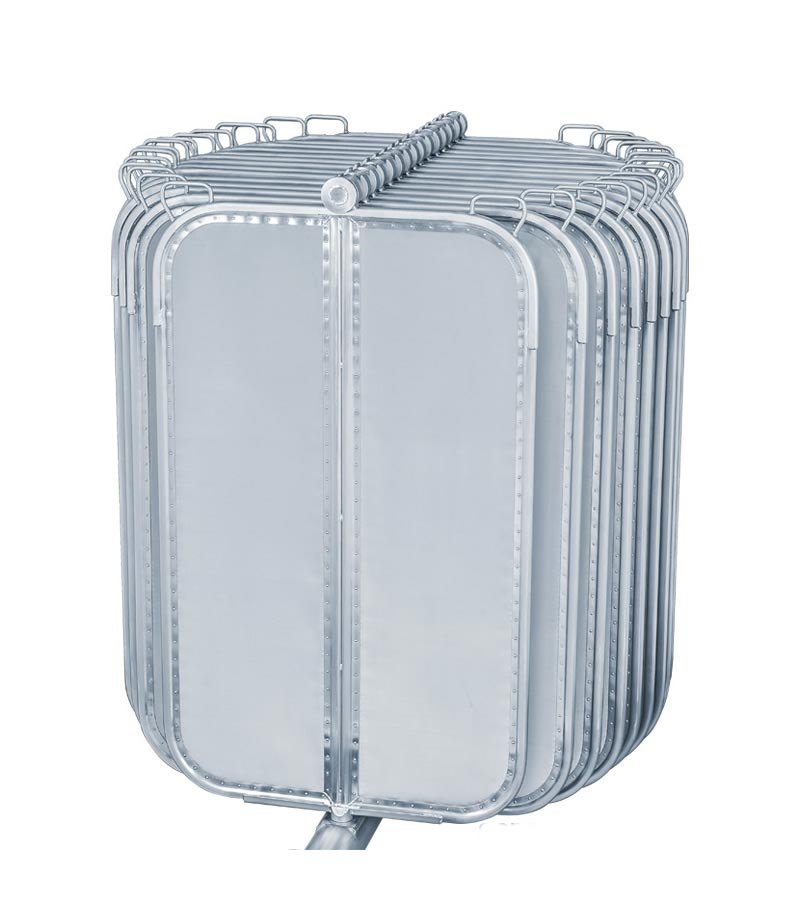
Filtalloy manufactures stainless steel filter leaves for vertical and horizontal pressure leaf filters. Each element combines filtration mesh, support and drainage layers, a frame and a filtrate connection.

Send a leaf drawing or sample photos with the required quantity. We review the element shape, mesh construction, outlet and fit within your equipment; this page covers the replaceable leaves.
Send Your Drawing or Requirements

Metal filter leaves with mounting rods and handles

Supply Forms and Product Configurations

The views below show product forms and construction details. Send the drawing or existing specification for the configuration you need.

Multi-layer stainless steel filter leaves with riveted frames
FLF-1: Multi-layer stainless steel filter leaf with a riveted frame.
Ring-shaped stainless steel pressure filter discs
FLF-2: Pressure filter discs for catalyst recovery applications.
Rectangular stainless steel pressure leaf filter elements
FLF-3: Rectangular pressure leaf filter elements.
Vertical pressure leaf filter housing with installed filter leaves
FLF-4: Filter leaves shown in a vertical pressure leaf filter.
Horizontal pressure leaf filter assembly with filter leaves
FLF-5: Filter leaf assembly shown in horizontal equipment.

Filter Leaf Shapes and Equipment Compatibility

The existing product examples below show different filter leaf elements and their equipment arrangements. Shape and connection details depend on the vessel layout and the required filtration duty.

Filter Leaves for Vertical Pressure Leaf Filters

When specifying a replacement for a vertical pressure leaf filter, provide the leaf dimensions, filtrate outlet, support or mounting details, spacing and available installation clearance. Check that the new elements fit the existing manifold and sealing arrangement.

Filter Leaves for Horizontal Pressure Leaf Filters

For a horizontal pressure leaf filter, match the filter leaf shape, connection position and spacing to the equipment drawings. Access for removal, cake discharge and cleaning should be considered with the complete leaf assembly.

Short replacement record

RecordInformation to retain
Outlet and datumUse the named frame/outlet datum to locate the connector, support and seal interfaces.
Assembly relationRetain leaf position/quantity, spacing and the corresponding equipment drawing; an individual leaf outline does not define the whole arrangement.
Missing detailsUse existing approved drawing values directly; identify only missing dimensions, tolerances or mating information for review.

Five-Layer Filter Leaf Construction

The standard construction shown here uses five layers of woven metal mesh: two outer filtration screens, two middle support layers and one inner drainage layer. The layers are assembled with a frame and riveted joints. The outer mesh, support arrangement, frame and outlet connection must work together.

For a replacement filter leaf, match the overall dimensions, outlet position, sealing arrangement and mounting features to the existing equipment. Changes to mesh or structure should be reviewed against the operating differential pressure and cleaning cycle.

LayerMesh designationWeaveWire diameter (mm)Opening / grade reference (mm)
1 inner drainage layer4 mesh/inchPlain weave1.64.75
2 middle support layers8 mesh/inchPlain weave0.752.47
2 outer filtration layers: option 160 mesh/inchPlain weave0.180.24
2 outer filtration layers: option 224 × 110Plain Dutch weave0.36 × 0.260.15
2 outer filtration layers: option 3PZ80Reverse Dutch weave0.2 × 0.40.08

The outer filtration rows are alternative mesh choices, not additional layers. These are the existing page’s mesh construction references. The previously listed filtration-media range is 80–300 μm; this is not a flow-rate unit or a verified absolute particle-retention rating. Confirm the required mesh grade and filtration performance for the specific process.

Design Information for Custom and Replacement Filter Leaves

Useful design information includes:

  • Process liquid, solids type, particle-size information and solids concentration.
  • Required filtrate quality or target particle retention, including the applicable test method if specified.
  • Operating temperature, process pressure and maximum differential pressure across the leaf.
  • Required flow, liquid viscosity and filtration cycle.
  • Filter-aid or precoat use, anticipated cake thickness and wet or dry discharge arrangement.
  • Material requirements, leaf shape, overall dimensions, frame and outlet details.
  • Mounting, seals, leaf spacing, tolerances and quantity.
  • Equipment drawings, existing leaf drawings, photographs or a sample.

For an existing installation, identify what needs to change: damaged mesh, loss of sealing, deformation, reduced flow or a different process requirement. This helps separate an element replacement from a change to the filtration process.

How Pressure Leaf Filtration Works

In pressure leaf filtration, process liquid passes through the outer filtration surfaces and into the internal drainage structure before leaving through the filtrate connection. Solids remain on the outer surfaces. Where the process uses a precoat or filter aid, the resulting cake also contributes to separation.

Mesh selection should therefore consider the liquid, solids, filtration objective and operating cycle together. A mesh opening alone does not establish the final process retention performance.

Features of Our Filter Leaves

  • Double-sided filtration surfaces provide filtration area within the vessel.
  • Internal mesh layers support the outer screens and provide drainage paths.
  • A reinforced frame and secure joints support structural integrity.
  • Filtration mesh can be selected to suit the process requirements.
  • Leaf filter elements can be matched to vertical or horizontal equipment.
  • Wet or dry cake discharge depends on the complete equipment and process arrangement.
  • Vegetable oil filtration: clarification and removal of suspended solids in edible oil processing.
  • Food and beverage: process streams such as juice, sugar solutions, glucose and vinegar.
  • Chemical processing: organic and inorganic salt solutions, dyes and other compatible liquids.
  • Catalyst recovery: filter elements for separating catalyst solids from process liquids, subject to the required retention and operating conditions.
  • Petrochemical processing: suitable lubrication oil and other process-liquid filtration duties.
  • Mining, metallurgy and pharmaceutical processing: evaluate the liquid, solids, material compatibility and process requirements for each project.

Filter Leaf Applications

Cleaning and Inspection

Use the cleaning procedure approved for the process and the equipment. Compatibility of the cleaning medium with the mesh, frame, seals and retained material should be reviewed before cleaning.

Inspect the filtration screens, frame, joints, outlets and seals after cleaning. Mesh damage, deformation or an incomplete seal can allow bypass even when the selected mesh grade is correct. Online cleaning and cake discharge must follow the equipment’s operating procedure.

Filter Leaf FAQ

What is the difference between a filter leaf and a pressure leaf filter?

A filter leaf is the internal filtration element. A pressure leaf filter is the complete equipment containing the vessel, leaves, manifold and associated operating components. This page focuses on the filter leaves and their fit within that equipment.

Does a five-layer filter leaf have five filtration layers?

No. In the standard structure shown here, the two outer layers perform filtration. The two middle layers provide support, and the inner layer provides drainage. The complete structure must be selected as an assembly.

Is mesh opening the same as final filtration precision?

No. Plain-weave openings, Dutch-weave grades and final process retention describe different things. Solids characteristics, precoat, filter aid, cake formation and the operating cycle can affect separation. State the required retention performance separately from the mesh designation.

Can you make replacement leaf filter elements from drawings or a sample?

Send your drawings, photographs or an existing sample for review. The key details include the outer dimensions, frame, mesh construction, outlet connection, mounting and sealing arrangement. Process conditions are also needed when reviewing changes to the original specification.

Can the same filter leaves be used in vertical and horizontal equipment?

Compatibility depends on the equipment layout, dimensions, connections, support and discharge arrangement. A leaf designed for one installation should not be assumed to fit another without checking these details.

How do I specify a catalyst recovery filter leaf?

Provide the process liquid, catalyst particle-size information, solids loading, required recovery or filtrate quality, temperature and differential pressure. These details help determine whether the proposed mesh and process arrangement can meet the separation objective.

Send Your Drawing, Specification or Sample Photos

Send the drawing or existing specification you have, together with the quantity and the parts you need. Sample photos and main dimensions are a useful starting point when a drawing is unavailable.

If you are still defining the product, briefly describe its intended use. We will clarify the additional manufacturing and inspection details with you.

Contact Filtalloy about this product

Related Products

QUESTIONS? MESSAGE US NOW!