
Automotive Knitted Wire Mesh and Metal Filter Components
Filtalloy manufactures automotive knitted wire mesh and drawing-defined metal components for filtration, support and vibration-control projects. Our compressed knitted mesh can be formed into rings, cushions and custom profiles with material, density and dimensions agreed for the intended assembly.
Selection starts with the function, loading, temperature, fluid or gas exposure and equipment interfaces. Filtration, damping, support and EMI shielding are different duties and need their own acceptance criteria.
Automotive Wire Mesh Components: Select by Function
- Exhaust support and cushioning: compressed knitted rings or cushions for specified support and movement conditions. Define thermal cycling, compression, vibration and contact geometry. See knitted wire mesh support in catalytic converters for component design and validation considerations.
- Vibration damping: metal cushions for drawing-defined mounting arrangements. Specify static preload, displacement, vibration frequency and required damping response.
- Breather or mist separation: knitted structures for suitable droplet-retention duties. Define gas flow, oil exposure, pressure drop and drainage.
- Filter support: woven mesh or formed metal structures supporting finer media, with stiffness, coating, pleating and interface requirements.
- EMI shielding: knitted conductive components for specified electrical-contact designs. Assembly geometry and test conditions determine shielding performance.
- Airbag inflator component development: any proposed mesh role requires the inflator manufacturer’s approved specification and qualification plan. A general knitted component is not an approved airbag replacement.
Density and Compression Must Match the Assembly
Wire material, wire diameter, knitted structure, forming geometry and compressed density affect mechanical and flow behavior. A denser part does not automatically give the best damping or lowest pressure drop. Define load–deflection and flow targets for the actual assembly.
Compressed Knitted Mesh and Related Components
Our existing compressed mesh range covers drawing-defined rings, pads and custom forms. For additional component selection, see knitted mesh rolls and the woven-mesh product range.
Epoxy Coated Wire Mesh for Automotive Air Filter Support
We supply epoxy coated wire mesh as a support layer for automotive air-filter media. The woven metal backing supports the primary media during downstream pleating and assembly and helps maintain the specified pleat structure in service. We supply full-width rolls, slit strips and cut pieces; pleating and filter assembly are performed by the downstream manufacturer.
Specify mesh count, bare-wire diameter, coated openings, required open area, roll or cut dimensions and coating requirements together with the filter-media and pleat design. Coating adhesion, bend flexibility, cut-edge condition and operating-temperature compatibility should be agreed for the intended application. The primary filter media and complete assembly determine particle-filtration efficiency and pressure drop.
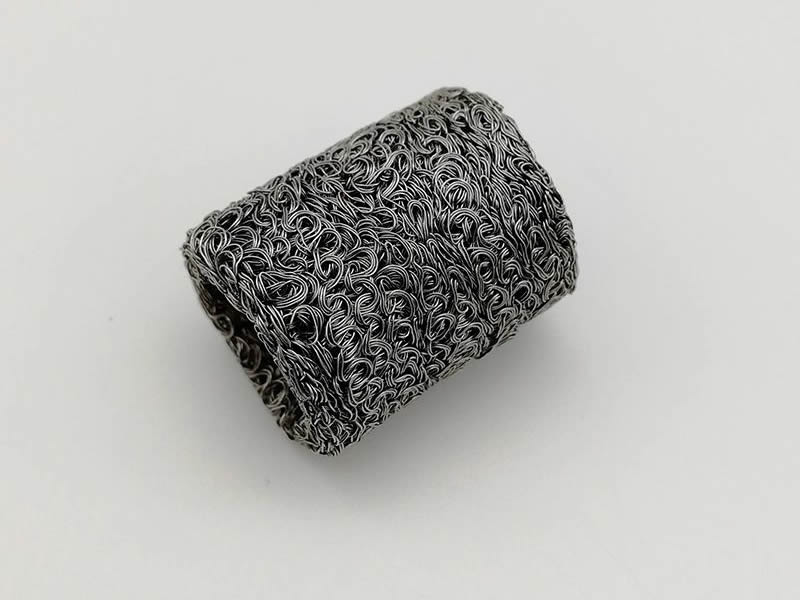
Compressed Knitted Mesh Filter
Compressed knitted mesh for specified support, damping or separation duties. Material, density, geometry and final compression condition are selected together; performance is confirmed against the project test requirements.
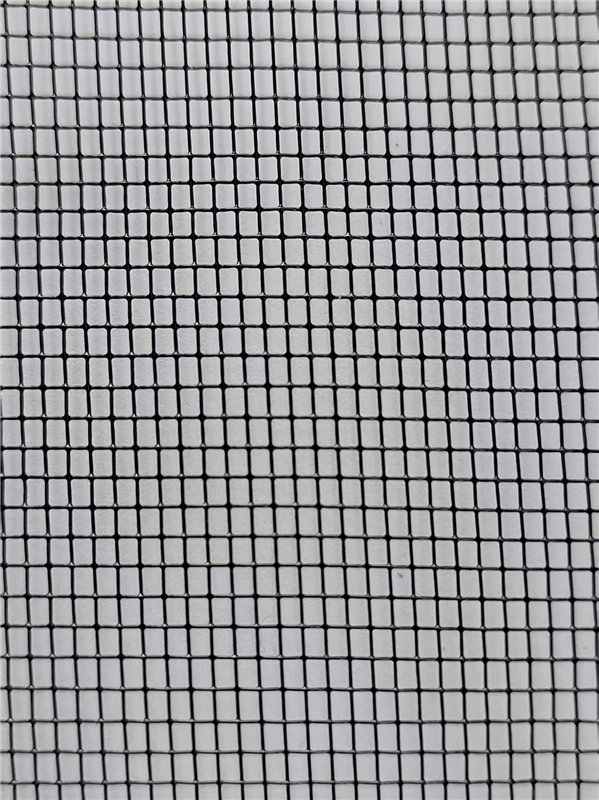
Epoxy Coated Wire Mesh
Epoxy-coated woven mesh supports the primary media in automotive air filters and helps maintain pleat structure. Available as rolls, slit strips and cut pieces for downstream pleating and assembly.
Discuss Your Automotive Mesh Requirements
Information Needed for an Automotive Mesh Component
- Component function, mounting position and assembly drawing revision.
- Material grade, wire diameter, knitted structure and compressed density.
- Dimensions, tolerances, compression allowance and contact surfaces.
- Preload, displacement, vibration, impact and temperature cycles.
- Fluid or gas composition, flow and allowable pressure drop where relevant.
- Required coating, corrosion exposure, electrical contact or cleanliness.
- Inspection, durability tests, supplier qualifications and acceptance limits.
Inspection and Project Qualification
Agree dimensional checks, mass or density verification and specified load–deflection, flow, corrosion or durability tests before manufacture. Samples should be evaluated in the intended assembly. Component dimensions alone do not establish vehicle-level noise, safety or durability performance.
Frequently Asked Questions
Is compressed knitted mesh a sealing gasket?
It can provide support or contact under specified compression, but its porous structure does not by itself establish a fluid-tight seal. Define the sealing mechanism and leakage requirement separately.
Can a metal cushion reduce every vibration?
No. The response depends on load, compression, frequency, geometry and installation. Specify the required operating range and test the assembly.
Is knitted mesh a fine engine air filter?
Do not infer fine-particle efficiency from knitted mesh alone. Breather mist separation, coarse screening and engine-intake particulate filtration require different specifications.
Are mesh parts approved airbag components?
This page does not establish airbag approval. Any inflator component requires the responsible manufacturer’s specification, supplier qualification and safety validation.
Can you reproduce a sample?
Yes. Include the intended duty, material and acceptance criteria. Identify wear or permanent deformation so it is not mistaken for the original geometry.
Three Ways to Start Your Project
- Requirements-based customization: share the operating conditions and component function for a new project.
- Drawing-based customization: send the approved drawing, revision and acceptance requirements.
- Sample-based customization: arrange a sample for measurement and construction review, together with the original duty where available.
Use the form below to discuss your component requirements.
Applications
Product Inquiry
Send the component function, assembly drawing and operating requirements for review.