

Metal Filters for Pharmaceutical Filtration
Filtalloy manufactures metal filter plates, discs, screens and filter elements for pharmaceutical filtration and equipment integration. We work from process requirements, customer drawings or replacement samples to match the filtration task, installation dimensions and cleaning conditions.
Our supply covers components for API solid–liquid separation, liquid prefiltration, powder sieving and recovery, and selected process utility duties. Material, filtration performance, surface finish and inspection requirements are agreed for each project.
Match the Filter to the Process
Filtration in the pharmaceutical industry involves different retention, flow and cleaning requirements at each stage. Start with what the component must retain or support, then select its structure.
| Process | Component options | Selection checks |
|---|---|---|
| API separation | Sintered filter plates, discs and supported mesh assemblies | Crystal size, slurry viscosity, cake release, pressure and solvent compatibility |
| Liquid prefiltration | Sintered mesh or porous metal filter elements | Particle retention, solids loading, flow and permitted pressure drop |
| Powder handling | Woven screens, sintered media and perforated supports | Particle distribution, screen strength, air flow and cleaning access |
| Catalyst recovery | Filter discs, plates and cylindrical elements | Smallest particles to retain, abrasion, chemistry and regeneration method |
| Process utilities | Metal elements for selected steam, water or gas particulate duties | Temperature, pressure, condensate, connections and downstream requirements |
For pharmaceutical liquid filtration, confirm whether the goal is clarification, particle removal, product recovery or protection of a downstream filter. These duties require different acceptance criteria.
Filter Plates for Nutsche Equipment
In API filtration, a Nutsche filter or agitated Nutsche filter dryer may use a supported filter medium to separate solids from liquid and hold the cake during washing or drying. We review the filter plate or mesh component against the equipment drawing, including active area, support, mounting holes, seals and discharge arrangement.
For Nutsche filtration projects, send the vessel interface and the conditions on both sides of the medium. Agitator clearance, reverse pressure during cleaning and repeated thermal cycles should be included where relevant. The specification must distinguish a support plate from the layer that performs particle retention.
Pharmaceutical Sieving and Filtration for Powders
For powder screening, specify the aperture and wire diameter together with the screen tension, frame interface and edge finish. For powder recovery from a gas stream, specify the particle distribution, gas flow and cleaning cycle. A sieve opening and a porous filter rating describe different structures and should not be treated as interchangeable.
In fluidized equipment, gas distribution and powder retention must be considered together. The supporting plate, filter medium and seals all affect operation. Trial evaluation under the intended process conditions helps establish the acceptable flow and retention balance.
Metal Filter Components We Supply
Use the product pages below to compare structures and request a component matched to your equipment.

Sintered Plate Filter
Flat filter plates for solid–liquid separation or gas distribution. Specify the support arrangement, active area, flatness and installation seal.
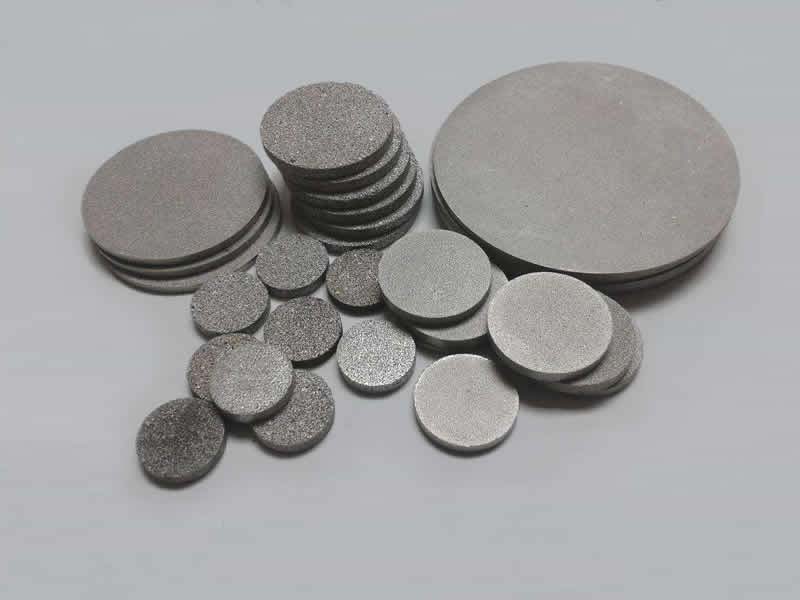
Porous Metal Filter Discs
Porous discs for particle retention or flow distribution. Select material, dimensions and permeability for the actual medium and duty.

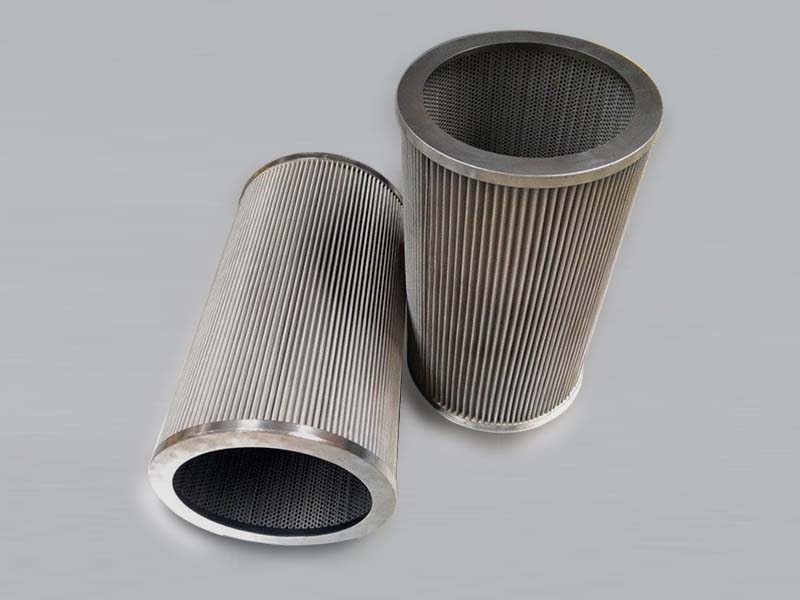
Sintered Mesh Filter Elements
Multilayer mesh elements for liquid or gas particulate filtration. Connections, support layers and cleaning access follow the equipment design.
Sintered Fiber Felt Filter
Metal fiber media for suitable filtration and powder recovery duties. Confirm retention, differential pressure and cleaning conditions.

Metal Filter Discs
Flat or formed filter discs supplied to drawings. Define mesh structure, edge treatment, dimensions and the method of installation.

Perforated Plates
Perforated screens and support plates for equipment integration. Hole pattern, open area, thickness and material follow your drawing.
Material and Structure Selection
316L stainless steel is an available option for filter components. The selected grade must be compatible with the process liquid, solvents, cleaning chemicals and temperature. Specify corrosion or contamination concerns before confirming a material.
- Retention: define the particles to retain and how performance will be measured. Nominal ratings, geometric openings and validated retention results have different meanings.
- Flow: provide viscosity, solids concentration, required throughput and permitted clean and loaded pressure drop.
- Strength: include maximum differential pressure, reverse flow, unsupported span and thermal cycling.
- Hygienic design: define product-contact surfaces, surface finish, weld requirements, sealing, drainage and access for cleaning.
- Installation: provide dimensions, tolerances, connections and the mating equipment details.
For catalyst recovery filters, also identify the catalyst particle size distribution and whether abrasion or chemical exposure will affect the medium.
Pharmaceutical Filter Cleaning and Inspection
Agree the cleaning method before selecting the filter. Provide the cleaning agents, concentrations, cycle temperature and duration. If CIP or SIP is required, include those conditions in the specification so the material, joints and installation can be reviewed.
Inspection can be scoped to the component and drawing: dimensions, visual condition, openings or pore characteristics, welds and permeability or flow where applicable. Specify the required method and acceptance limits before production. Material certificates and inspection documentation should be agreed with the order.
After cleaning, continued use depends on verified condition and process performance. There is no universal reuse limit for every pharmaceutical filter.
Define the Validation Requirements
A metal component’s material grade or filtration rating alone does not establish compliance with a pharmaceutical process. Hygienic requirements must be translated into the drawing, manufacturing specification, inspection plan and equipment qualification.
Final sterilizing filtration requires a filter and process validated for that purpose. Particle prefiltration, steam particulate removal and powder recovery do not establish sterile liquid or gas performance. EU GMP Annex 1 discusses filter compatibility, bacterial retention validation and integrity testing for sterile medicinal products.
Frequently Asked Questions
Can you make a replacement from an existing filter?
Yes. Start with a drawing or photos and dimensions. If a sample is needed, we can discuss reviewing it to establish the component structure and an agreed replacement specification.
Do you supply complete Nutsche filter dryers?
Our supply on this page is metal filtration components. For a Nutsche filter plate, provide the equipment drawing and operating conditions so we can review the part and its interface.
Can metal pharmaceutical filters replace membrane filters?
The filtration objective must be reviewed first. Metal media may serve particle removal or support duties. Replacing a validated membrane filter requires a separate assessment of retention, compatibility and process validation.
What information is needed for a first inquiry?
Send the drawing or required dimensions, material, filtration objective, medium, flow, temperature, pressure and cleaning conditions. Identify any documentation, inspection or validation requirements at the start.
Discuss Your Filter Requirements
New process: send the medium, target particle size, flow, operating temperature, pressure and cleaning method.
Drawing or replacement: send the drawing, dimensions, connections, material and required inspections.
Sample matching: send photos first. We can discuss receiving a sample to review its dimensions, structure and replacement requirements.
You do not need to disclose the end-use industry to begin. The operating conditions and component requirements are the starting point.
Applications
Product Inquiry
Share your operating conditions, drawing or replacement sample requirements.