
Wire Drawing and Annealing: The Essential Path to Forming Durable Epoxy Coated Screen
From window screens to filtration components, we encounter various types of metal mesh in our daily lives. Their defining characteristics include fine density, robust strength, and excellent rust-resistance properties. However, are you familiar with two crucial steps in their manufacturing process: wire drawing and annealing? Below, we provide a detailed, step-by-step breakdown of these procedures.
1. Wire Drawing—The Magical Transformation from Thick Rods to Fine Wires
The raw material we procure from steel mills consists of carbon steel wire rods with a diameter of 6.5 millimeters. These rods are sequentially passed through a series of dies with progressively smaller apertures; under the influence of tensile force, they are elongated and stretched, ultimately transforming into slender filaments measured in microns. This constitutes the first step in the metal mesh formation process. Since the surface of the wire becomes smooth and lustrous after stretching, we refer to this finished product as “cold-drawn wire” or “bright wire.”
During the wire drawing process, situations sometimes arise where the wire suddenly ceases to stretch further. What causes this?
Carbon steel wire exhibits a specific characteristic during processing: the more it is stretched, the harder and more brittle it becomes—a phenomenon known in the industry as “work hardening.” If one were to forcibly continue stretching the wire at this stage, it would not only subject the machinery to excessive mechanical stress but could also cause the wire to snap, thereby throwing the entire production line into disarray. It is precisely at this critical juncture that the annealing process becomes indispensable.
2. Annealing—The Process of Softening Hardened Wire
The annealing process involves placing the cold-drawn wire into a vacuum annealing furnace, slowly heating it to a temperature range of 650°C to 750°C, and maintaining this constant temperature for a specific duration. Subsequently, the wire is allowed to cool slowly and naturally until it is ready to be removed from the furnace. Precise temperature control is the key to the success of this process. After undergoing annealing, the wire’s hardness is reduced, its internal stresses are relieved, and its ductility and flexibility are fully restored. Upon removal from the furnace, we apply a coating of oil to the wire to prevent rusting. At this stage, the resulting wire is not only exceptionally fine and refined but also possesses superior resistance to both breakage and corrosion.
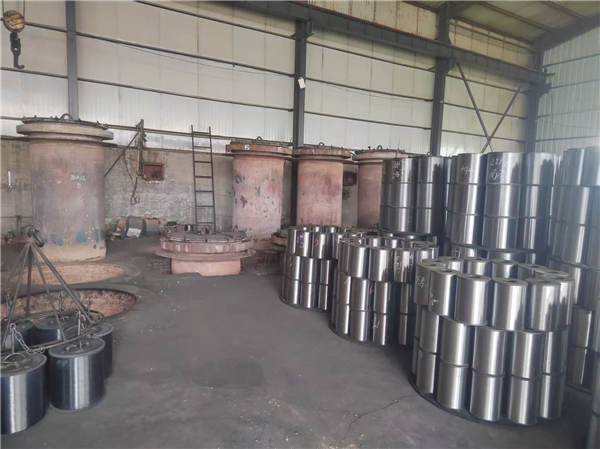
From wire drawing to annealing, every single step plays a pivotal role in determining the ultimate quality of the wire mesh. We adhere to rigorous quality control standards, ensuring that every phase of the manufacturing process is meticulously monitored and managed. The hardness or softness of the wire directly impacts the pleating performance of our clients’ filtration components.