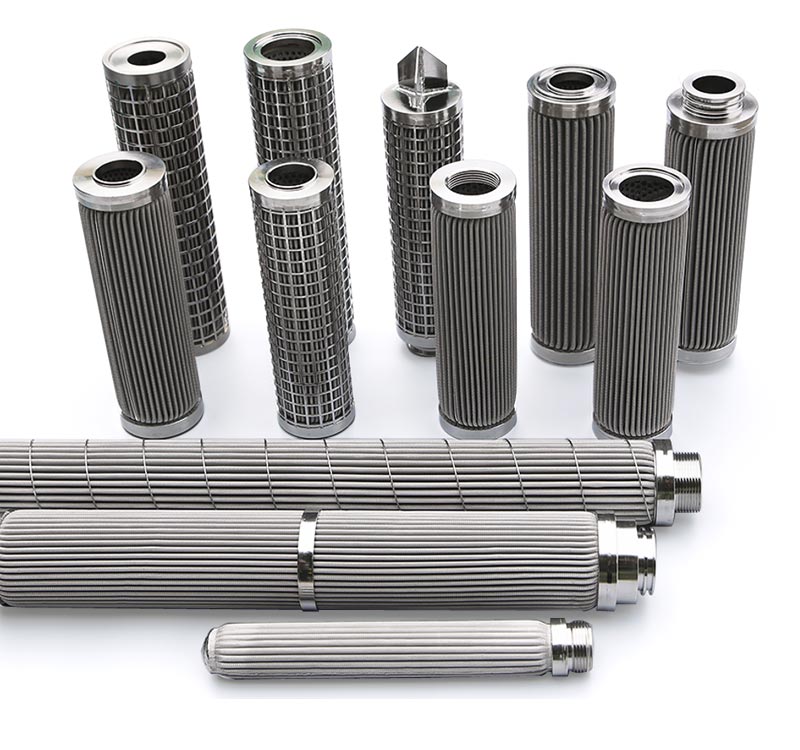
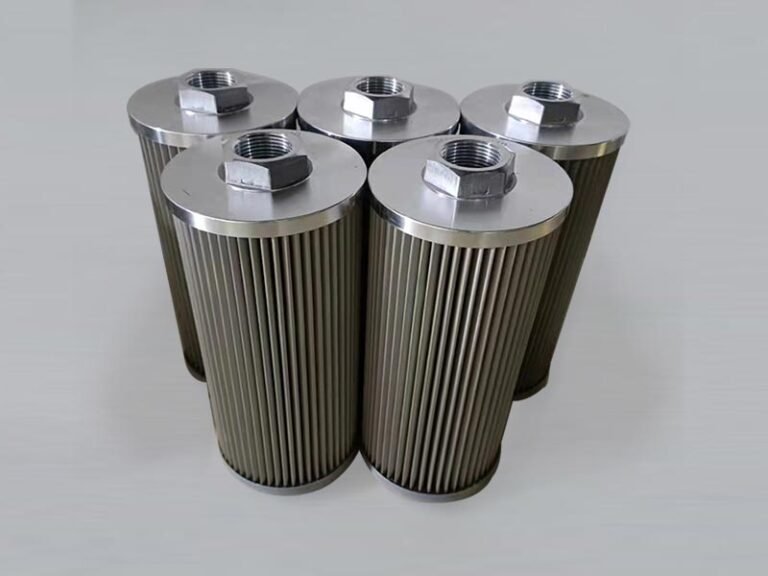
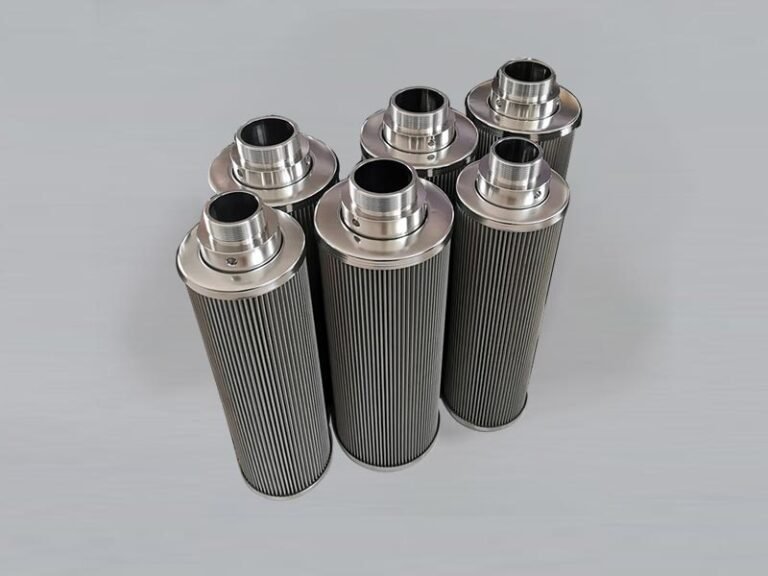
Filtalloy manufactures pleated metal filter cartridges using woven wire mesh, sintered wire mesh or sintered metal fiber felt. The filtration medium is formed into pleats and assembled with support layers and end connections to suit the installation and operating conditions.
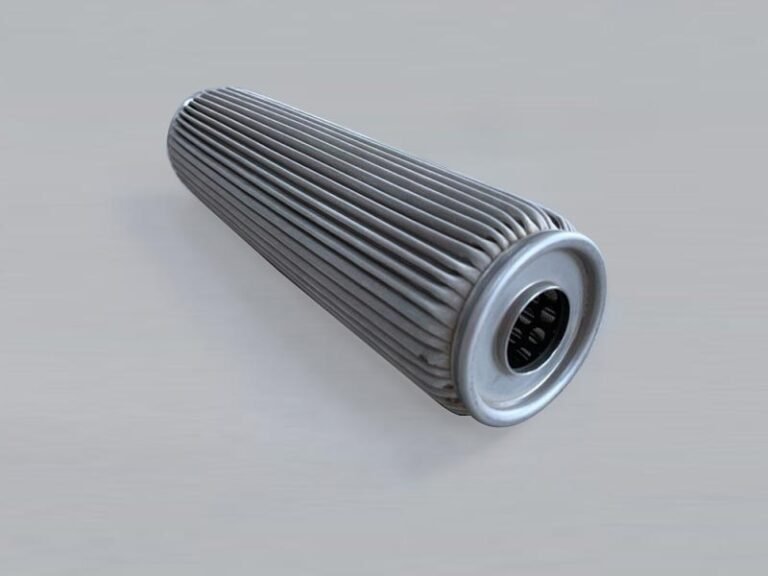
A stainless steel wire mesh pleated filter cartridge provides additional filtration area within a compact cylindrical envelope. We can customize the medium, dimensions, connections and reinforcement arrangement from your operating requirements, drawings or an existing sample.
How the Pleated Structure Works
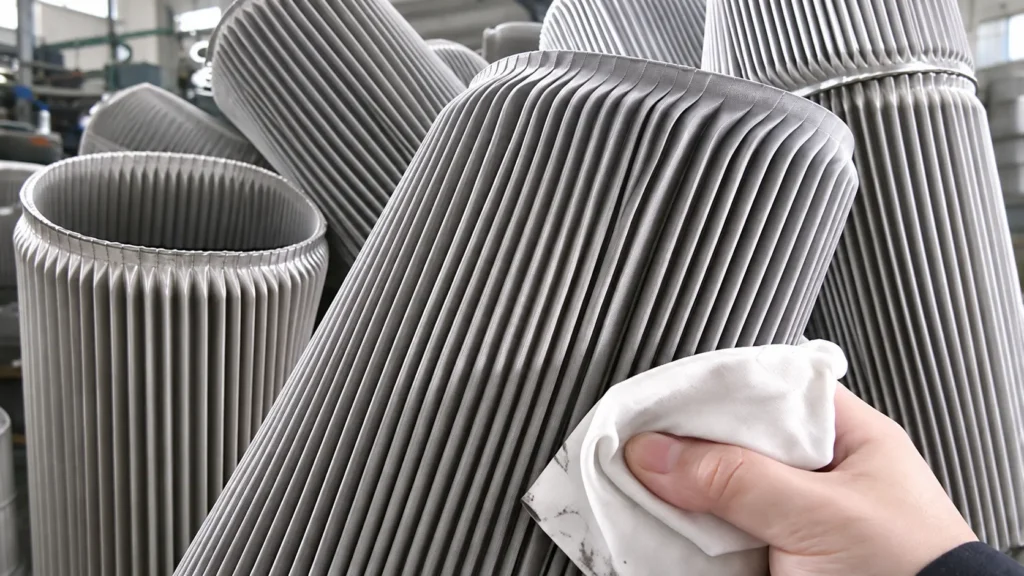
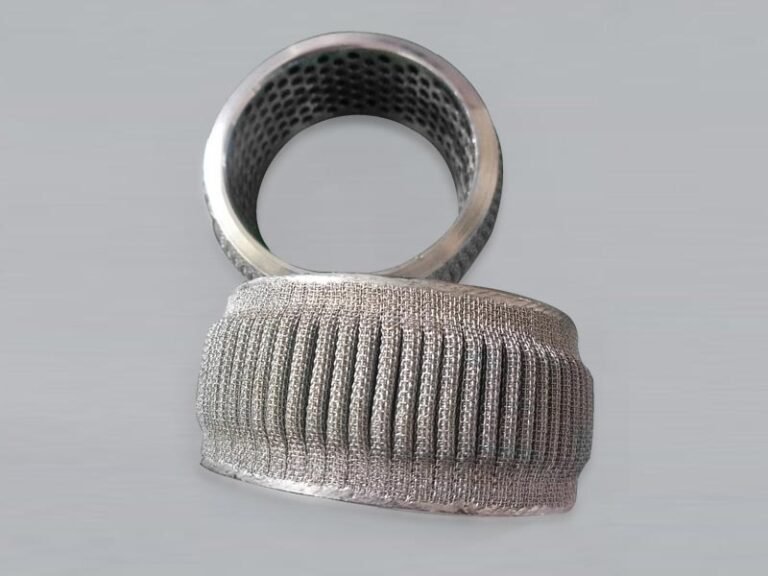
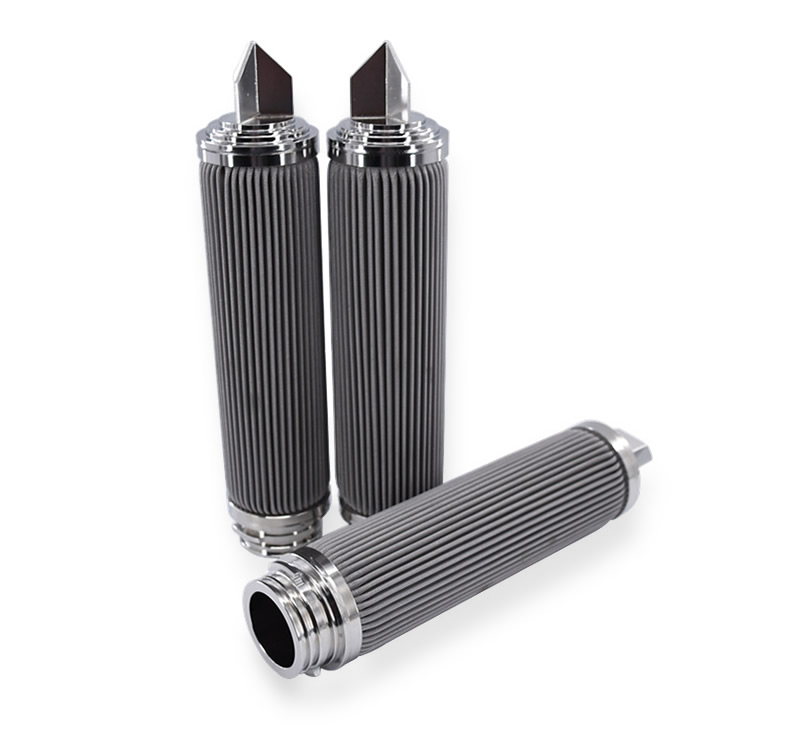
Pleating packs a larger medium area into the available cartridge space. The usable area depends on the element diameter and length, pleat geometry and support arrangement. Flow passages between the pleats must remain open for the medium to work effectively.
More area does not automatically mean a finer filtration rating. Particle retention is determined by the selected medium and its rating; flow and differential pressure also depend on fluid viscosity, contamination and the cartridge design.
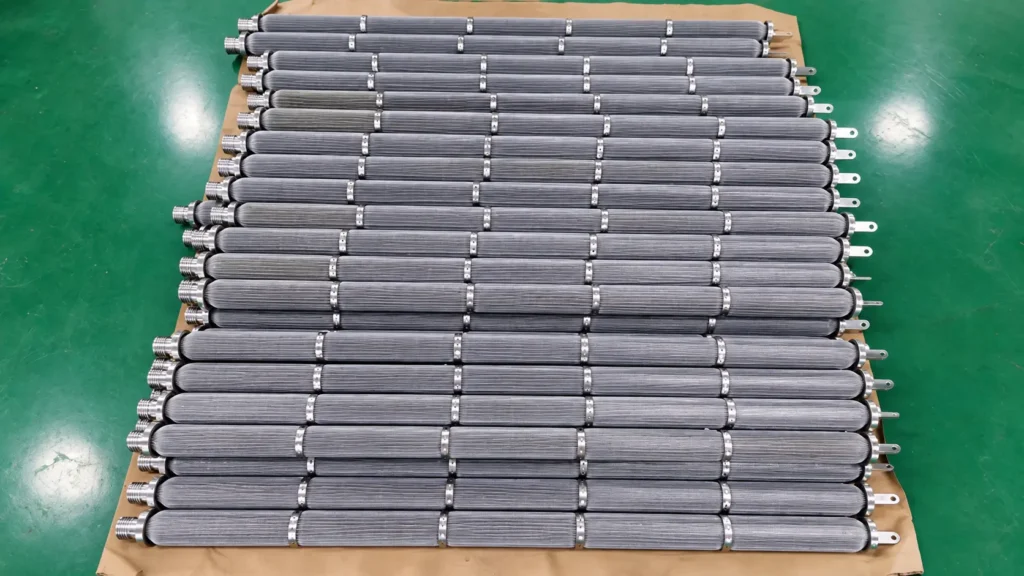
Pleat forming and finishing — illustration
Filter Media Options
Choose the filtration medium for the contaminants, required rating, operating conditions and cleaning method.
Wire Mesh and Sintered Metal Fiber Felt: Filter Media Comparison
Item
Woven wire mesh
Sintered metal fiber felt
Target contaminants
Hard particulate
Hard particle and deformable gel
Nominal filter rating (μm)
5–400
1–100
Dirt holding capacity
Low
High
Permeability
Good
Good
Working differential pressure
High
High
Working temperature
High
High
Cleaning and reuse
Yes
Yes
Corrosion resistance
Good
Good
Sintered metal wire mesh is also available. Confirm its rating and suitability for the specified pleat geometry.
These are nominal ratings. A micron value alone does not specify an absolute retention efficiency or test method. Where a defined retention requirement is needed, provide the acceptance criteria for review.
316 and 316L stainless steel are common material options. Other alloy options can be reviewed against temperature, corrosion conditions and the selected filtration medium. Material compatibility should be checked for both operation and cleaning.
Actual operating temperature and allowable differential pressure must be reviewed for the complete cartridge design; qualitative comparisons are not universal performance limits.
Connections, Supports and Protective Sleeves
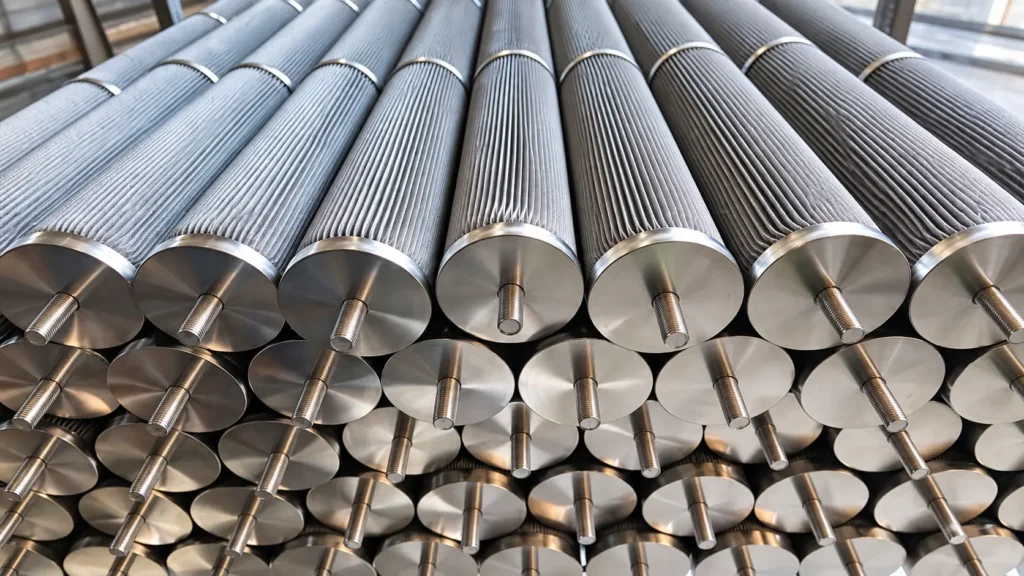
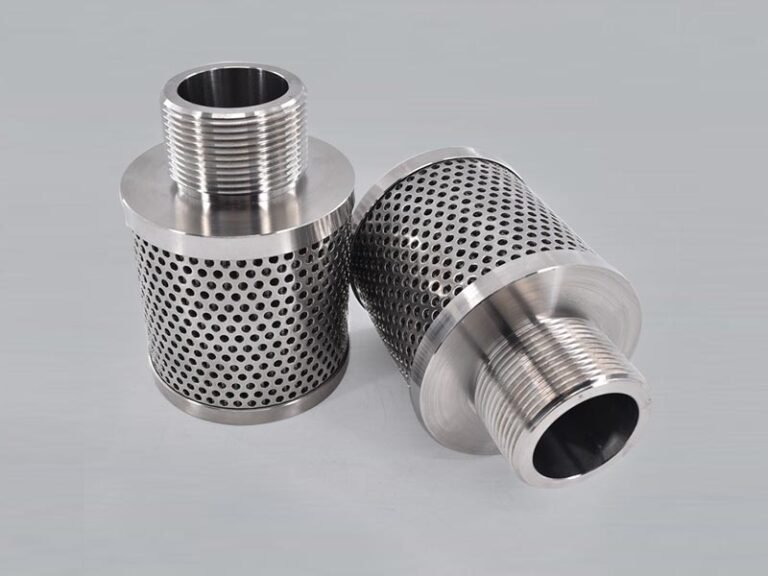
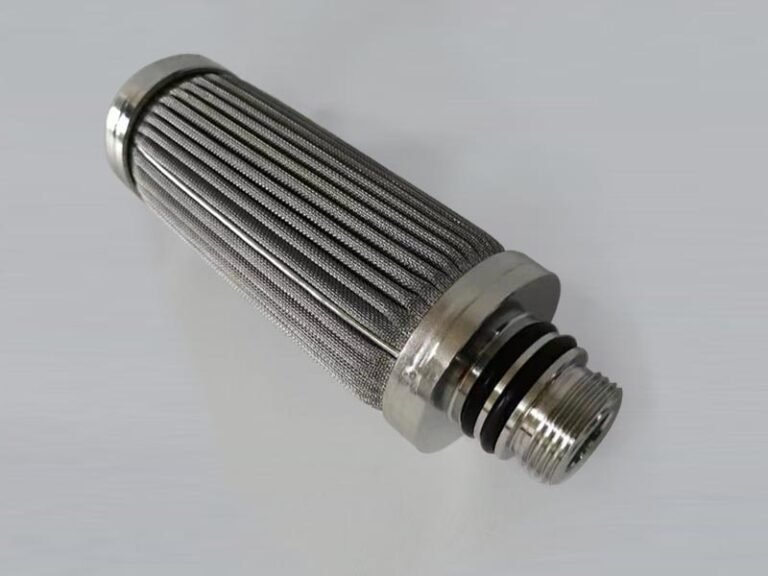
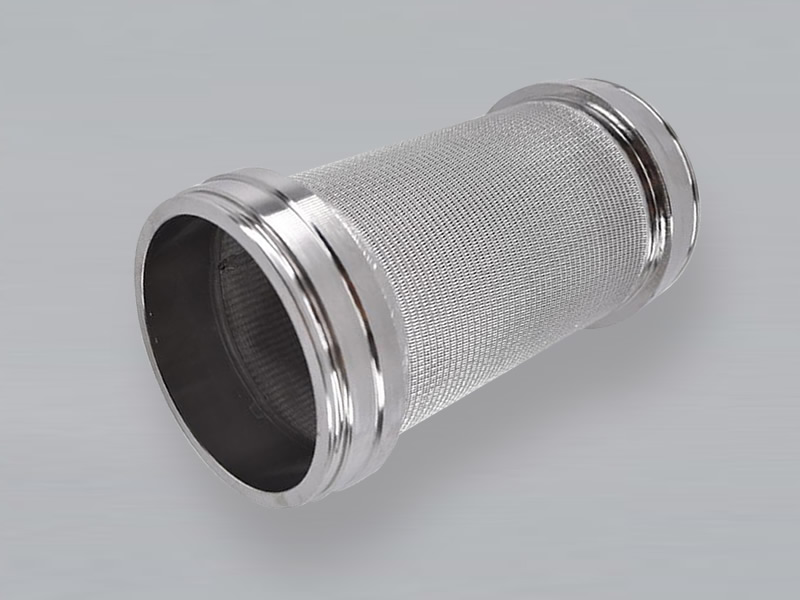
End connections can be customized to the installation. Existing configurations include threaded connections, flanges and other drawing-based end arrangements. Threaded studs may be used in particular mounting designs; their function and dimensions must follow the installation drawing.
Threaded stud configuration — illustration
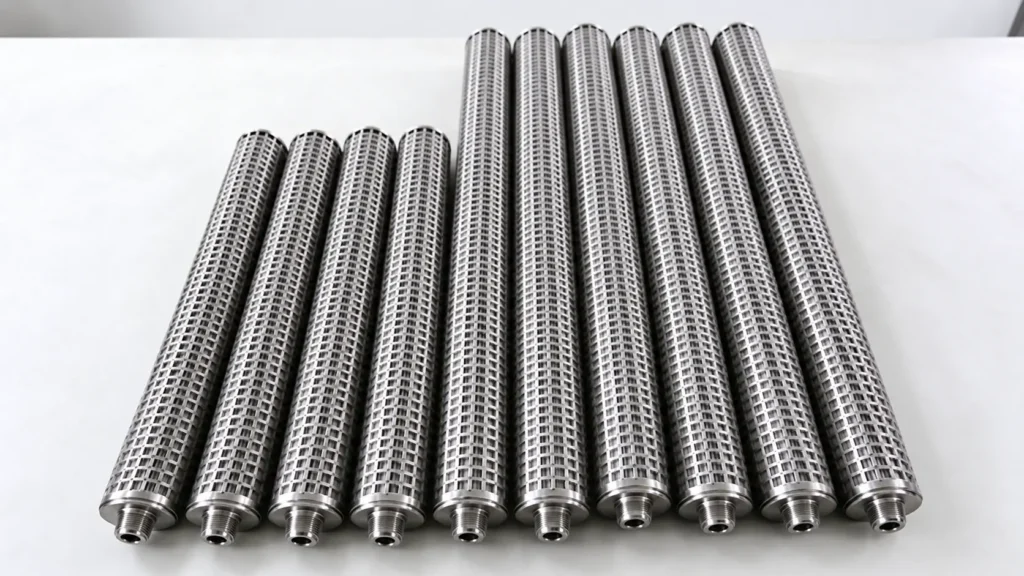
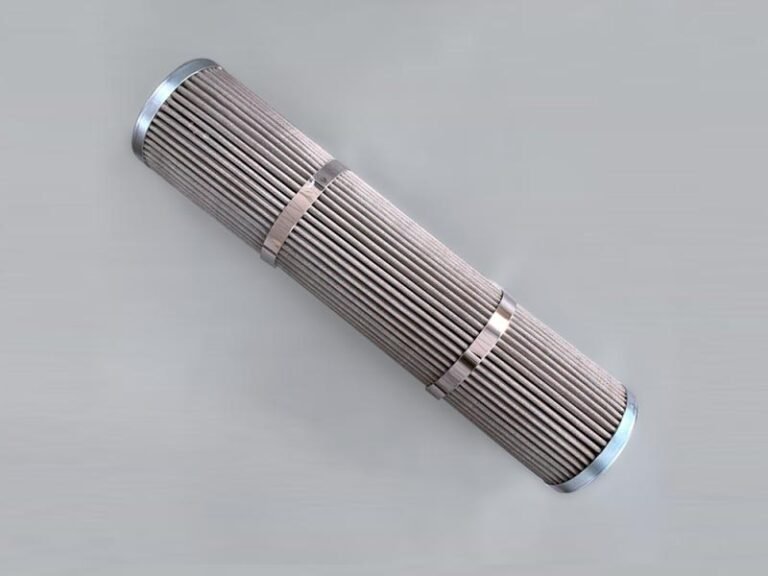
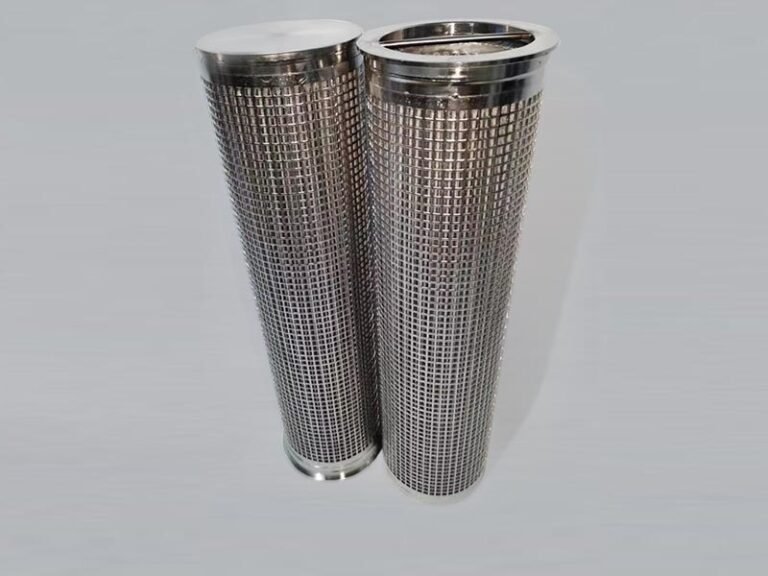
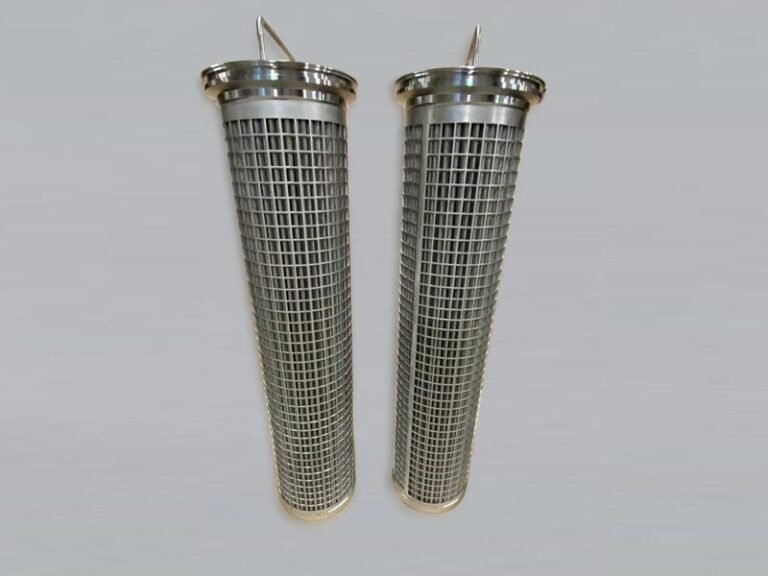
Internal support tubes, external protective sleeves and reinforcement bands serve different structural purposes. A protective sleeve helps protect the pleated medium from handling damage and can form part of the reinforcement arrangement. It does not replace the specified filtration layer.
Support location must suit the flow direction. Specify outside-to-inside or inside-to-outside flow when requesting a cartridge, together with the allowable differential pressure and any reverse-flow cleaning requirement.
Perforated protective outer sleeve — illustration
Pleated Cartridge Configurations
Support and Reinforcement
PMF-1 · Cylindrical configuration
PMF-2 · Reinforced plate
PMF-3 · Internal support for outside-to-inside flow
PMF-5 · Reinforcement bands
End Connection Options
PMF-4 · Double O-ring connection
PMF-6 · Threaded candle configuration
PMF-7 · Female threaded connection
PMF-8 · Male threaded connection
Flanged and Handled Configurations
PMF-9 · Flanged connection and protective sleeve
PMF-10 · Handles and protective sleeves
Industrial Filtration Applications
Pleated metal cartridges can be evaluated for hydraulic oil, lubricants, fuels and chemical process liquids. Gas applications require review of temperature, contaminants and corrosion conditions. Select the medium and structural design for the actual service rather than the application name alone.
For polymer melt filtration, see our Polymer Melt Filter Elements page for melt-specific selection considerations and candle filter configurations.
Cleaning methods may include chemical cleaning, ultrasonic cleaning or steam treatment, subject to the contamination and cartridge materials. Select the procedure for the deposit, welded assembly and any seals or non-metal components.
Before returning a cartridge to service, check its condition and verify the agreed acceptance requirements. Cleaning does not guarantee unlimited reuse or a fixed service life. Contact our engineers with the fluid and contamination details when a cleaning procedure needs review.
Custom Pleated Filter Cartridges
We can review your drawing, operating requirements or existing sample to define the filtration medium, element dimensions, end fittings and support arrangement. Finished configurations vary with the installation and service conditions.
Design from operating requirements: discuss the medium and element configuration for a new project.
Manufacture from drawings: provide the dimensions, connections and acceptance requirements for a specified design.
Reproduce from an existing sample: send an old element when drawings or complete dimensions are unavailable.
Pleating increases the medium area that fits into a cartridge. Filtration accuracy depends on the selected medium and rating. Pleat geometry and support design must also maintain usable flow passages.
Which media can be used in a pleated metal cartridge?
Options include woven wire mesh, sintered wire mesh and sintered metal fiber felt. Selection depends on contaminants, required rating, operating conditions and cleaning requirements.
Is the outer sleeve the filtering medium?
The protective outer sleeve and the filtration layer serve different purposes. The sleeve protects or supports the pleated medium; the specified filtration layer determines the filtration rating.
Can the connection and flow direction be customized?
Yes. Provide the installation drawing or sample, connection dimensions and intended flow direction. The support arrangement and allowable differential pressure are reviewed with the cartridge design.
Can pleated stainless steel filter cartridges be cleaned and reused?
They can be considered for cleaning and reuse when the construction and contamination allow it. The cleaning method must be compatible with the materials, and the element must meet the agreed checks before reuse.
What information is needed for a custom cartridge?
Provide the fluid, contaminants, required rating, flow, temperature, pressure, allowable differential pressure and installation dimensions. A drawing or existing sample helps define the mechanical configuration.
Discuss Your Filter Requirements
To discuss a design, provide:
Fluid or gas, contaminants and required nominal filtration rating.
Flow rate, viscosity where relevant, operating temperature and pressure.
Allowable differential pressure and filtration direction.
Cartridge diameter and length, connection dimensions and available installation space.
Material requirements, cleaning method and any acceptance checks.