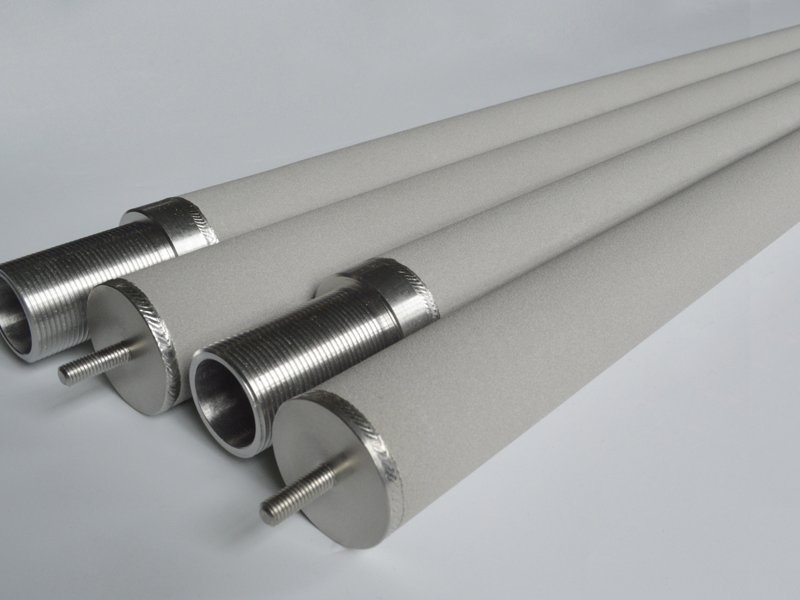
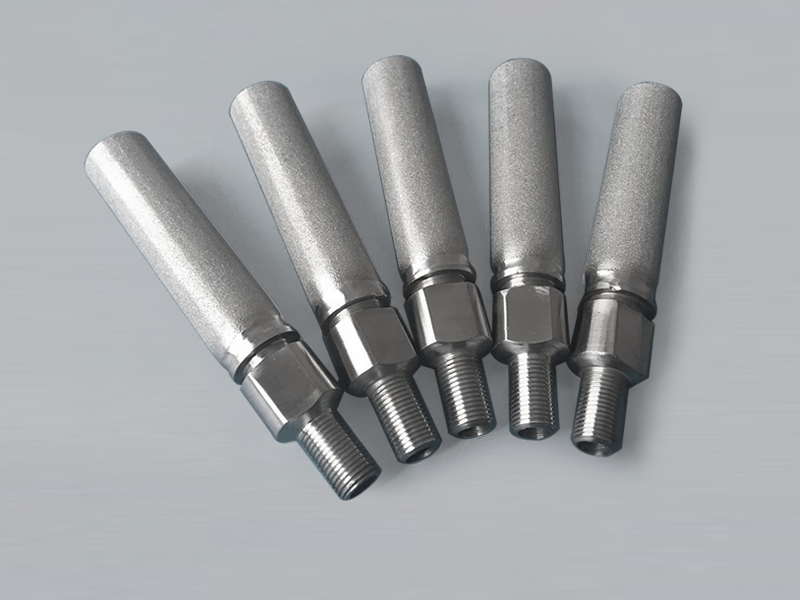
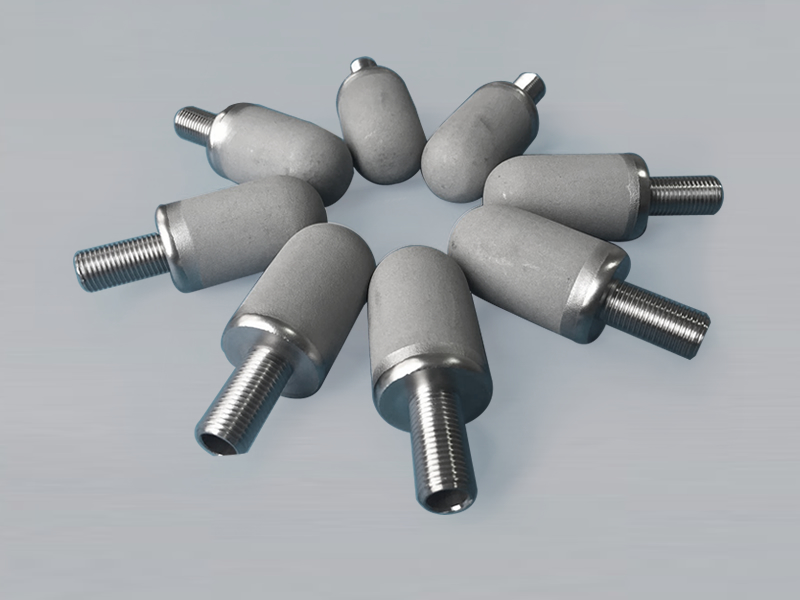
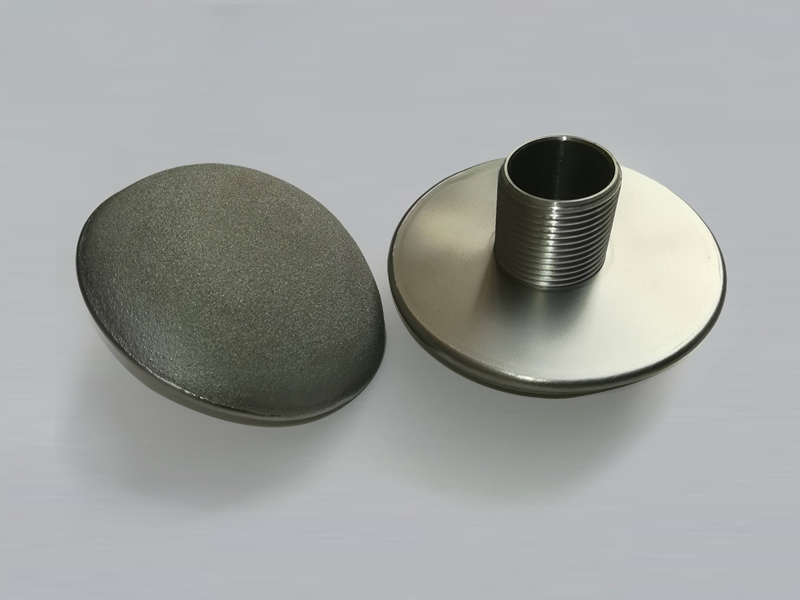
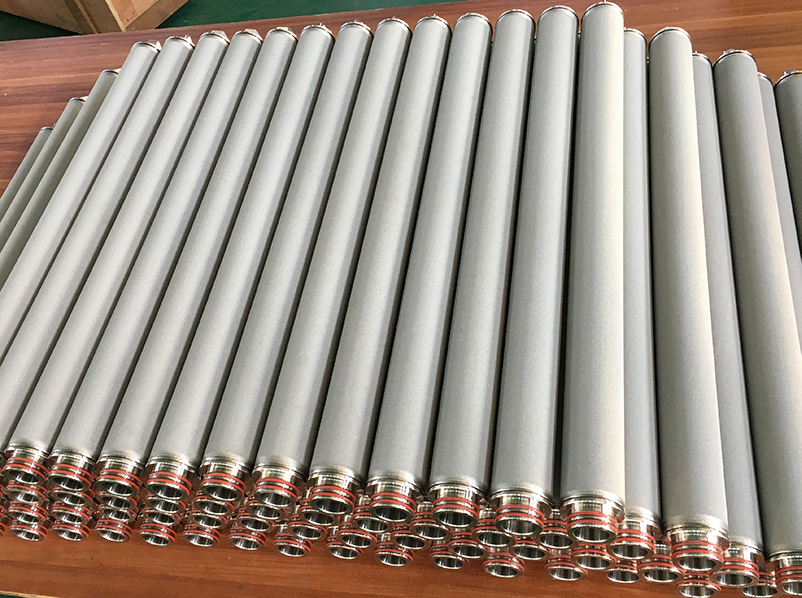
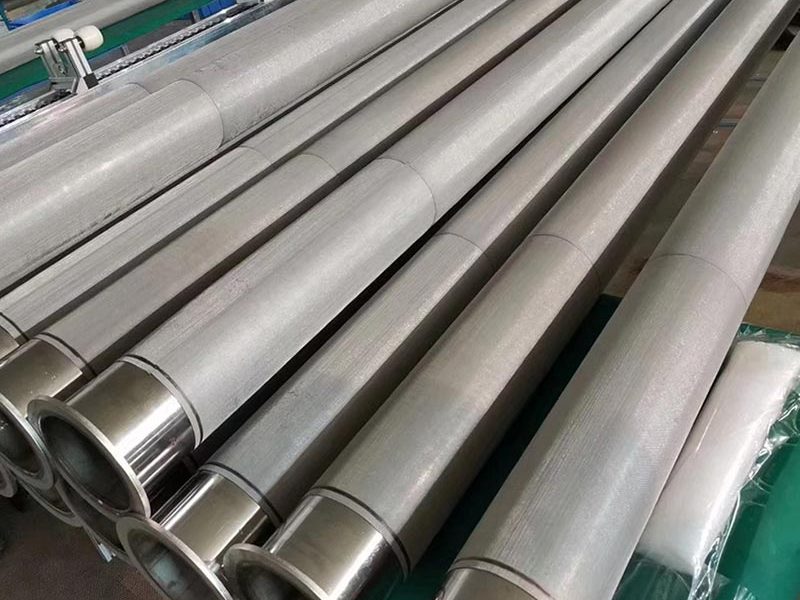
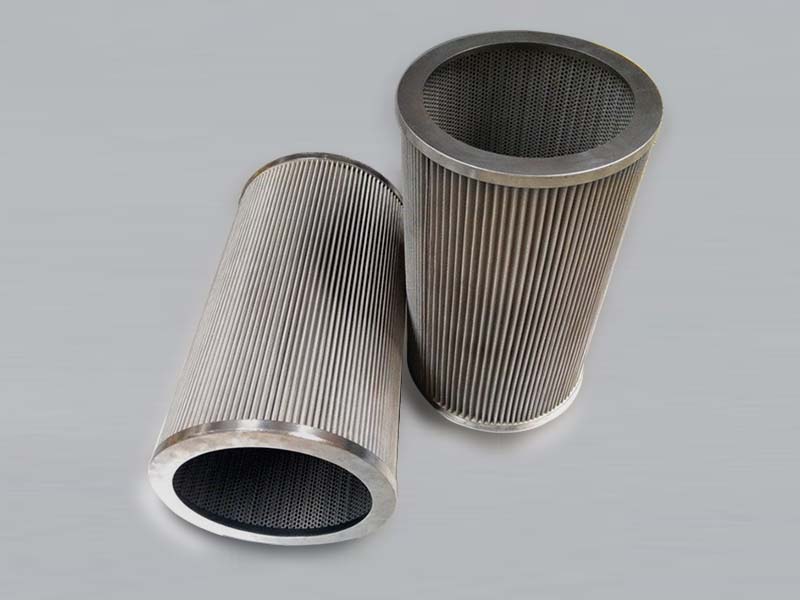
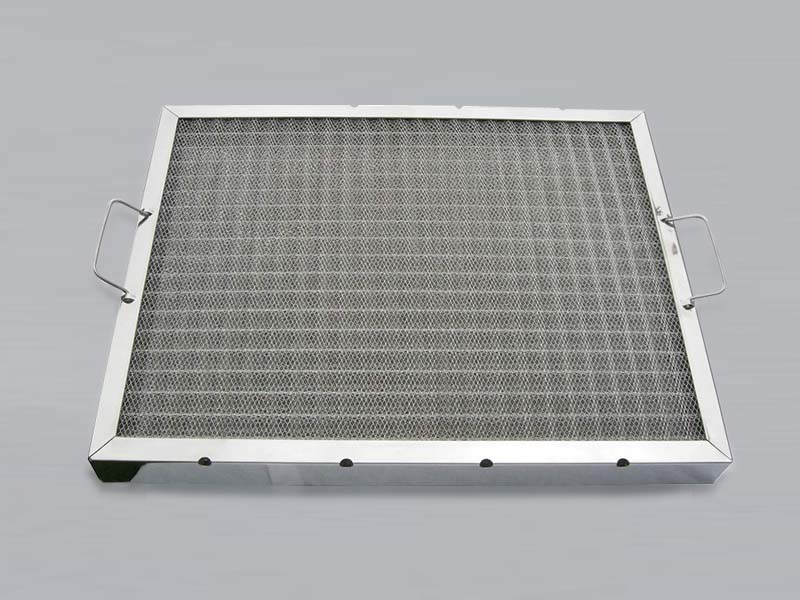
Filtalloy manufactures porous metal filters from sintered metal powder. Disc, cylindrical and custom forms can be specified for filtration or gas dispersion. Select the material, nominal filtration rating, porosity, dimensions and connection against the actual process conditions.
Our published nominal rating range across the materials below is 0.1–200 μm. Each material has its own available range; a nominal rating alone does not establish absolute retention, flow resistance or service life.
Materials and indicative specifications
Ranges below are supplied for initial selection. Final limits depend on medium, atmosphere, differential pressure, element geometry and connection design; values are not a universal continuous-duty guarantee.
Material
Nominal rating (μm)
Porosity
Temperature reference
316L stainless steel
0.1–100
30–45%
Confirm for the specific duty
Titanium TA1/TA2
0.2–100
28–50%
Below 280°C in air
Bronze
1–200
25–50%
−50 to 200°C
Monel 400
0.1–100
30–40%
500–540°C
Hastelloy C276
0.1–100
30–40%
450–650°C
Inconel 600/625
0.1–100
30–40%
600–800°C
Pure nickel
0.1–100
30–40%
600–800°C
2205 / 310S
1–50
30–40%
400–900°C
Temperature figures are material/product references, not a promise for every finished element. The supplied 316L temperature notation is ambiguous, so no single maximum is stated here.
Customer and workshop photographs
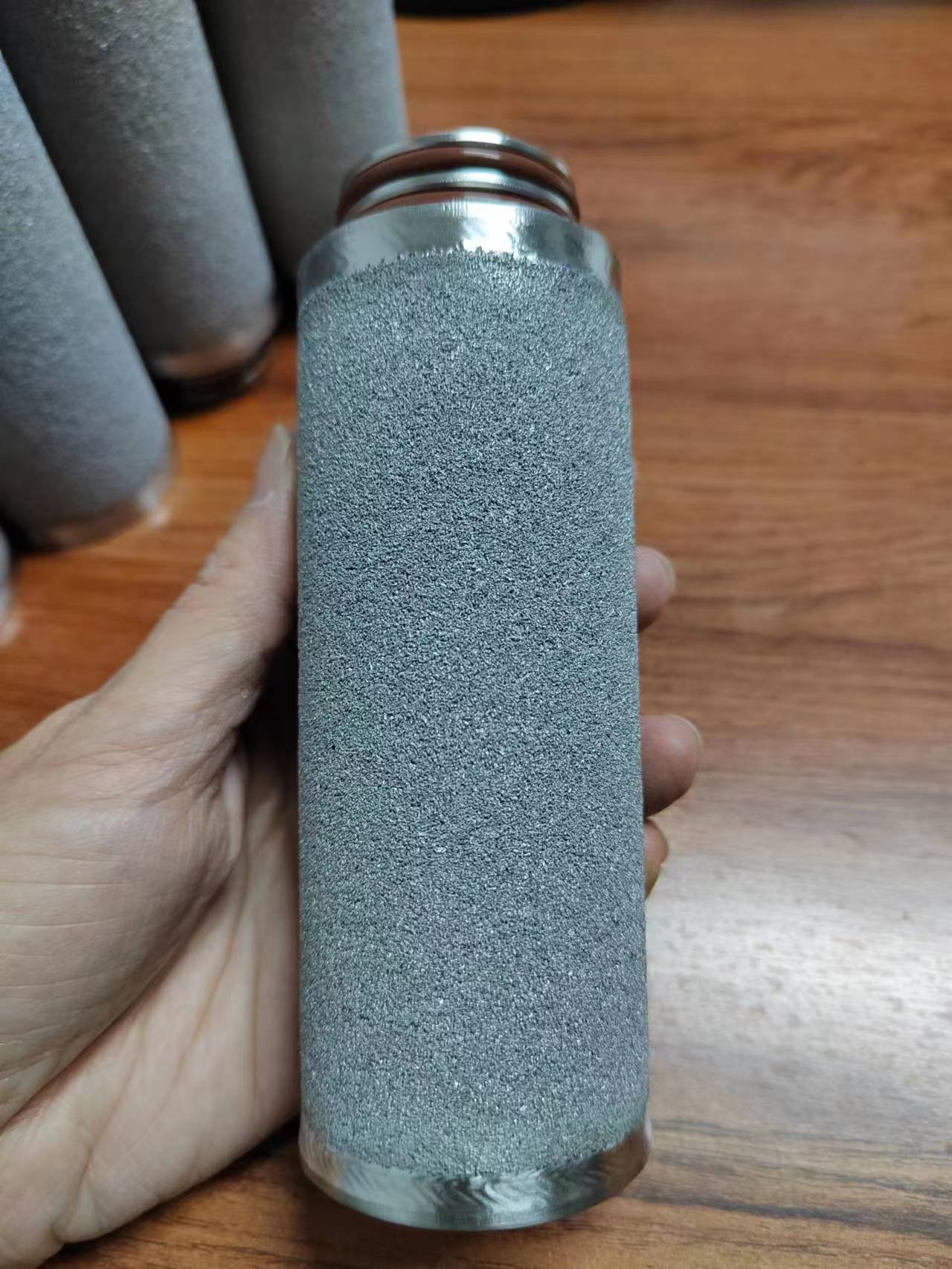
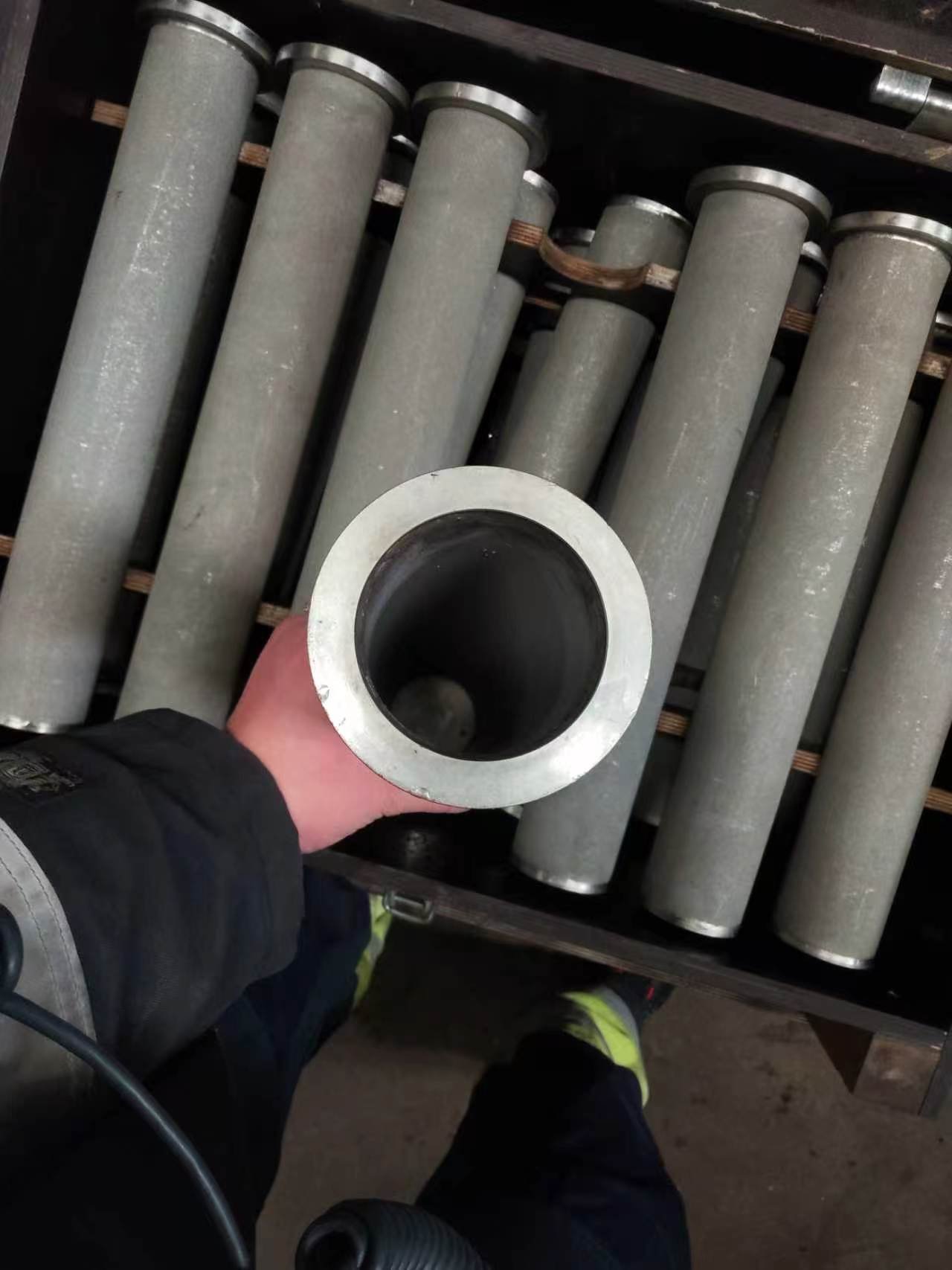
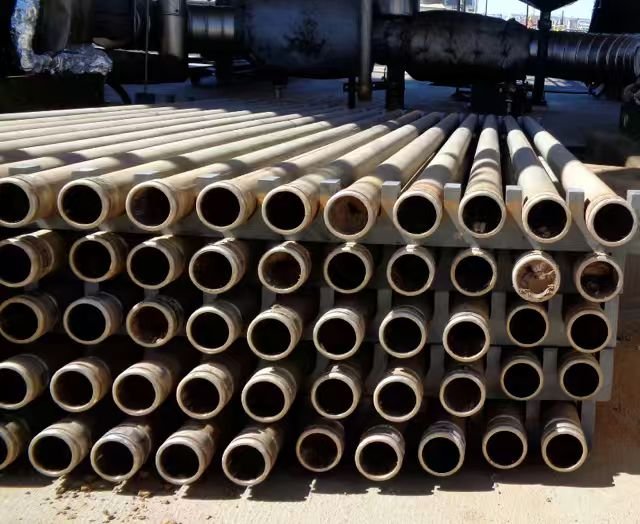
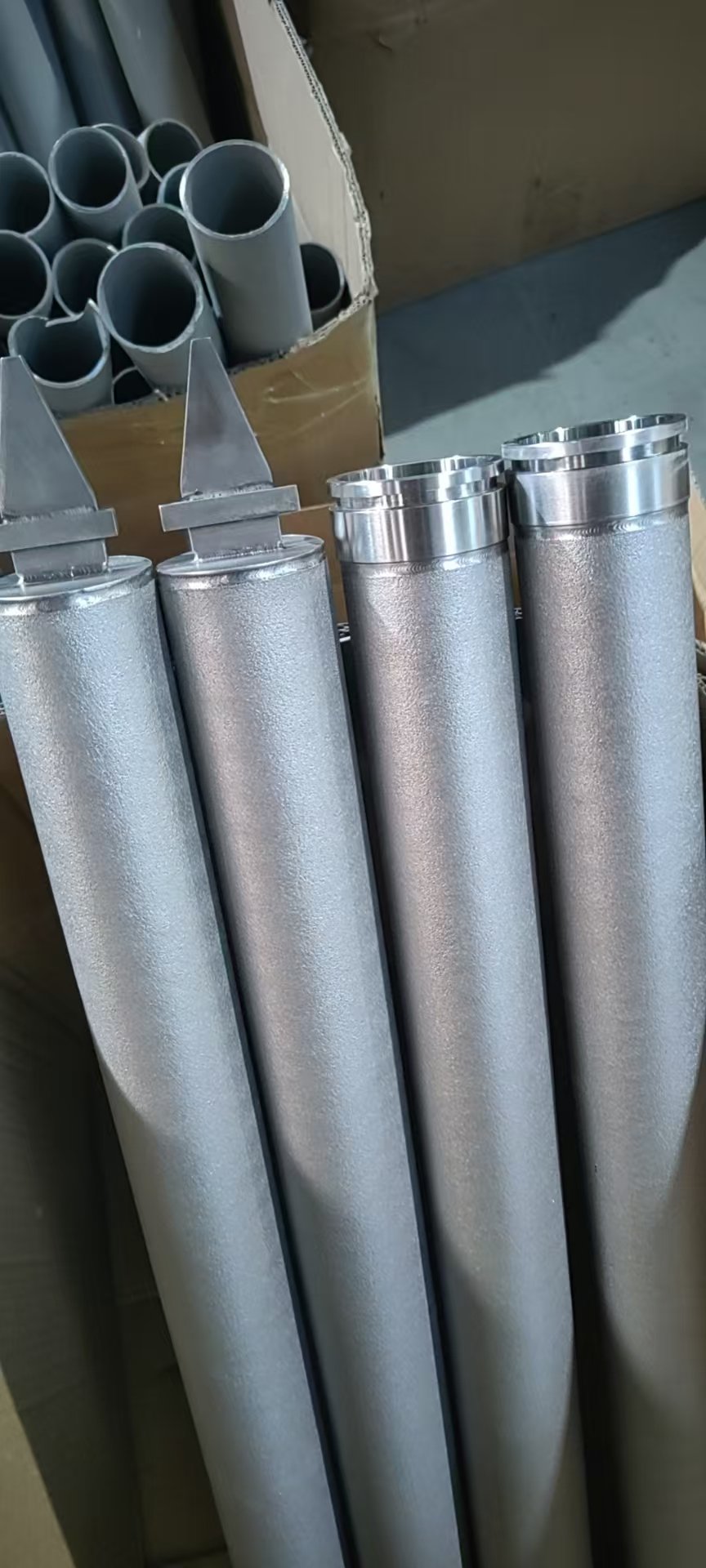
These photographs show actual cylindrical porous metal elements, their condition after use and examples of connection ends. They illustrate form and application context; exact material, nominal rating and service results are specified separately for each project.
Customer-returned element after use; the photo does not establish its rating or cleaning performance.
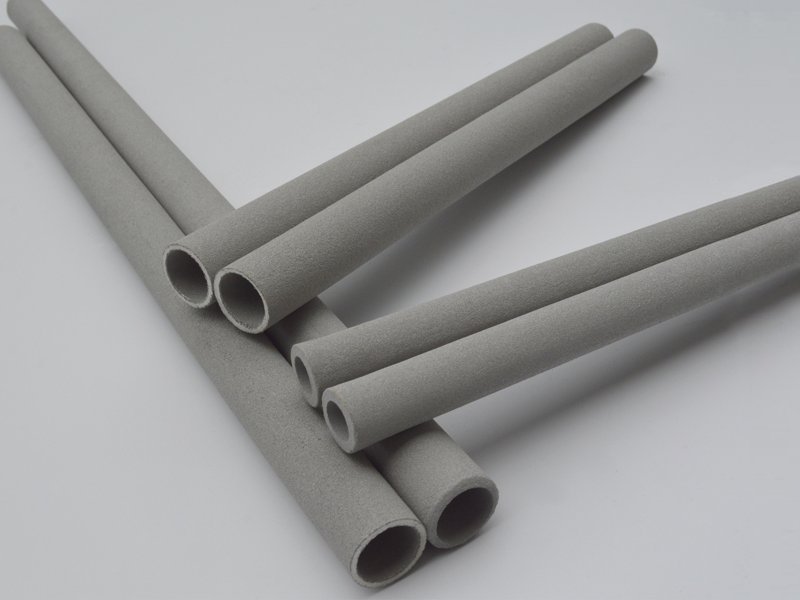
Porous metal tubes returned after service and awaiting cleaning assessment.
Examples of connector end forms on powder-sintered cylindrical elements.
Shapes and connection options
We can assess porous discs, cylinders, tubes, spargers and custom shapes from drawings or samples. Existing connection examples include M threads, 222, 226, 215 and DOE. Other connections can be customized. Specify mating dimensions, seal geometry, flow direction and installation constraints rather than relying on the connector name alone.
POF-1: Porous instrument filters with different connection types.
POF-2: Sintered porous spargers. Confirm medium compatibility and connection requirements for each project.
POF-3: Stainless steel porous filters for a solvent-handling application.
POF-4: Titanium porous aerators for a wastewater application.
POF-5: Titanium porous aerators for gas dispersion.
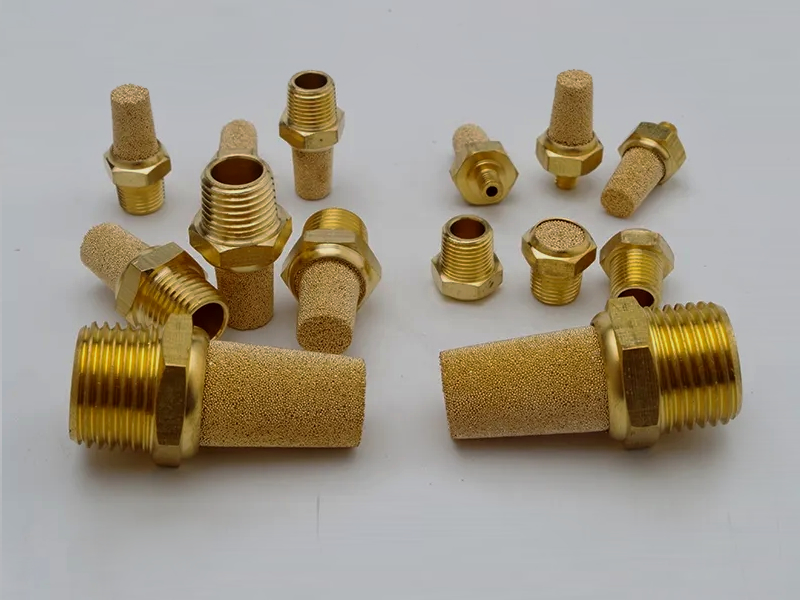
POF-6: Sintered bronze silencers in several shapes and sizes.
POF-7: Porous metal filters without adapters.
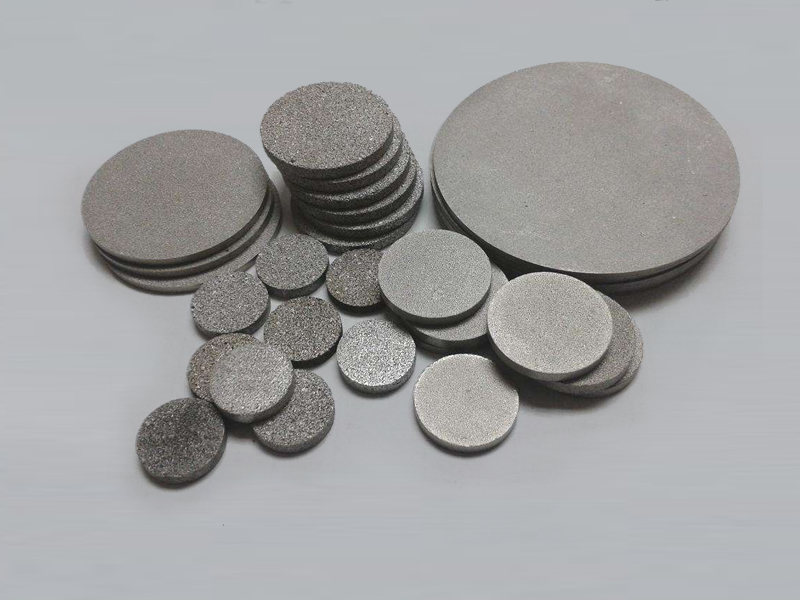
POF-8: Thin 316L porous metal filter discs.
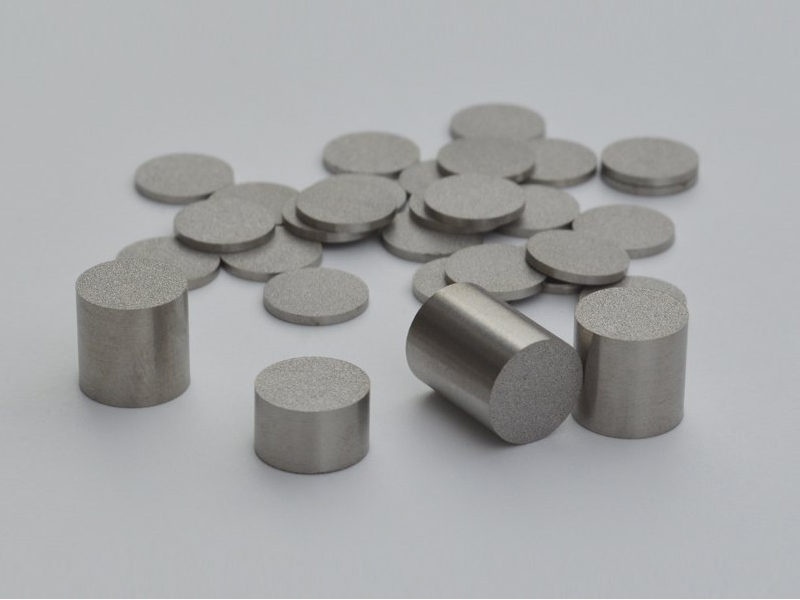
POF-9: Thick porous metal filter elements; confirm the required duty for the specific design.
Applications and operating conditions
Discuss gas and steam particle filtration, liquid filtration, catalyst retention, and gas dispersion against the actual medium and duty. Chemical compatibility, flow, allowable pressure drop, temperature, cleaning cycle and applicable contact requirements must be checked for each project. A photograph illustrates a product form; it does not certify a material, rating or performance figure for every element.
From process conditions to a manufacturable element
Send the process medium and atmosphere; normal and peak temperature; operating pressure and flow; particle target or dispersion goal; nominal rating; allowable pressure drop; drawing or sample with dimensions and connection; cleaning method and quantity. We review material, powder-sintered structure, geometry and inspection requirements before confirming a specification.
Inspection may cover dimensions, surface condition, connections and agreed performance tests. Any flow or retention value must include the test medium and test conditions. Some designs can be cleaned and reused; the method and recovery depend on the contaminant and structure.
Frequently asked questions
Does 0.1–200 μm apply to every material?
No. It is the combined nominal range across the materials listed above. Check the range for the chosen material and confirm the finished design.
Does a nominal micron rating guarantee an absolute removal efficiency?
No. Define a test method and particle challenge if a specific retention efficiency is required.
Can I use the listed temperature as a continuous operating limit?
Not without reviewing the process atmosphere, medium, pressure, element geometry and connection.
Can a nonstandard connector be made?
Yes, subject to drawing review, mating dimensions and manufacturability.
Can the element be cleaned?
Some designs can be cleaned and reused. Confirm the contaminant and cleaning process for the specific element.
Discuss Your Filter Requirements
Share your medium, temperature, target nominal rating, flow, allowable pressure drop, dimensions and connector drawing or sample. We will review a suitable material and element structure.