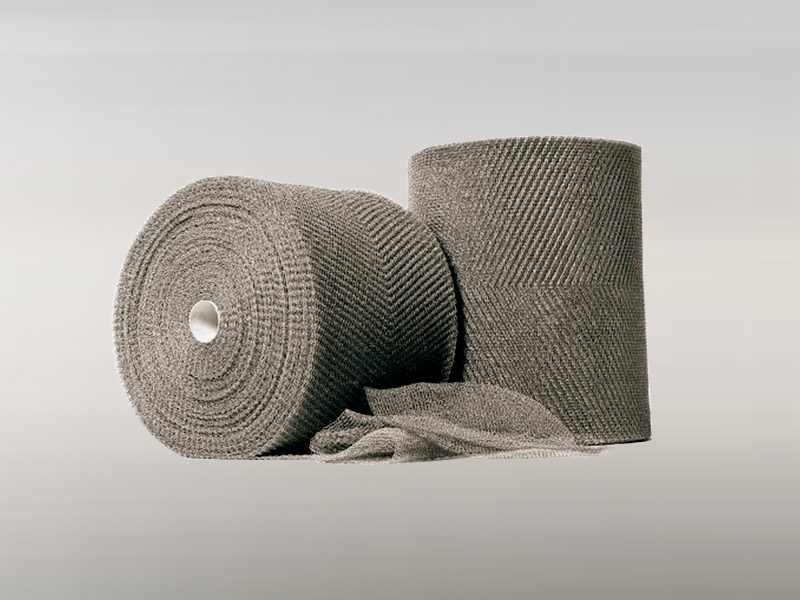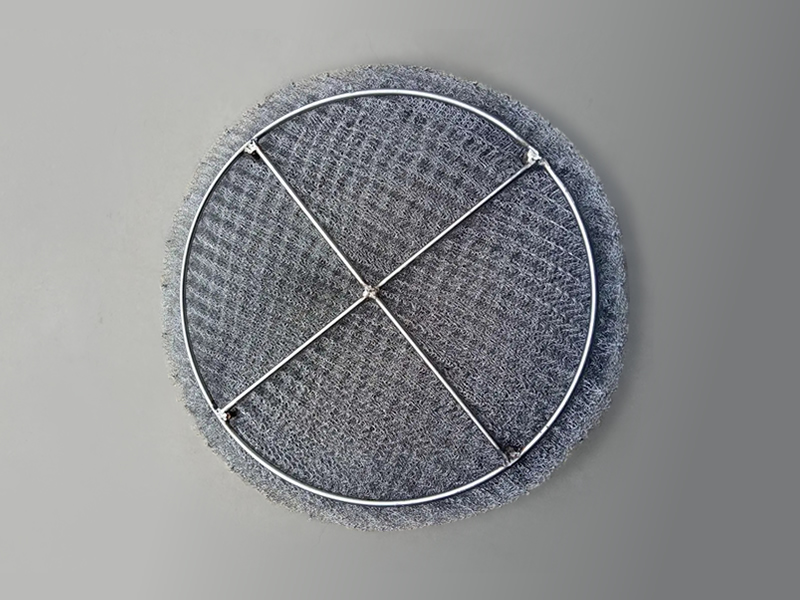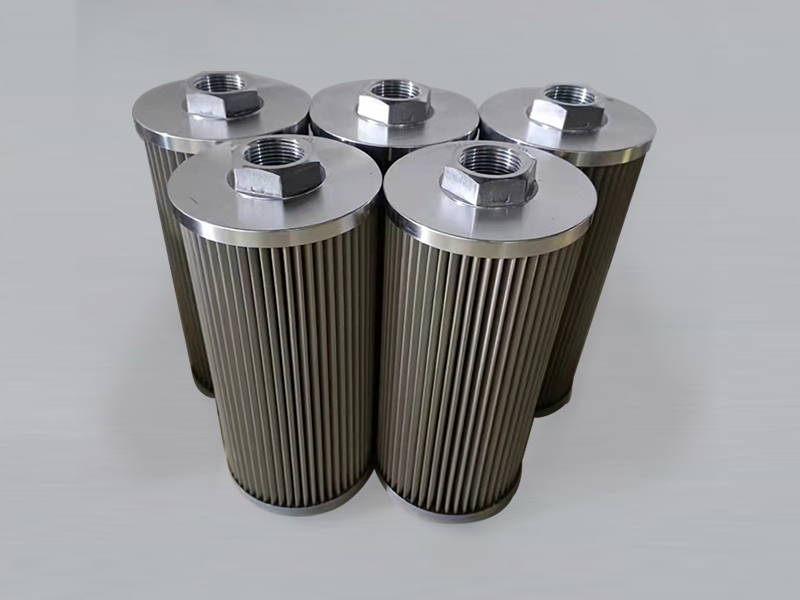
Filtalloy manufactures stainless steel filter leaves for vertical and horizontal pressure leaf filters. Each element combines filtration mesh, support and drainage layers, a frame and a filtrate connection.
Send a leaf drawing or sample photos with the required quantity. We review the element shape, mesh construction, outlet and fit within your equipment; this page covers the replaceable leaves.
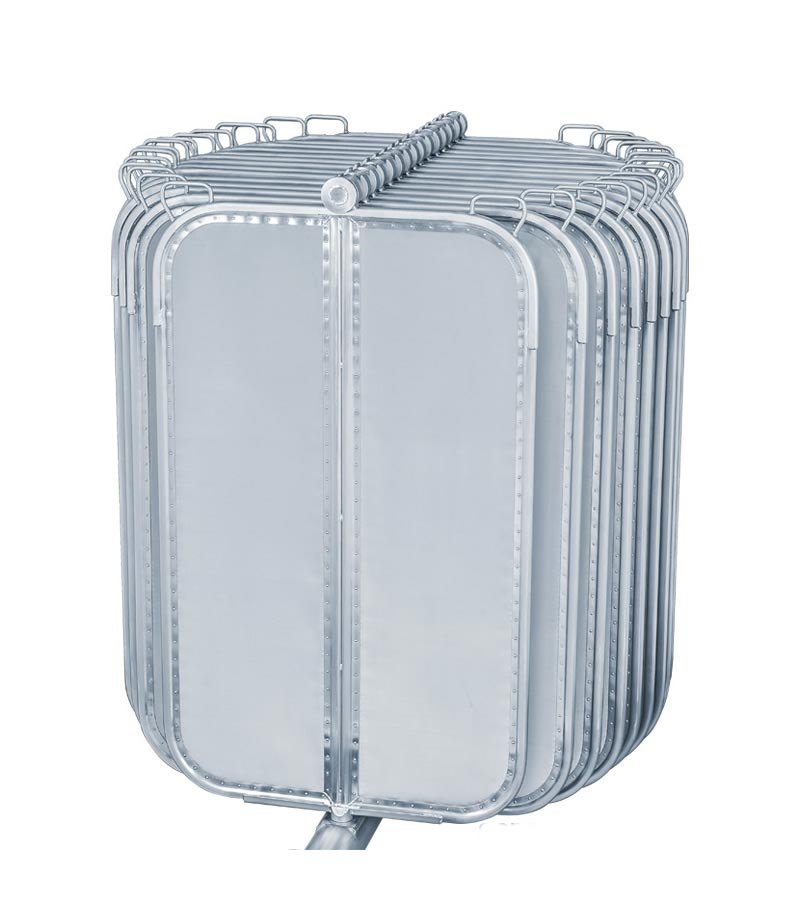
The views below show product forms and construction details. Send the drawing or existing specification for the configuration you need.


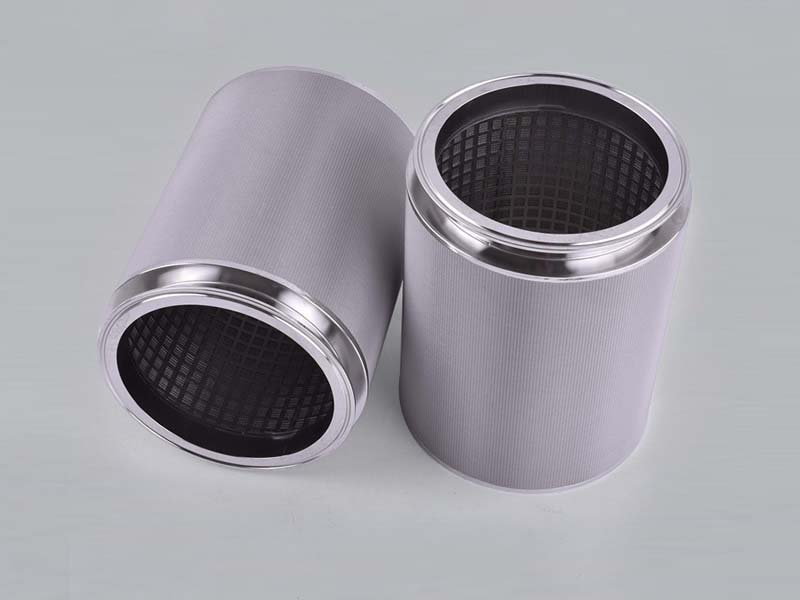
The existing product examples below show different filter leaf elements and their equipment arrangements. Shape and connection details depend on the vessel layout and the required filtration duty.
When specifying a replacement for a vertical pressure leaf filter, provide the leaf dimensions, filtrate outlet, support or mounting details, spacing and available installation clearance. Check that the new elements fit the existing manifold and sealing arrangement.
For a horizontal pressure leaf filter, match the filter leaf shape, connection position and spacing to the equipment drawings. Access for removal, cake discharge and cleaning should be considered with the complete leaf assembly.
Short replacement record
| Record | Information to retain |
|---|---|
| Outlet and datum | Use the named frame/outlet datum to locate the connector, support and seal interfaces. |
| Assembly relation | Retain leaf position/quantity, spacing and the corresponding equipment drawing; an individual leaf outline does not define the whole arrangement. |
| Missing details | Use existing approved drawing values directly; identify only missing dimensions, tolerances or mating information for review. |
The standard construction shown here uses five layers of woven metal mesh: two outer filtration screens, two middle support layers and one inner drainage layer. The layers are assembled with a frame and riveted joints. The outer mesh, support arrangement, frame and outlet connection must work together.
For a replacement filter leaf, match the overall dimensions, outlet position, sealing arrangement and mounting features to the existing equipment. Changes to mesh or structure should be reviewed against the operating differential pressure and cleaning cycle.
| Layer | Mesh designation | Weave | Wire diameter (mm) | Opening / grade reference (mm) |
|---|---|---|---|---|
| 1 inner drainage layer | 4 mesh/inch | Plain weave | 1.6 | 4.75 |
| 2 middle support layers | 8 mesh/inch | Plain weave | 0.75 | 2.47 |
| 2 outer filtration layers: option 1 | 60 mesh/inch | Plain weave | 0.18 | 0.24 |
| 2 outer filtration layers: option 2 | 24 × 110 | Plain Dutch weave | 0.36 × 0.26 | 0.15 |
| 2 outer filtration layers: option 3 | PZ80 | Reverse Dutch weave | 0.2 × 0.4 | 0.08 |
The outer filtration rows are alternative mesh choices, not additional layers. These are the existing page’s mesh construction references. The previously listed filtration-media range is 80–300 μm; this is not a flow-rate unit or a verified absolute particle-retention rating. Confirm the required mesh grade and filtration performance for the specific process.
Useful design information includes:
For an existing installation, identify what needs to change: damaged mesh, loss of sealing, deformation, reduced flow or a different process requirement. This helps separate an element replacement from a change to the filtration process.
In pressure leaf filtration, process liquid passes through the outer filtration surfaces and into the internal drainage structure before leaving through the filtrate connection. Solids remain on the outer surfaces. Where the process uses a precoat or filter aid, the resulting cake also contributes to separation.
Mesh selection should therefore consider the liquid, solids, filtration objective and operating cycle together. A mesh opening alone does not establish the final process retention performance.
Use the cleaning procedure approved for the process and the equipment. Compatibility of the cleaning medium with the mesh, frame, seals and retained material should be reviewed before cleaning.
Inspect the filtration screens, frame, joints, outlets and seals after cleaning. Mesh damage, deformation or an incomplete seal can allow bypass even when the selected mesh grade is correct. Online cleaning and cake discharge must follow the equipment’s operating procedure.
A filter leaf is the internal filtration element. A pressure leaf filter is the complete equipment containing the vessel, leaves, manifold and associated operating components. This page focuses on the filter leaves and their fit within that equipment.
No. In the standard structure shown here, the two outer layers perform filtration. The two middle layers provide support, and the inner layer provides drainage. The complete structure must be selected as an assembly.
No. Plain-weave openings, Dutch-weave grades and final process retention describe different things. Solids characteristics, precoat, filter aid, cake formation and the operating cycle can affect separation. State the required retention performance separately from the mesh designation.
Send your drawings, photographs or an existing sample for review. The key details include the outer dimensions, frame, mesh construction, outlet connection, mounting and sealing arrangement. Process conditions are also needed when reviewing changes to the original specification.
Compatibility depends on the equipment layout, dimensions, connections, support and discharge arrangement. A leaf designed for one installation should not be assumed to fit another without checking these details.
Provide the process liquid, catalyst particle-size information, solids loading, required recovery or filtrate quality, temperature and differential pressure. These details help determine whether the proposed mesh and process arrangement can meet the separation objective.
Send the drawing or existing specification you have, together with the quantity and the parts you need. Sample photos and main dimensions are a useful starting point when a drawing is unavailable.
If you are still defining the product, briefly describe its intended use. We will clarify the additional manufacturing and inspection details with you.
Products
Resources
Contact us
Location:
Hi-Tech Industrial Zone, Hengshui,
Hebei, China, 053000
Contact:
+86 133 1308 7837
Email: info@alloyfilter.com
COPYRIGHT © 2026 FILTALLOY TECHNOLOGY LIMITED