
Extruder Screens & Screen Packs
An extruder screen is a metal mesh filter used to remove solid contamination from molten polymer before downstream processing. A screen pack combines filtering and support layers to suit the melt, equipment and cleanliness requirement.
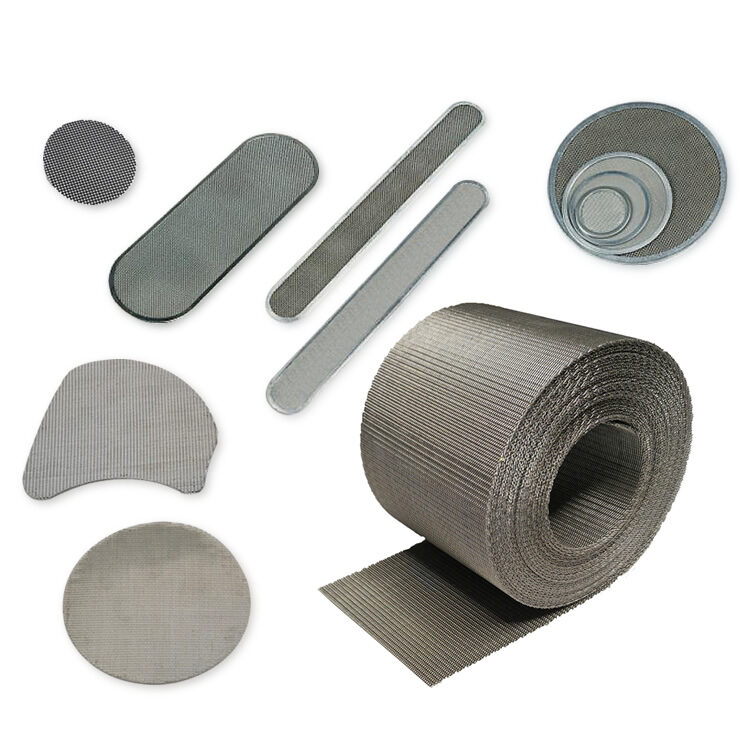
Filtalloy manufactures single-layer screens, multi-layer packs, rimmed and spot-welded discs, pleated screens, custom shapes and reverse Dutch weave belts for continuous filtration. Products are made to operating requirements, drawings or existing samples.
Extruder Screen Sizes, Materials and Edge Options
- Round disc diameter: 20–900 mm. Other dimensions and shapes are made to drawing.
- Single layers and screen packs with typically 2–5 layers.
- Round, kidney-shaped, oval, rectangular, ring-shaped and other custom profiles.
- Cut edges, peripheral spot welding or rimmed packs with aluminum or stainless steel frames; other frame materials are selected to the drawing and service.
- Optional locating tabs, with position and dimensions specified for the screen changer or breaker plate.
Standard mesh materials include 304, 316 and 316L stainless steel. Other available grades include 321, 904L, duplex 2205 / 2507, Hastelloy C-276 and Monel 400. Carbon steel can be supplied for suitable lower-cost applications; copper or brass requires confirmation of compatibility.
Operating temperature is confirmed for the complete assembly, including mesh, frame, welds, polymer and cleaning process. A material temperature capability alone is not a screen-pack temperature rating.
Weave Types and Nominal Filtration Rating
Available woven media include plain weave, twill weave, Dutch weave and reverse Dutch weave (RDW). Reverse Dutch weave is available for continuous filtration belts and applications requiring suitable mechanical stability. Sintered mesh can be incorporated as a layer for selected higher-demand constructions.
Common mesh counts include 20–500 mesh, depending on the weave and wire specification. For square-opening mesh, theoretical aperture depends on mesh count and wire diameter. Dutch weave and RDW micron values are nominal ratings for the specified mesh, not a direct conversion from one mesh-count number.
Nominal filtration ratings are not absolute ratings established by ISO 16889 beta-ratio testing. Provide the weave, wire dimensions and rating requirement for each layer rather than specifying a micron value alone.
Polymer Melt Filtration Applications
- PP, PE, PET, PA and PC processing, subject to the selected mesh and operating conditions.
- Masterbatch and recycled plastic, including post-consumer recycled (PCR) feed.
- Rubber compounds and compatible coating melts.
- Blown film and BOPP film processing.
- Polymer fiber, yarn and monofilament production.
- Spunbond and other polymer nonwoven production.
Multi-Layer Screen Packs and Breaker Plate Support
Single-layer screens can serve suitable low-contamination duties. Multi-layer gradient packs are available for recycled feed or applications requiring staged filtration and additional support. Pleated constructions increase filtering area where compatible with the equipment.
Illustrative layer order, in melt-flow direction: coarse 20/40 mesh layer → intermediate 60–80 mesh layer → fine 120–200 mesh layer → downstream 20–40 mesh support. The actual sequence and wire specifications must be agreed for the polymer, flow and breaker plate.
Coarser layers help support the fine mesh and reduce deformation. They do not guarantee against rupture. Spot welding helps retain the agreed layer order; rimmed packs hold the layers and provide an installation interface. Bypass control also depends on edge dimensions, flatness and the equipment fit.
Differential Pressure and Screen Change Decisions
Increasing differential pressure can indicate contamination loading, but melt viscosity, temperature and throughput also affect resistance. Excessive differential pressure can push fine mesh into breaker-plate holes, leading to rupture and metal contamination.
Allowable differential pressure and the change-screen threshold are confirmed for screen diameter, layers, weave, wire dimensions, support geometry, polymer and temperature. There is no universal pressure limit for all screen packs. Follow the agreed equipment limits and change the screen before the approved threshold is exceeded.
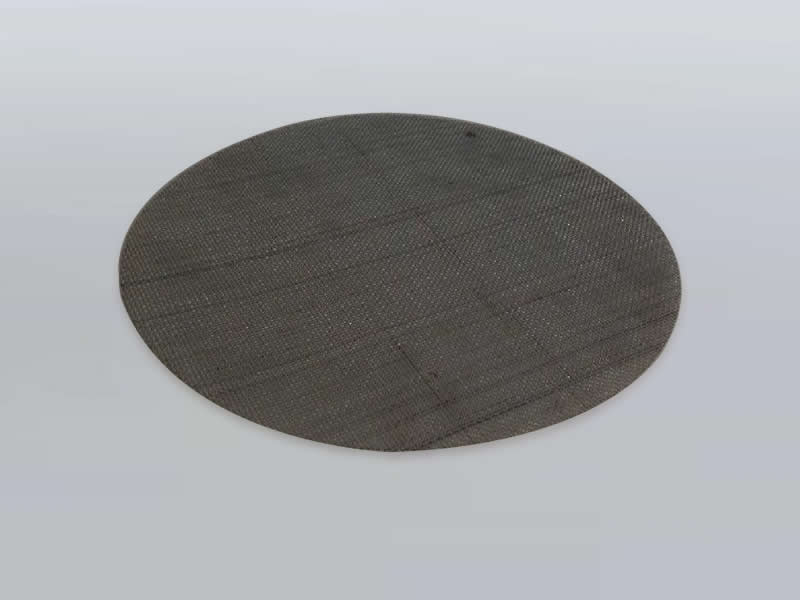
EXS-1: Single-layer mild steel plain weave extruder screen
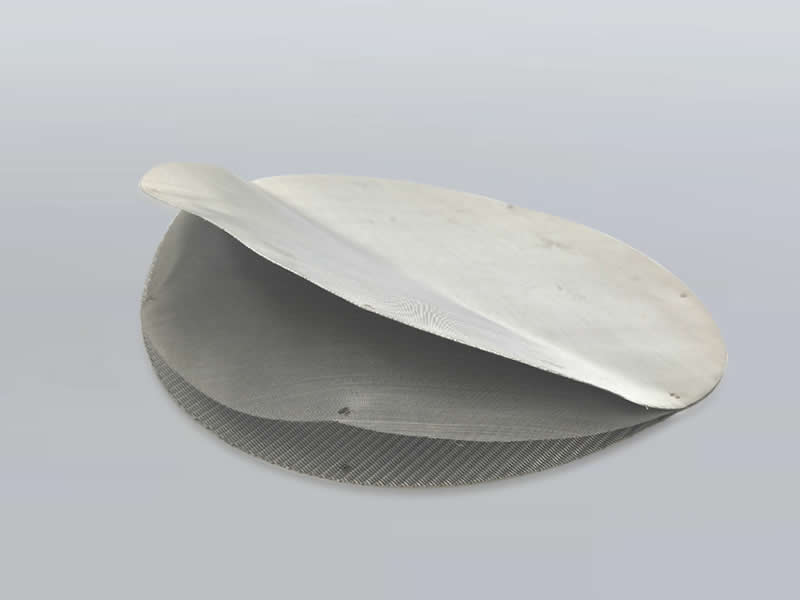
EXS-2: Multi-layer stainless steel extruder screen packs
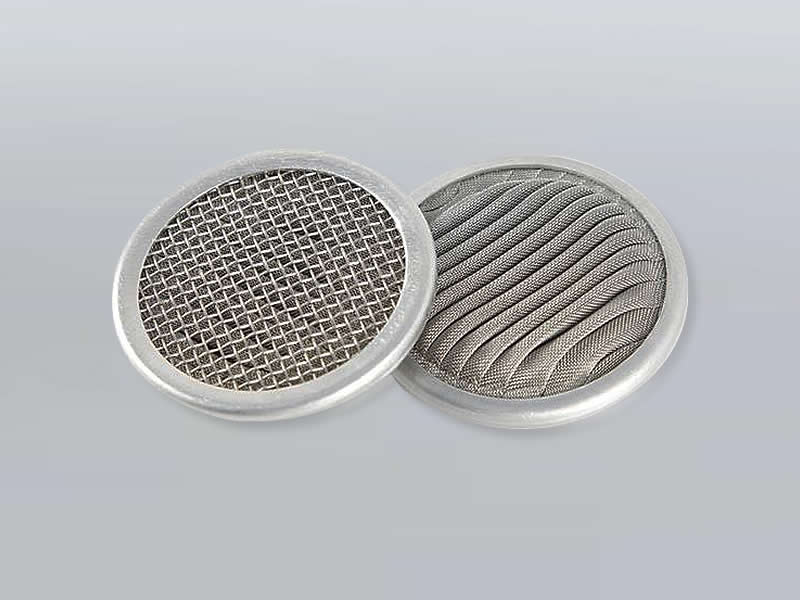
EXS-3: Pleated stainless steel extruder screen disc with rim.
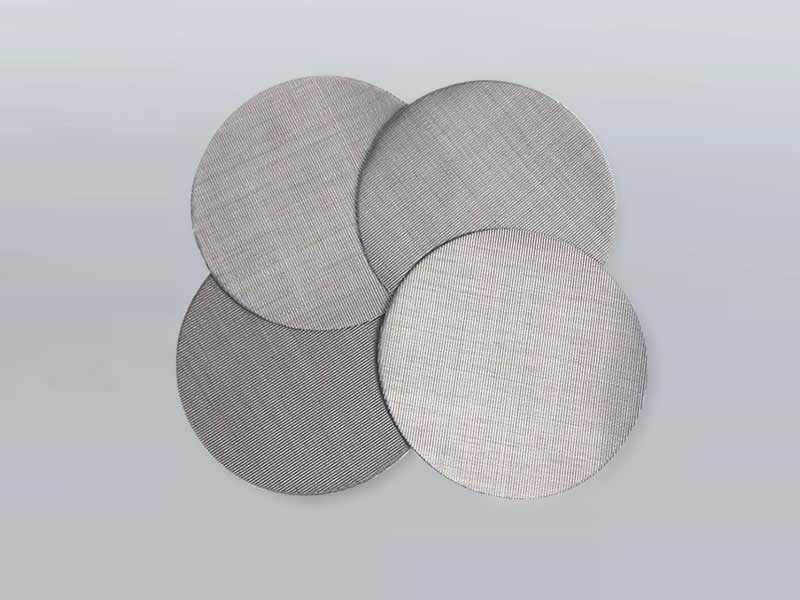
EXS-4: Dutch weave SS round filter disc in single layer

EXS-5: Single layer kidney-shaped extruder screen for blown film process
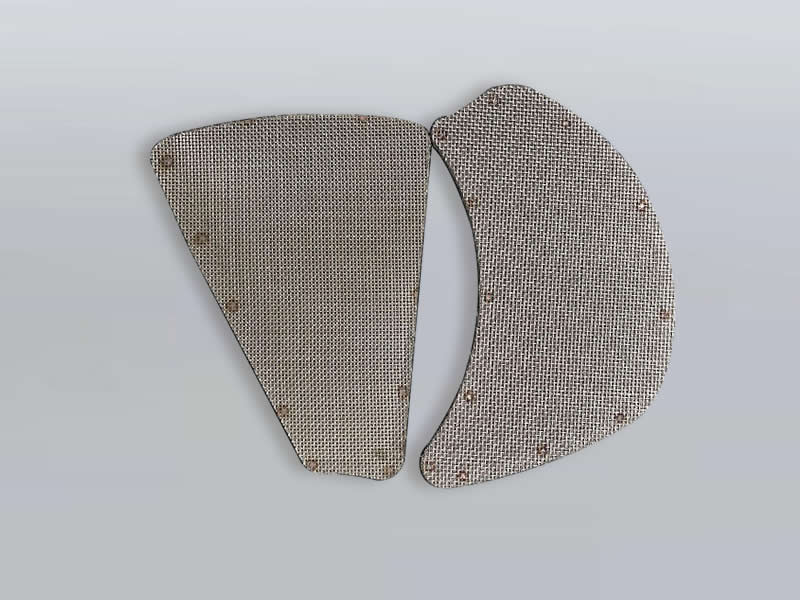
EXS-6: Multi-layer extruder screen packs of kidney-shape

EXS-7: Spot welded extruder screen with support rings on both sides
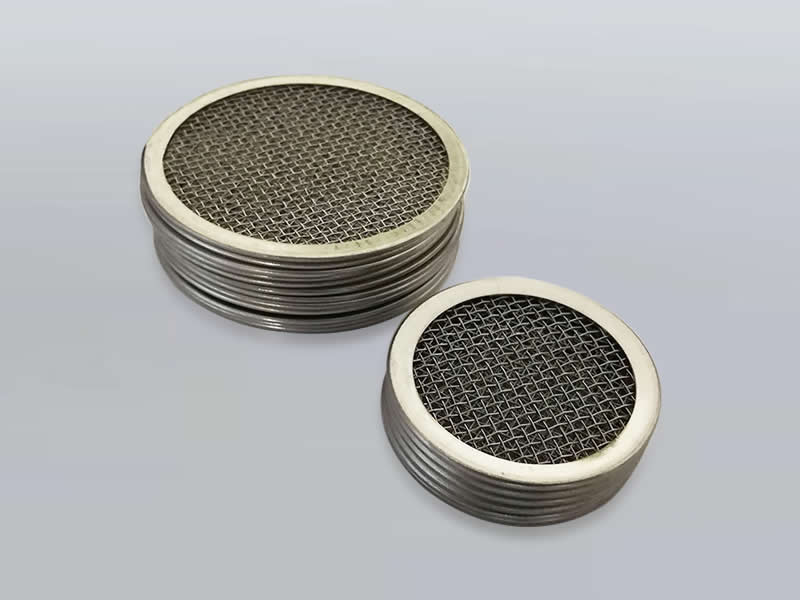
EXS-8: Filter discs with outer metal frame

EXS-9: Extruder screen with center installation hole

EXS-10: Metal framed extruder screen in ring shape

EXS-11: Metal framed filter disc in square shape
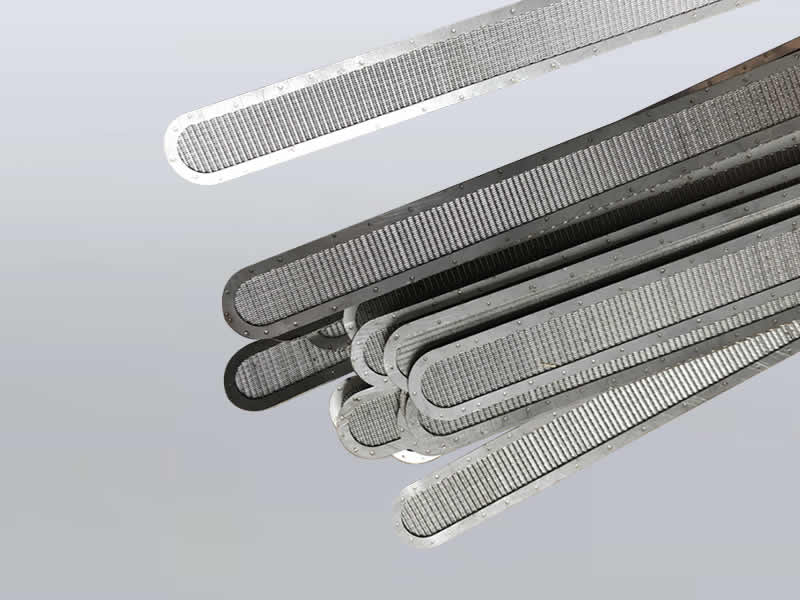
EXS-12: Framed spin-pack screens for polymer fiber and nonwoven production.

EXS-13: Pleated extruder screen in special shapes can be customized

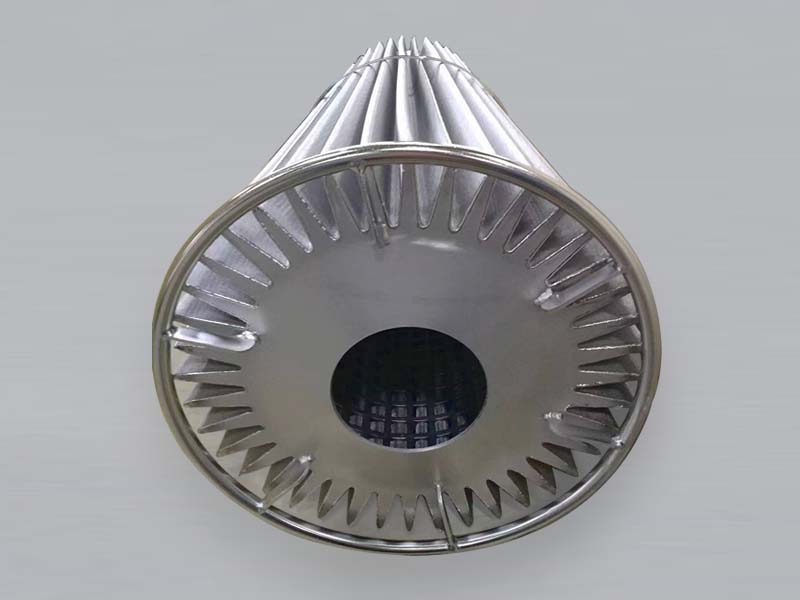
EXS-14: Related product — polymer filter candles for melt filtration. Select the image to view polymer filter elements.
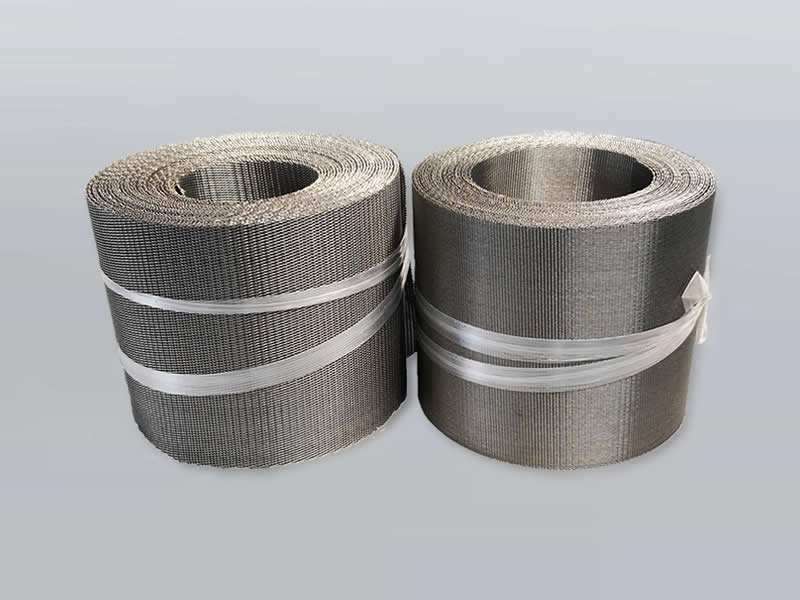
EXS-15: Reverse Dutch weave mesh belts for compatible continuous melt filtration equipment.
| Specification of Filter Mesh Belt (EXS-15 Reversed dutch weave filter belts) | |||||||
| Code | Mesh Count | Wire Diameter | Filtration | Width | Length per Roll | ||
| Warp | Weft | Warp(mm) | Weft(mm) | (um) | (mm) | (m) | |
| EXS15-048010 | 48 | 10 | 0.5 | 0.05 | 400 | 97-400 | 10/20 |
| EXS15-072015 | 72 | 15 | 0.45 | 0.55 | 250 | 97-400 | 10/20 |
| EXS15-132014 | 132 | 14 | 0.355 | 0.45 | 250 | 97-400 | 10/20 |
| EXS15-132018 | 132 | 18 | 0.355 | 0.45 | 200 | 97-400 | 10/20 |
| EXS15-152024 | 152 | 24 | 0.27 | 0.4 | 130 | 97-400 | 10/20 |
| EXS15-260040 | 260 | 40 | 0.15 | 0.25 | 75 | 97-400 | 10/20 |
| EXS15-320040 | 320 | 40 | 0.15 | 0.3 | 55 | 97-400 | 10/20 |
| EXS15-400120 | 400 | 120 | 0.06 | 0.1 | 60 | 97-400 | 10/20 |
| STANDARD EXTRUDER SCREEN SPECIFICATION - WOVEN MESH LAYERS | ||||||
| Code | MESH | WIRE DIA. MM | WIRE DIA. INCH | APERTURE SIZE MM | APERTURE SIZE INCH | OPEN AREA % |
| EXS-PW010071 | 10 X 10 | 0.711 | 0.028 | 1.829 | 0.072 | 51.8 |
| EXS-PW014046 | 14 X 14 | 0.457 | 0.018 | 1.357 | 0.053 | 55.9 |
| EXS-PW016046 | 16 X 16 | 0.457 | 0.018 | 1.131 | 0.045 | 50.7 |
| EXS-PW020056 | 20 X 20 | 0.559 | 0.022 | 0.711 | 0.028 | 31.4 |
| EXS-PW020048 | 20 X 20 | 0.457 | 0.018 | 0.813 | 0.032 | 41 |
| EXS-PW024038 | 24 X 24 | 0.376 | 0.015 | 0.682 | 0.027 | 41.4 |
| EXS-PW030038 | 30 X 30 | 0.376 | 0.015 | 0.531 | 0.021 | 34.2 |
| EXS-PW030031 | 30 X 30 | 0.31 | 0.012 | 0.536 | 0.021 | 40 |
| EXS-PW040027 | 40 X 40 | 0.274 | 0.011 | 0.361 | 0.014 | 32.3 |
| EXS-PW050019 | 50 X 50 | 0.193 | 0.008 | 0.335 | 0.013 | 43.6 |
| EXS-PW060019 | 60 X 60 | 0.193 | 0.008 | 0.23 | 0.009 | 29.8 |
| EXS-PW080012 | 80 X 80 | 0.122 | 0.005 | 0.196 | 0.008 | 37.9 |
| EXS-PW100010 | 100 X 100 | 0.102 | 0.004 | 0.152 | 0.006 | 36 |
| EXS-PW120009 | 120 X 120 | 0.091 | 0.004 | 0.12 | 0.005 | 31.8 |
| EXS-PW150007 | 150 X 150 | 0.071 | 0.003 | 0.088 | 0.003 | 29.6 |
| EXS-PW200005 | 200 X 200 | 0.05 | 0.002 | 380.077 | 0.003 | 36.76 |
| EXS-PW250004 | 250 X 250 | 0.04 | 0.002 | 0.062 | 0.002 | 36.76 |
| EXS-TW300040 | 300 X 300 | 0.04 | 0.002 | 0.045 | 0.002 | 27.83 |
| EXS-TW325035 | 325 X 325 | 0.035 | 0.001 | 0.043 | 0.002 | 30.49 |
| EXS-TW400028 | 400 X 400 | 0.028 | 0.001 | 0.036 | 0.001 | 31.25 |
| EXS-TW500025 | 500 X 500 | 0.025 | 0.001 | 0.026 | 0.001 | 25.79 |
Cleaning, Reuse and Service Life
Screen packs may be cleaned where their construction and condition permit. Controlled thermal or pyrolysis cleaning can remove polymer residues, followed by a suitable cleaning process. Temperature, atmosphere and treatment time must suit the polymer, mesh, welds and frame. Abrasive blasting is not a default treatment for fine mesh.
Alkaline or ultrasonic cleaning requires confirmation of compatibility with every assembly material. After cleaning, inspect for wire deformation, broken mesh, damaged welds, frame distortion and residual contamination before reuse. Fine RDW mesh can deform after repeated cleaning; some high-contamination applications use packs once and replace them.
Service life depends on contamination, melt properties, throughput and the pressure limit. There is no fixed operating-hour or cleaning-cycle guarantee for every screen pack.
Manufacturing and Inspection
- Outside dimensions, thickness and locating-tab position against the approved drawing.
- Mesh wires, weave structure, number of layers and flow-direction layer order.
- Spot welds, rim appearance, burrs and edge flatness.
- Material identification against the agreed certificates.
- Optional bubble-point testing when agreed with the customer, with a specified procedure and acceptance criterion.
Tolerances are defined in the drawing or order. Bubble-point testing characterizes the wetted porous structure under the test conditions; it does not by itself validate melt filtration efficiency or establish a beta-ratio rating.
Extruder Screen and Screen Pack FAQ
What is the difference between an extruder screen and a screen pack?
A screen can be a single mesh layer. A pack combines specified filtering and support layers, commonly held by spot welds or a rim.
Does mesh count convert directly to microns?
No. Square-opening aperture also depends on wire diameter. Dutch weave and reverse Dutch weave require their own specified nominal rating.
Why should I specify each layer?
Layer order, weave, wire dimensions and material determine both filtration and support. A micron value alone does not define a replacement pack.
What causes a screen pack to fail under pressure?
Excessive differential pressure, inadequate support, incorrect layer order or poor equipment fit can contribute to deformation, bypass or rupture.
Can extruder screens be cleaned and reused?
Yes, where the assembly and condition allow it. Inspect after cleaning; replace damaged packs. High-contamination duties may favour single use.
Can you supply a replacement for an existing screen changer?
Yes. Provide a drawing or sample, layer specifications, equipment identification and breaker-plate details for compatibility review.
Discuss Your Extruder Screen Requirements
Custom development
Provide polymer type, feed contamination, throughput, melt temperature, target operating differential pressure and equipment support geometry. Include the required filtration result and change-screen strategy.
Made to drawing
Provide outside diameter, any inside diameter, thickness and a DXF or PDF for custom shapes. Specify each layer in flow order: mesh count, weave, wire dimensions, material and nominal rating. State cutting, spot-welding or rim requirements and locating-tab dimensions and position.
Made from a sample
Send an existing screen pack when drawings are unavailable. Include the extruder or screen-changer brand and model, breaker-plate identification or photos, and operating conditions so we can check replacement compatibility.
Related Products
Products
Discuss Your Filter Requirements
Share your layer specifications, drawing, sample or operating requirements.