
Custom Strainer Baskets, Cone and Plate Strainers
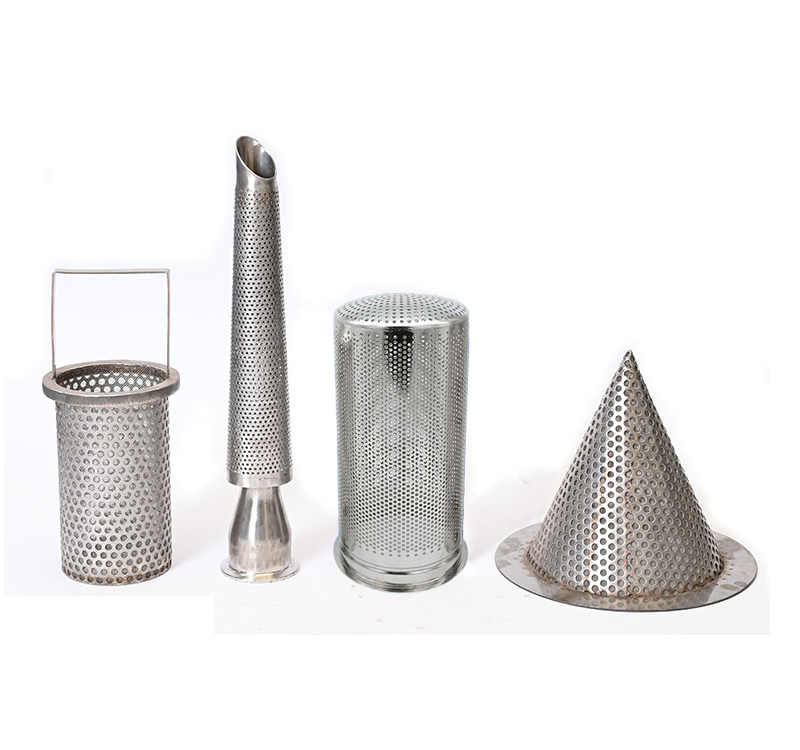
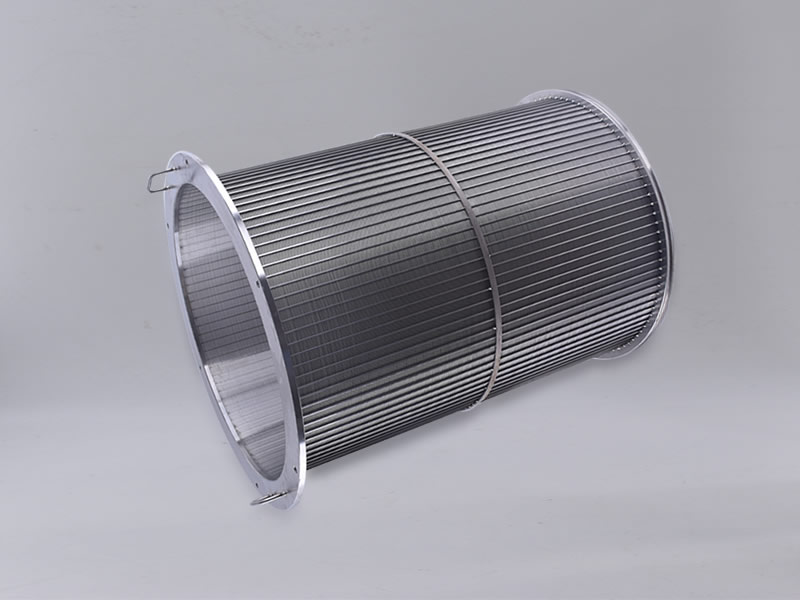
Filtalloy manufactures custom strainer baskets and cone or plate strainer elements for pipeline coarse filtration and downstream equipment protection. We supply the removable elements and replacement baskets, not complete pipeline strainer units with pressure housings.
Constructions include woven wire mesh, perforated metal and combinations of both. Select the openings, support, shape and installation details for the debris and operating conditions. These elements help intercept specified solids; they do not guarantee capture of every particle.
Temporary strainers and replacement baskets
Cone and plate strainers are supplied for system start-up and pipeline flushing to intercept debris such as weld slag, scale and sealant residues. Remove them after the flushing stage. They are not offered here for continuous operation.
Strainer baskets are supplied as replacement coarse-filter elements for ongoing service in a compatible housing. Suitable baskets can be cleaned and reused after inspection.
Construction options and operating limits
- Single-layer woven mesh, perforated metal or supported multilayer combinations.
- Flat, curved and slanted basket forms, with specified flanges and handles.
- Cone and plate forms for the agreed start-up or flushing duty.
- Custom support, sealing faces, fittings and installation geometry.
- Specified mesh direction and support arrangement for operating and cleaning flow.
No single pressure, differential-pressure, temperature or efficiency rating applies to all elements. Confirm system pressure, maximum allowable differential pressure, temperature, flow, viscosity, material, support and installation. Temporary service still requires a defined pressure and blockage limit.
Application media and industries
- Food and beverages: juice, beer, beverage and grain-processing duties, with material and contact requirements confirmed.
- Power generation: specified seawater and cooling-water assemblies.
- Oil and refining: injection water, cooling water and oil process streams.
- Gas and air: coarse particle interception in suitable assemblies.
- Mining: cooling-water systems and related coarse filtration.
- Irrigation: water screening to help protect pumps.
- Petrochemicals and hydraulics: oil and process-fluid coarse filtration.
- Steel production: process-water systems.
- Pulp and paper: cooling-water and specified seawater duties.
- Water treatment: wastewater process assemblies.
- Chemical processing: cooling water, wastewater and chemical liquids, with composition, concentration, temperature and alloy compatibility confirmed.
- Plastics: cooling-water and wastewater filtration; polymer-melt coarse interception or protection only where the structure and duty are suitable. For dedicated melt filtration, see our extruder screens and screen packs.
Industry examples do not certify every material or element for every medium. Housing suitability, pressure limits and process requirements remain part of the assembly specification.
Filter media, materials and connections
Ordinary woven wire mesh, perforated plate and combinations are available. Specify each layer’s mesh count or nominal rating, weave, material and sequence. A perforation opening or nominal mesh rating does not establish an absolute retention efficiency.
- Stainless steel 304, 316, 316L, 430 and 316Ti, with other grades by request
- Plain carbon steel and galvanized steel
- Nickel and titanium
- High-alloy options such as Inconel, Hastelloy and Monel families, with exact grade and availability confirmed
Flanges, handles, supports, flat sealing faces and sealing grooves can be customized to the drawing. Confirm the exact flange standard, size, facing and gasket interface.
Inside-to-outside and outside-to-inside flow can both be designed. For a woven-mesh lining, specify the operating and cleaning directions so the mesh is properly supported. For a cone, state whether its tip faces upstream or downstream.
Strainer baskets for ongoing coarse filtration
Replacement baskets can use woven mesh, perforated plate or both, with flat or curved bottoms, slanted openings and the illustrated handle arrangements. Geometry must fit the existing housing, support seat and seal interface. Removal and lifting clearance are part of the specification.
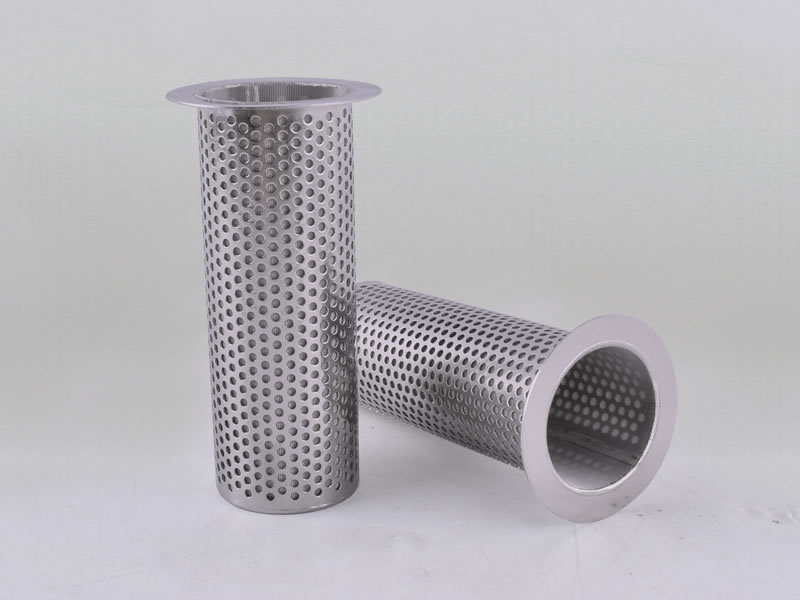
PFS-B1: Perforated basket strainer with flat bottom
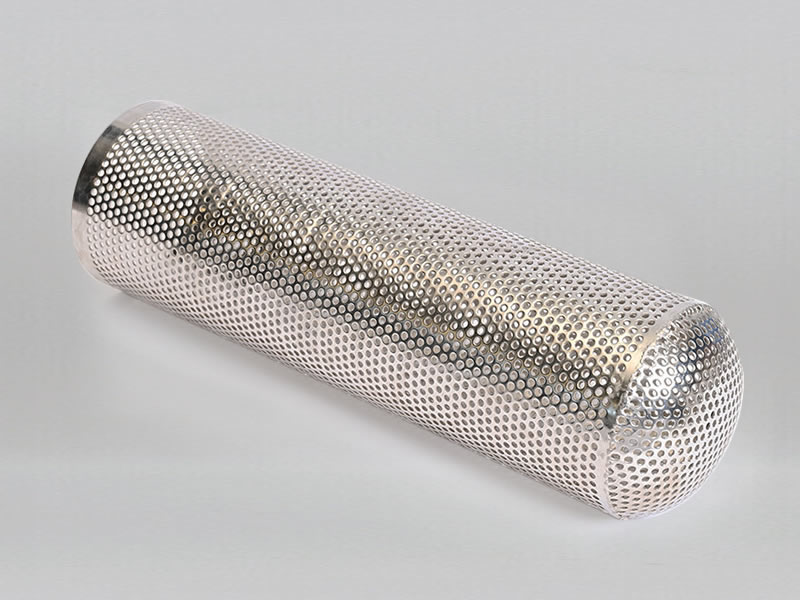
PFS-B2: Perforated filter with arch bottom
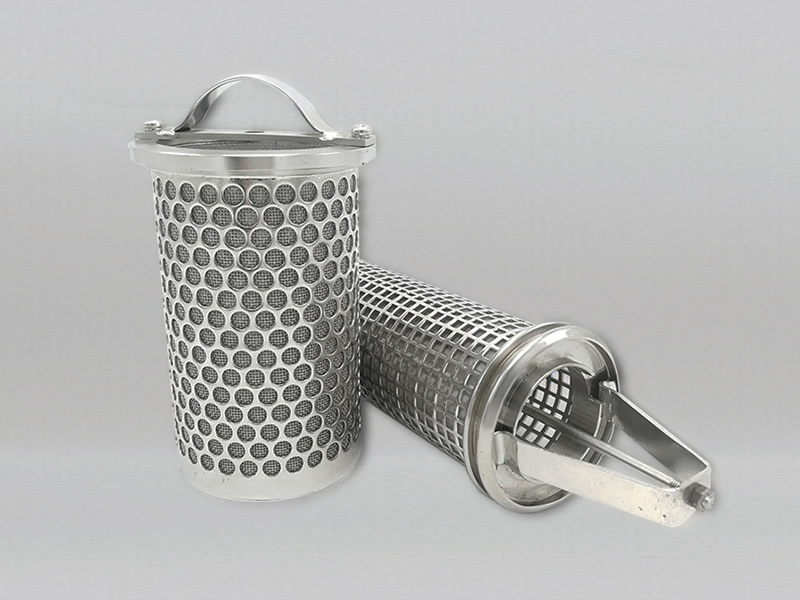
PFS-B3: Perforated basket strainer with bolted handle
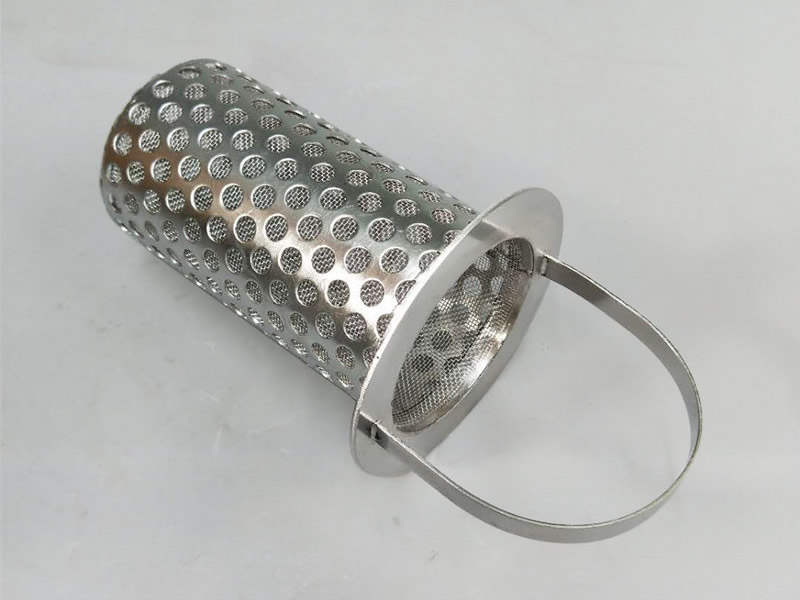
PFS-B4: Perforated basket strainer with welded handle
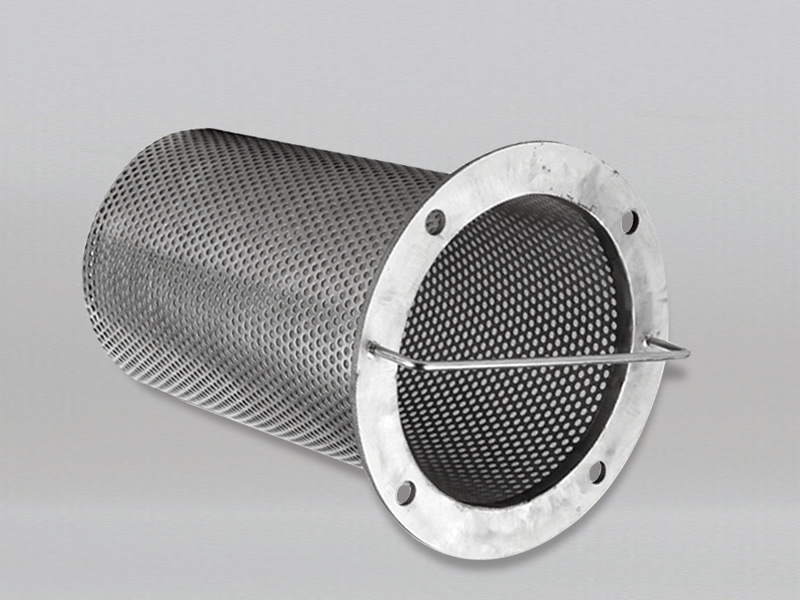
PFS-B5: Perforated basket strainer with round handle bar
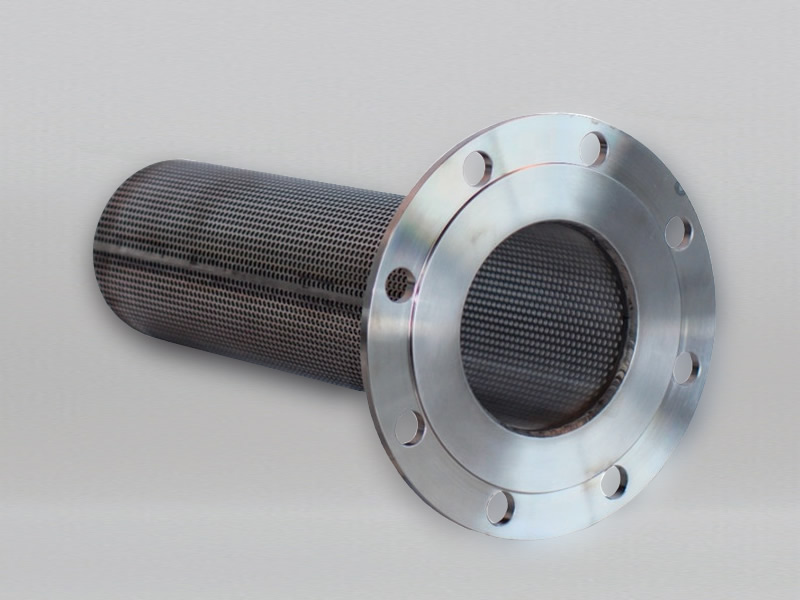
PFS-B6: Perforated basket strainer with flange for bolt installation
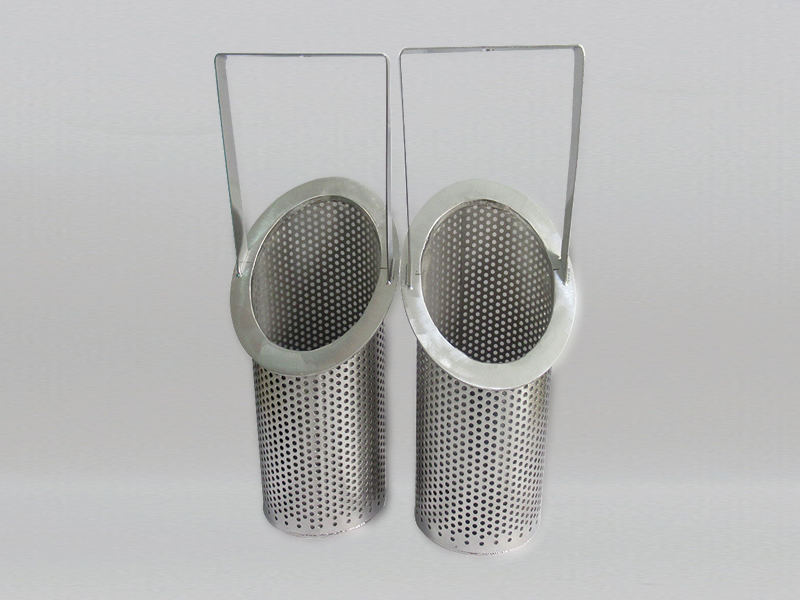
PFS-B7: Slanted basket strainer with flat handle
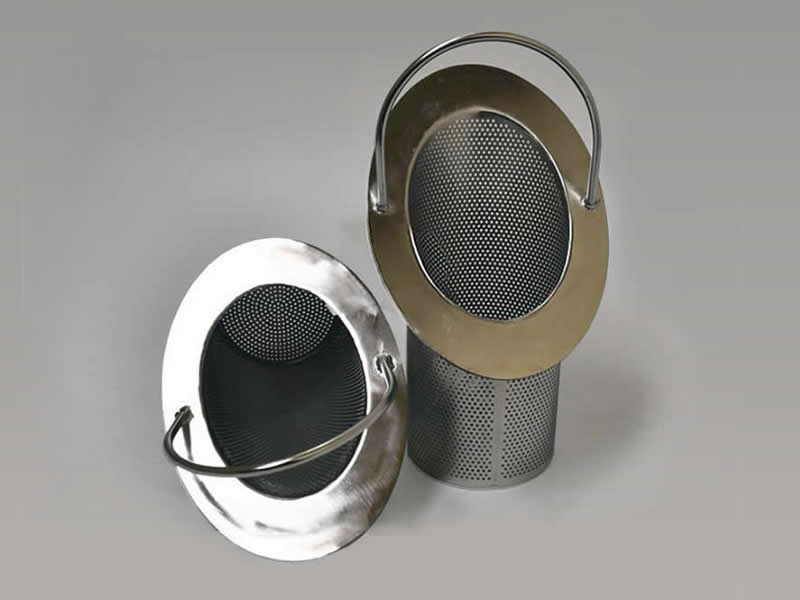
PFS-B8: Slanted basket strainer with round handle
Cone strainers for start-up and flushing
Cone strainers, sometimes called witch’s hat strainers, are temporary elements for the specified pipeline start-up or flushing stage. Confirm installation dimensions, flange interface, cone orientation, mesh side, permitted differential pressure and removal access. Remove the element when flushing is complete.
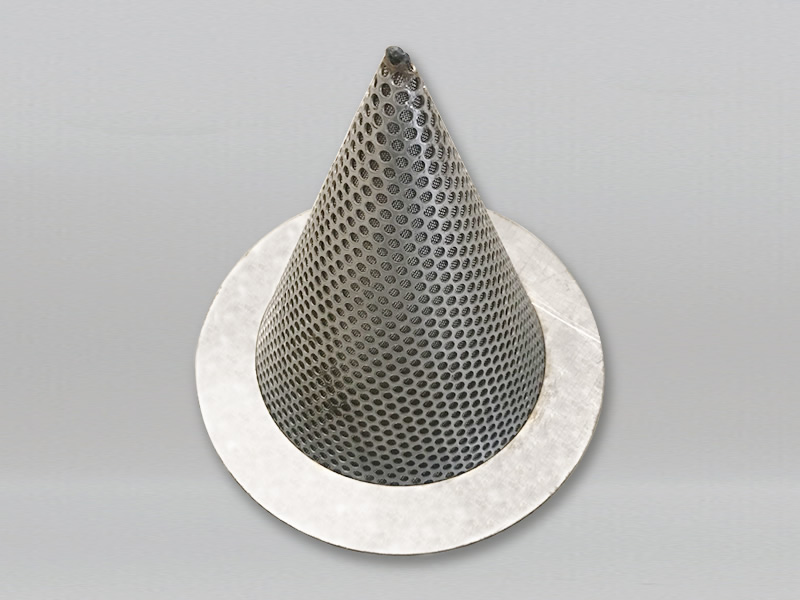
PFS-C1: Cone strainer with perforated support and inner mesh
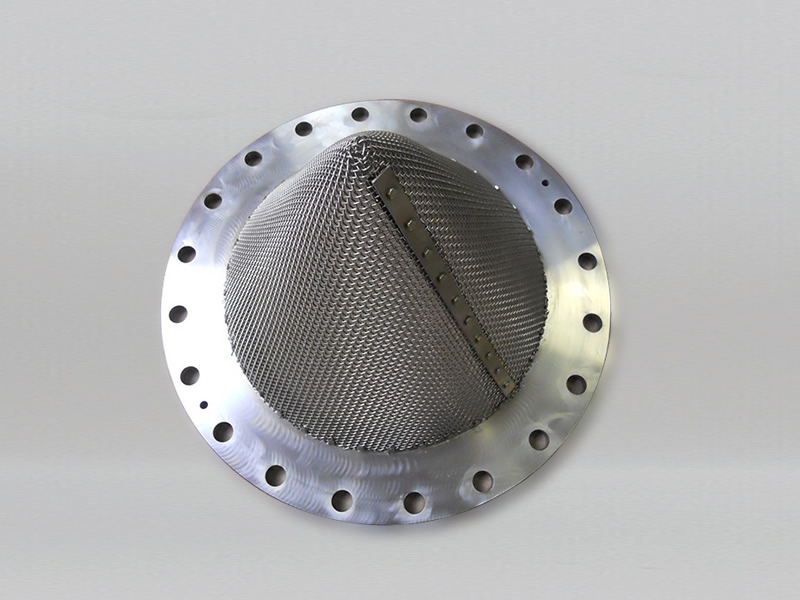
PFS-C2: Cone strainer with a bolting flange
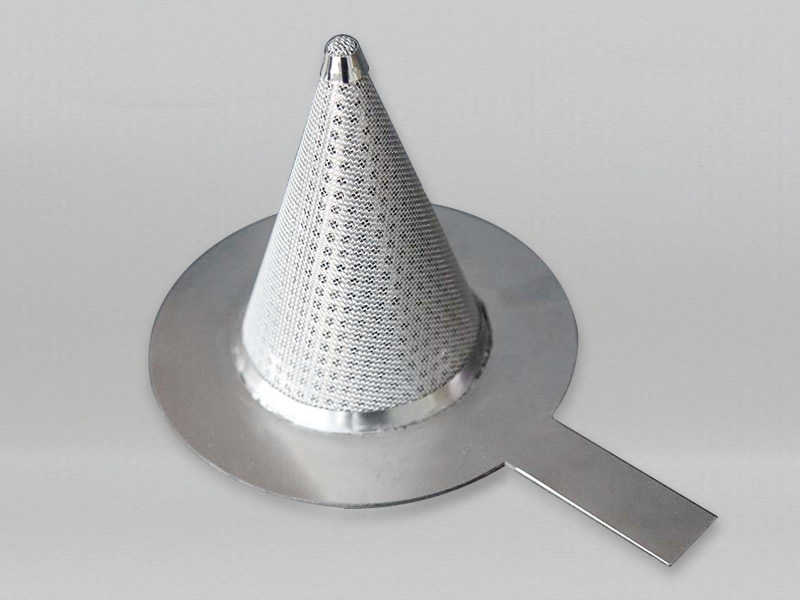
PFS-C3: Cone strainer with reinforced top ring and handle tail
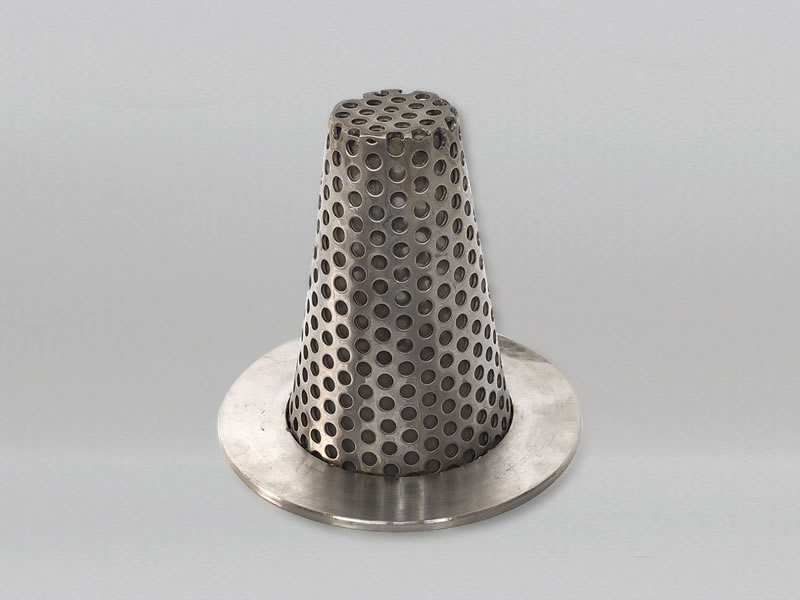
PFS-C4: Flat-top cone strainer
Plate strainers for start-up and flushing
Plate or disc strainer elements fit the specified pipeline flange arrangement for temporary debris interception. Available filtering area and pressure loss must be reviewed for the actual pattern, lining and flow. Remove the element after the flushing stage. A figure-8 designation applies only when that shape is specified, not to every plate strainer.

PFS-P1: Plate strainer in perforated plates and woven mesh layer
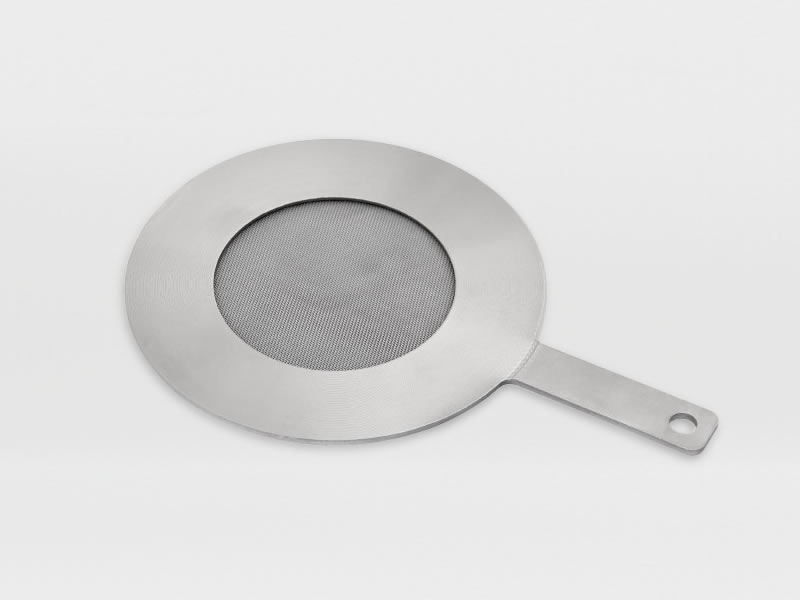
PFS-P2: Plate strainer with fine woven mesh layer
Effective open-area ratio (OAR)
For this page, OAR means the effective open flow area of the strainer element divided by the pipe’s flow cross-sectional area, expressed as a ratio or percentage. It is different from a perforated plate’s pattern open-area percentage, which compares hole area with the perforated field area.
State how mesh lining, solid borders and support obstructions are accounted for. We do not assign a universal 100%, 150%, 200% or 300% ratio to every element. OAR alone does not determine differential pressure: flow, viscosity, opening geometry, lining and contamination also matter. For flat-sheet patterns, see our perforated sheets and plates.
Cleaning, reuse and replacement
Temporary cone and plate elements are removed after start-up or flushing. Reuse is not promised; dispose of them or assess them as specified for the project.
Suitable baskets can be cleaned and reused after inspection. Select the method for the contaminant, alloy, welds, fine mesh and seals:
- Reverse-flow flushing or backwashing where the complete housing and flow arrangement permit.
- Controlled water-jet cleaning of removed parts without damaging mesh or seams.
- Compressed-air reverse cleaning for suitable gas-duty parts with loose deposits.
- Compatible solvent or detergent soaking with gentle soft-brush cleaning.
- Short, low-power ultrasonic cleaning where appropriate to the part.
- Chemical cleaning with an agreed reagent compatible with every wetted component.
Replace baskets with serious corrosion, cracked welds, deformed openings, damaged mesh or sealing surfaces, or reduced support integrity. The element alone does not provide automatic online backwashing.
Manufacturing inspection
- Dimensions: outside diameter, height, flange diameter and bolt-circle dimensions against the drawing.
- Mesh and layers: mesh count or specified nominal rating, number of layers and layer order.
- Welds: body seams, flange welds and handle attachments checked for weak or missed welds and cracks.
- Edges and burrs: openings, cut edges and flange areas inspected for sharp projections that could damage adjacent parts or media.
- Interfaces and sealing faces: flatness, scratches and specified groove dimensions checked.
- Materials: grade and agreed MTC documentation checked against the specification.
- Part-specific checks: cone-tip or closure integrity, effective open-area ratio and handle attachment/pull strength, where applicable and using the agreed inspection or sampling method.
Test loads, sampling plans, tolerances and acceptance criteria are agreed per order; no single handle-load or zero-burr guarantee applies to every construction.
Custom manufacture and replacement
Design for a new application
Share the pipeline and process conditions, debris target, available space, OAR requirement and duty. We review the element shape, support, mesh, seal and handle before agreeing the drawing.
Manufacture to drawing
Send a dimensioned drawing, layer specifications, materials, installation details and checks. We supply the element to the agreed requirements; a pressure housing is not included.
Recreate from a sample
An existing basket or temporary element can help establish geometry and construction. Uncertain material, original mesh specification or performance requirements must be confirmed before reproduction.
Strainer element FAQ
Do you supply complete basket strainer units?
No. We supply removable strainer elements and replacement baskets, without pressure housings.
Which elements are temporary?
The cone and plate products on this page are for the specified start-up or pipeline-flushing stage and are removed afterward. Baskets are offered for ongoing coarse filtration in compatible housings.
What does OAR mean here?
It compares the element’s effective open flow area with the pipe’s flow cross-sectional area. Specify the calculation basis, including how lining and support obstructions are treated.
Can baskets be cleaned and reused?
Suitable baskets can be cleaned using an agreed procedure, then inspected. Replace damaged, corroded or deformed parts; temporary elements carry no repeat-use promise.
Can you design either flow direction?
Yes. Specify inside-to-outside or outside-to-inside flow, mesh location and cleaning direction. Temporary cone-tip orientation must also be defined.
What information is needed for a replacement?
Provide a drawing or sample, pipe and flange details, basket dimensions, mesh layers, material, seal and handle geometry, operating conditions and removal clearance.
Inquiry for Our Product
Please provide:
- DN or pipe size and actual bore; exact flange standard, size and facing, such as ASME B16.5 RF/FF, the applicable PN standard or JIS standard
- Required effective open-area ratio (OAR) and its calculation basis
- Basket or cone outside diameter, height/length, opening and closure geometry
- Flow direction, mesh side and upstream/downstream cone-tip orientation
- Handle type, dimensions and attachment
- Sealing face or groove, gasket interface and support-seat dimensions
- Flange separation access and basket lifting clearance
- Each mesh layer’s specification, material and order
- Medium, flow, viscosity, temperature, system pressure and allowable differential pressure
- Start-up/flushing or ongoing duty; cleaning method, tolerances, inspection requirements and quantity
Related Products

Products
Contact Our Engineers
Complete our interactive form to receive a custom quote based on your needs.