
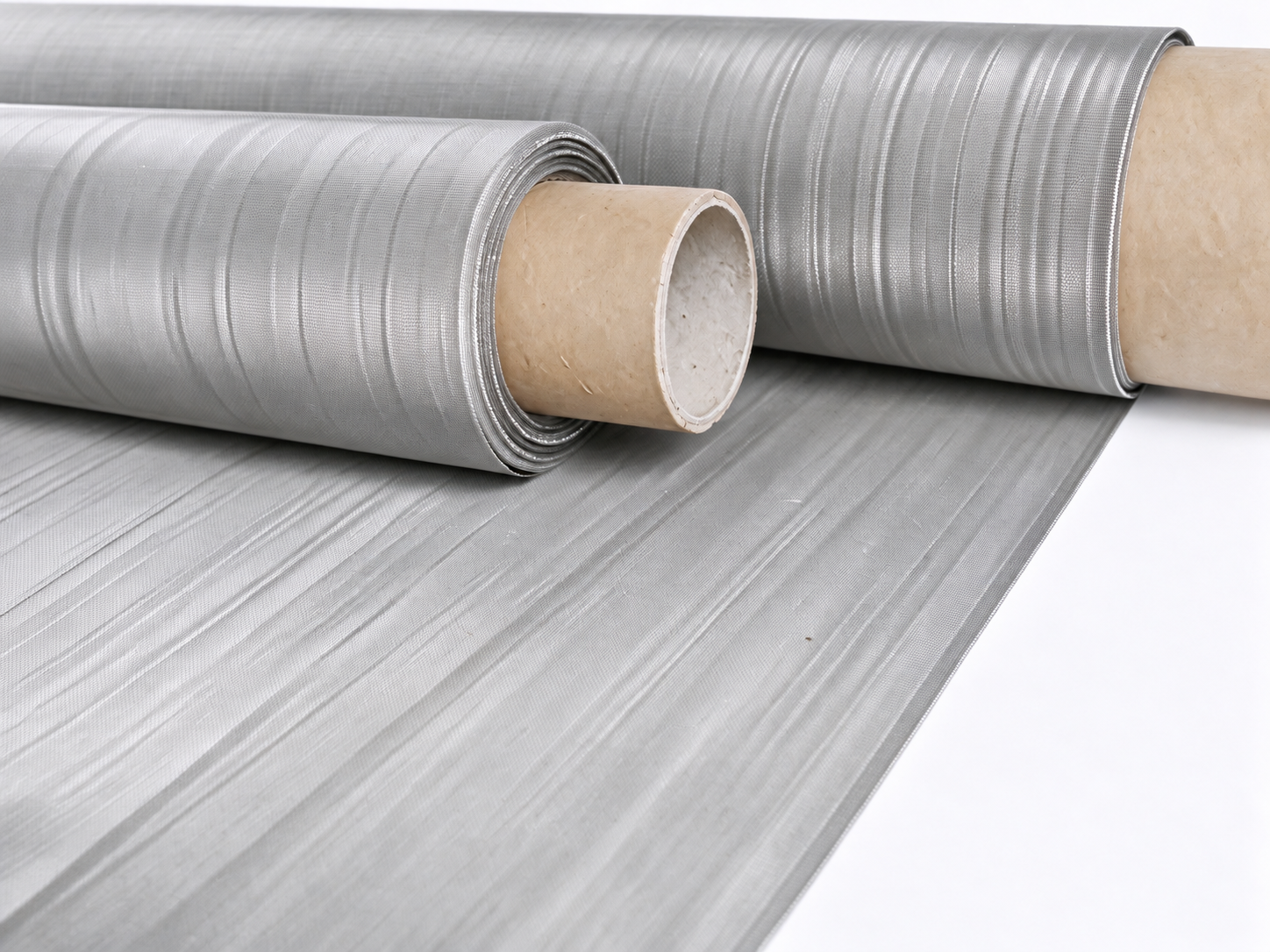
Filtalloy supplies nickel wire mesh for alkaline water electrolysis and customer-designed electrode components. Our nickel woven wire mesh is available in Nickel 200 and Nickel 201, with plain and twill weave options. We supply rolls and fabricated mesh parts to the dimensions, surface condition and inspection requirements of each order.
Supply options include 1–400 mesh, wire diameters from 0.03 to 2.0 mm, widths up to 2 m and roll lengths up to 100 m. Mesh count, wire diameter and weave must be specified together. Available processing includes annealing, calendering, flattening, cleaning and deburring.
Discuss Your Mesh Requirements
Nickel Mesh for Hydrogen Electrolysis
Alkaline water electrolysis
Nickel mesh can serve as an electrode substrate in alkaline hydrogen production. Its woven wires provide a conductive network, while the openings allow electrolyte and gas to pass through. Mesh geometry is one part of electrode design: wire diameter, aperture, open area and thickness affect the structure available for electrolyte access and bubble release.
We supply the mesh substrate and fabricated parts for your electrode design. If you intend to add a catalyst layer, specify the required material grade, surface preparation and final dimensions before ordering. Electrode performance depends on the complete preparation and operating conditions.
AEM water electrolysis
Nickel mesh is also used in research on anion exchange membrane water electrolysis. Mesh selection for an AEM electrolyzer should consider contact with adjacent layers, compression, edge condition and the membrane interface. Share your drawing and mesh requirements so we can prepare the substrate for evaluation in your assembly.
Nickel 200 and Nickel 201 Wire Cloth
Both grades are commercially pure nickel. The main distinction is their carbon limit: Nickel 200 has a maximum carbon content of 0.15%, while Nickel 201 has a maximum of 0.02%. Nickel 201 is the low-carbon option for applications where prolonged elevated-temperature exposure makes carbon-related embrittlement a concern.
| Material | UNS designation | Maximum carbon content | Ordering information |
|---|---|---|---|
| Nickel 200 | N02200 | 0.15% | Specify grade and raw-wire material certificate requirements |
| Nickel 201 | N02201 | 0.02% | Specify the low-carbon grade when required by your design |
For electrolysis applications, select the grade together with the electrolyte, operating temperature and electrode construction. The raw-wire material certificate identifies the supplied grade and batch chemistry. If your drawing specifies a Chinese grade such as N6 or N4, include the applicable material standard for comparison with the requested UNS grade.
Available Mesh and Dimensions
| Parameter | Supply range |
|---|---|
| Overall mesh count | 1–400 mesh per linear inch |
| Overall wire diameter | 0.03–2.0 mm |
| Plain weave | 1–200 mesh; wire diameter 0.05–2.0 mm |
| Twill weave | 20–400 mesh; wire diameter 0.03–0.30 mm |
| Standard width range | 0.6–1.6 m |
| Custom width | Up to 2 m |
| Roll length | 10–100 m, specified by order |
| Delivery forms | Rolls, strips, discs, shaped pieces, cylinders and welded parts |
These are manufacturing ranges across different specifications. The mesh count and wire diameter combination, finished width and delivery form are reviewed together for each order. Plain weave uses an over-one, under-one interlacing pattern. Twill weave uses a staggered pattern; specify the required construction when ordering.
Square-aperture specification examples
The following combinations provide a starting point for selecting nickel wire cloth. They are specification examples for custom supply. Aperture and open area are calculated from nominal mesh count and wire diameter.
| Mesh count / inch | Wire diameter (mm) | Theoretical aperture (mm) | Theoretical open area (%) | Weave |
|---|---|---|---|---|
| 10 | 0.900 | 1.6400 | 41.69 | Plain |
| 16 | 0.560 | 1.0275 | 41.89 | Plain |
| 20 | 0.315 | 0.9550 | 56.55 | Plain |
| 30 | 0.250 | 0.5967 | 49.66 | Plain |
| 40 | 0.200 | 0.4350 | 46.93 | Plain |
| 50 | 0.160 | 0.3480 | 46.93 | Plain |
| 60 | 0.140 | 0.2833 | 44.80 | Plain / twill |
| 80 | 0.100 | 0.2175 | 46.93 | Plain / twill |
| 100 | 0.090 | 0.1640 | 41.69 | Twill |
| 120 | 0.080 | 0.1317 | 38.69 | Twill |
| 150 | 0.070 | 0.0993 | 34.41 | Twill |
| 200 | 0.060 | 0.0670 | 27.83 | Twill |
| 250 | 0.050 | 0.0516 | 25.79 | Twill |
| 300 | 0.045 | 0.0397 | 21.95 | Twill |
For square mesh with equal warp and weft counts and wire diameters:
- Aperture (mm) = 25.4 ÷ mesh count − wire diameter (mm).
- Open area (%) = [aperture ÷ (aperture + wire diameter)]² × 100.
Theoretical open area describes the projected openings. Finished mesh measurements are checked separately, including after calendering. Provide the aperture or open-area target alongside the nominal mesh specification.
Nickel Wire Mesh Manufacturing
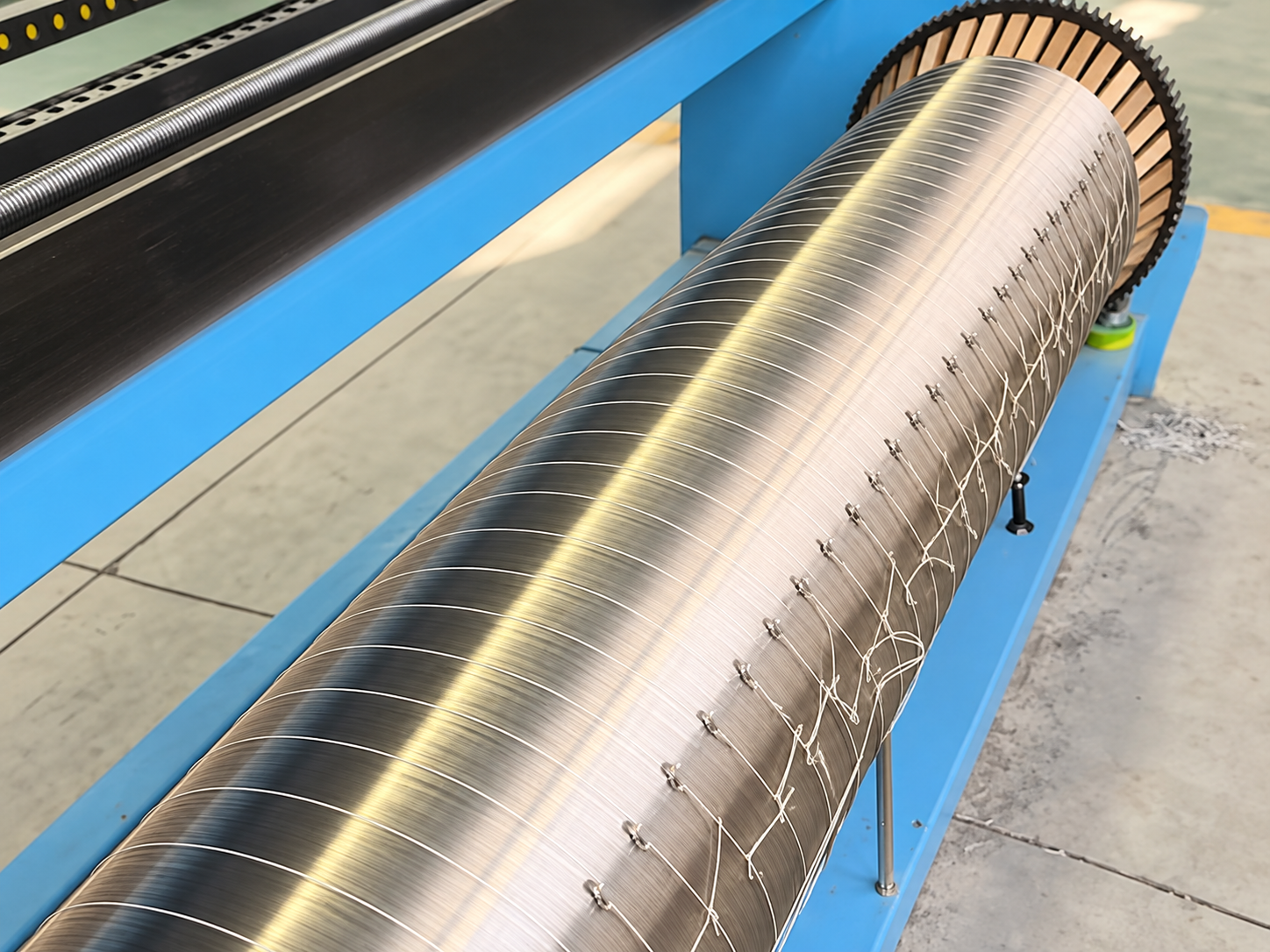
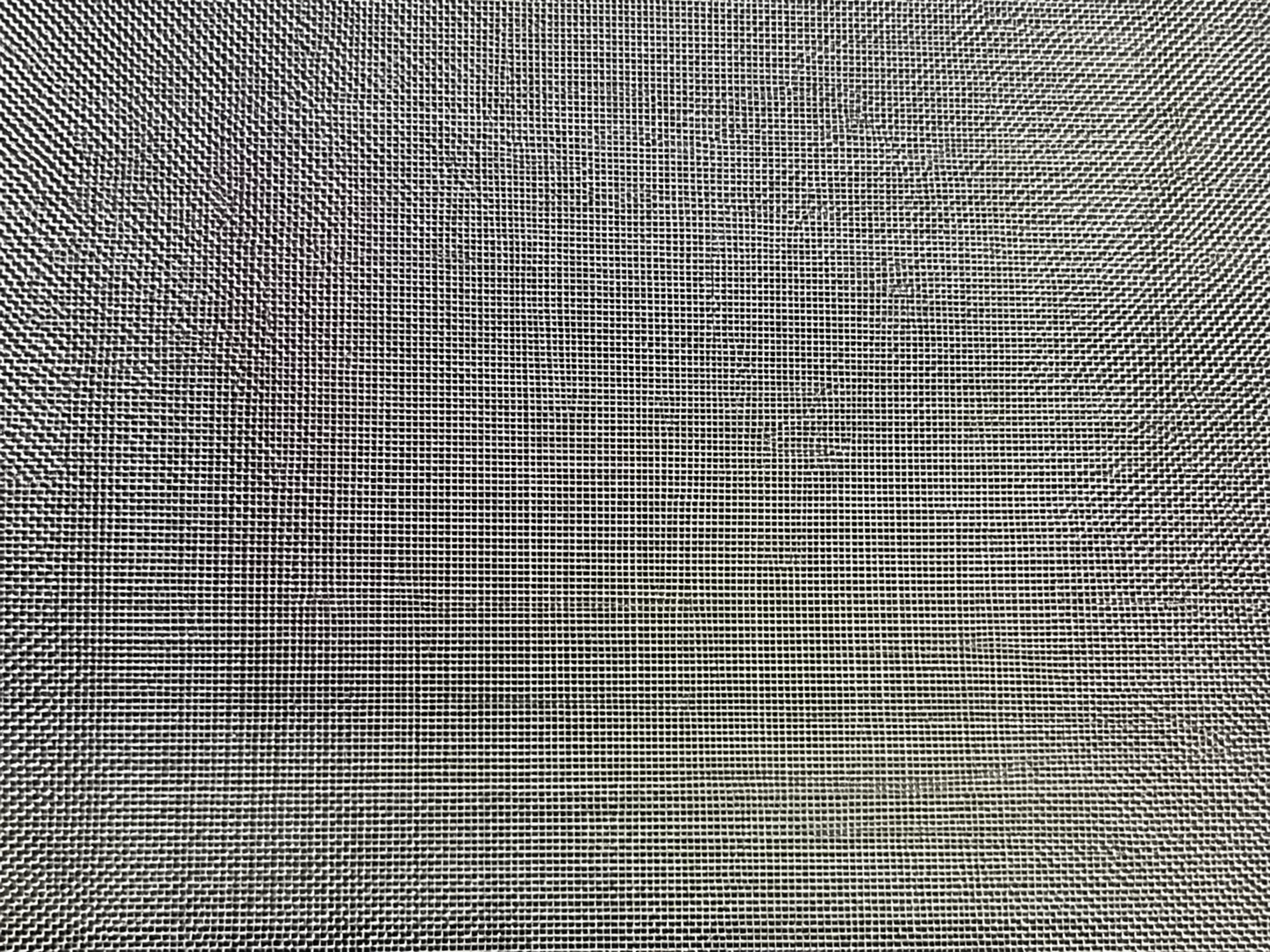
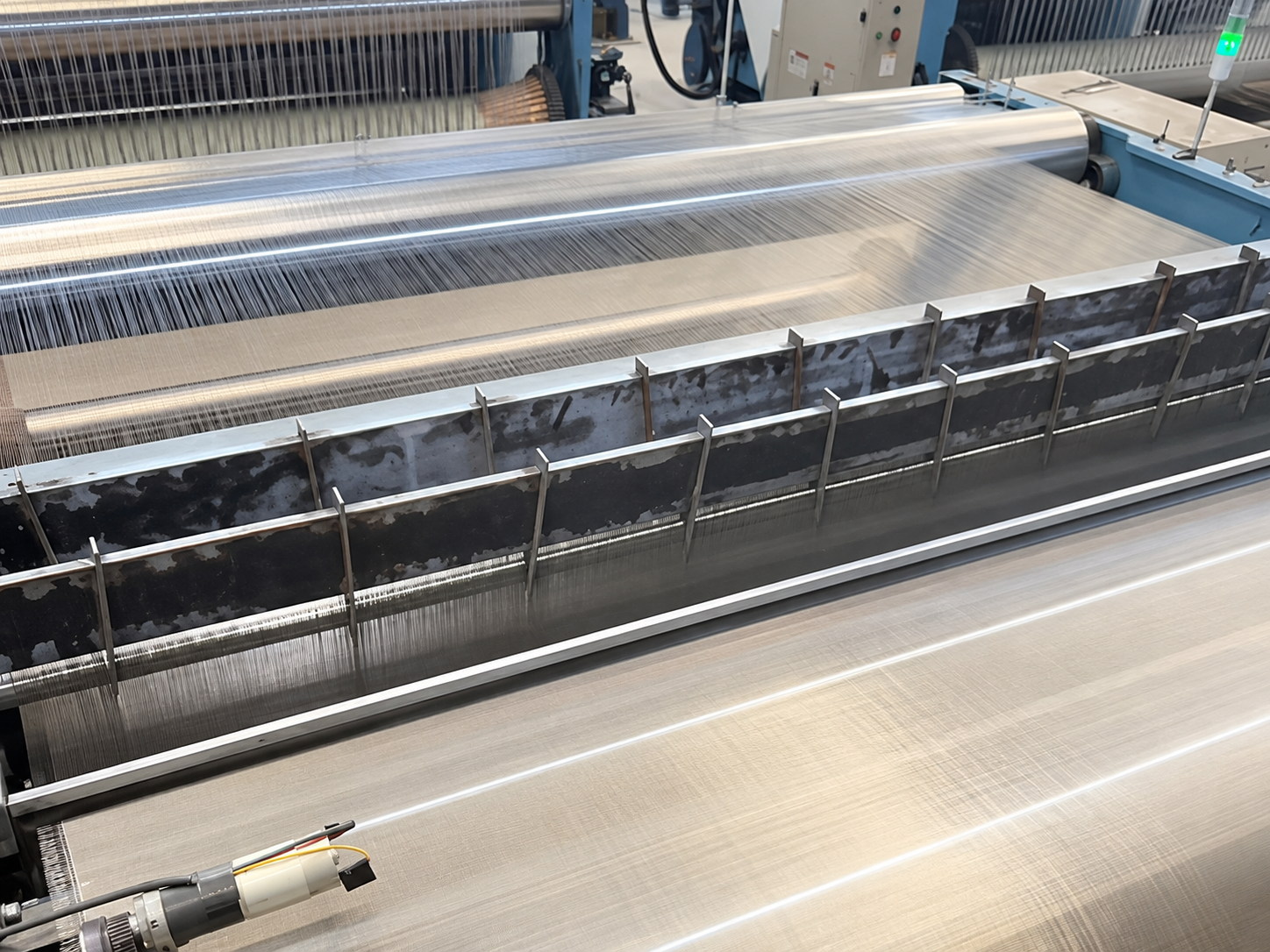
Warp preparation and weaving form the mesh structure specified for each order. The process images show nickel wire warping and weaving, including 40 mesh nickel wire mesh on a loom.
Processing and Fabricated Mesh Parts
| Service | Requirements to specify |
|---|---|
| Annealing | Required material condition and dimensional checks after processing |
| Calendering | Finished thickness, aperture condition and contact-surface requirements |
| Flattening | Flatness requirement and the method used to assess it |
| Cleaning | Surface condition, residue limits if applicable, and handling requirements |
| Deburring | Edge condition and acceptance criteria for cut or formed parts |
| Cutting | Strip width, disc diameter or shaped-piece drawing, with dimensional tolerances |
| Forming and welding | Cylinder dimensions, seam or joint details, weld position and inspection requirements |
We can supply mesh rolls for further processing or prepare strips, round discs, shaped pieces, cylinders and welded parts to your drawing. For calendered nickel mesh, specify the finished condition and the dimensions that must be checked after rolling. For parts used near a membrane, include edge finish and surface-contact requirements in the drawing.
Factory Inspection and Supply Documents
We inspect material identification, wire diameter, mesh count, aperture, thickness, width, length, appearance and surface cleanliness. The following values are our factory execution tolerances for the specified nominal mesh condition. Finished-part requirements are recorded with the order.
| Inspection item | Factory control |
|---|---|
| Wire diameter | ±5% of specified nominal diameter; measurements at multiple points |
| Average mesh count | ±4% of specified nominal count |
| Mesh thickness | ±10% of the agreed nominal thickness for the delivery condition |
| Width | ±10 mm of ordered width |
| Length | Ordered length and acceptance requirement |
| Aperture | Average aperture and maximum opening checked against agreed limits |
| Appearance | Check for broken wires, weaving defects, sparse areas, creases and visible surface defects |
| Surface cleanliness | Visual inspection and white-paper wipe check for obvious oil or contamination |
Supply documents are available with the order: the raw-wire material certificate, factory dimensional inspection report and product certificate of conformity. Specify the required batch references and report items when placing the order.
Third-party composition or aperture testing can be arranged to the agreed project scope. If you require carbon or sulfur verification, include the detection limits and suitable test method in the inspection request. Cleaning acceptance based on visual and wipe checks can be supplemented by a separately specified residue test.
Specify Your Nickel Mesh
Send a mesh specification, component drawing or reference sample, together with:
- Electrolysis system and the mesh's intended role.
- Electrolyte type and concentration, and operating temperature.
- Material grade and certificate requirements.
- Warp and weft mesh counts, wire diameters, and aperture or open-area target.
- Finished thickness, flatness and surface condition.
- Part dimensions, tolerances, edge finish and weld details.
- Required annealing, calendering, flattening, cleaning or deburring.
- Quantity, delivery form, inspection items and report requirements.
Send Your Drawing or Mesh Specification
Frequently Asked Questions
Can you supply nickel mesh electrode substrates for alkaline electrolysis?
Yes. We supply woven nickel mesh and fabricated mesh parts to the specified geometry and surface condition. Share the intended electrode role and any requirements for your subsequent electrode preparation.
What is the difference between Nickel 200 and Nickel 201 mesh?
Nickel 201 has a lower maximum carbon content: 0.02%, compared with 0.15% for Nickel 200. Specify the grade required by your operating conditions and material standard. The supplied raw-wire certificate records the grade and batch chemistry.
Can you supply 400-mesh nickel wire cloth with 0.03 mm wire?
Our twill-weave supply range extends to 400 mesh and a minimum wire diameter of 0.03 mm. We review the requested combination, finished dimensions and processing condition before confirming the order.
Can nickel mesh be calendered and cleaned?
Yes. Calendering, cleaning, annealing and flattening are available. Specify the finished thickness, aperture checks, flatness and surface acceptance requirements for the processed mesh.
Can you cut discs or supply welded nickel mesh cylinders?
Yes. We supply strips, round discs, shaped pieces, formed cylinders and welded parts. Send a drawing with dimensions, tolerances, edge finish and joint details.
Which mesh count should I choose for hydrogen production?
Mesh count should be considered together with wire diameter, aperture, thickness and the electrode assembly. Send your design targets or a reference sample so we can review a manufacturable specification. Final electrode suitability is established through your application testing.
What documents can be supplied?
The available supply documents include a raw-wire material certificate, factory inspection report and certificate of conformity. Additional third-party tests can be arranged when specified with the order.
Explore our Woven Wire Mesh range for other materials and mesh structures.