
Custom stamped wire mesh discs are woven metal mesh pieces cut to a specified outline, such as a round disc, ring, rectangle or drawing-defined profile. Unlike mesh supplied in rolls, these parts are prepared for subsequent fitting or assembly. The cut outline, mesh specification and edge requirements are defined by the part design.
If you have a drawing, an existing sample or a clear part photo, send it with your expected quantity. We can review the mesh specification, geometry and fabrication requirements before agreeing the manufacturing method.
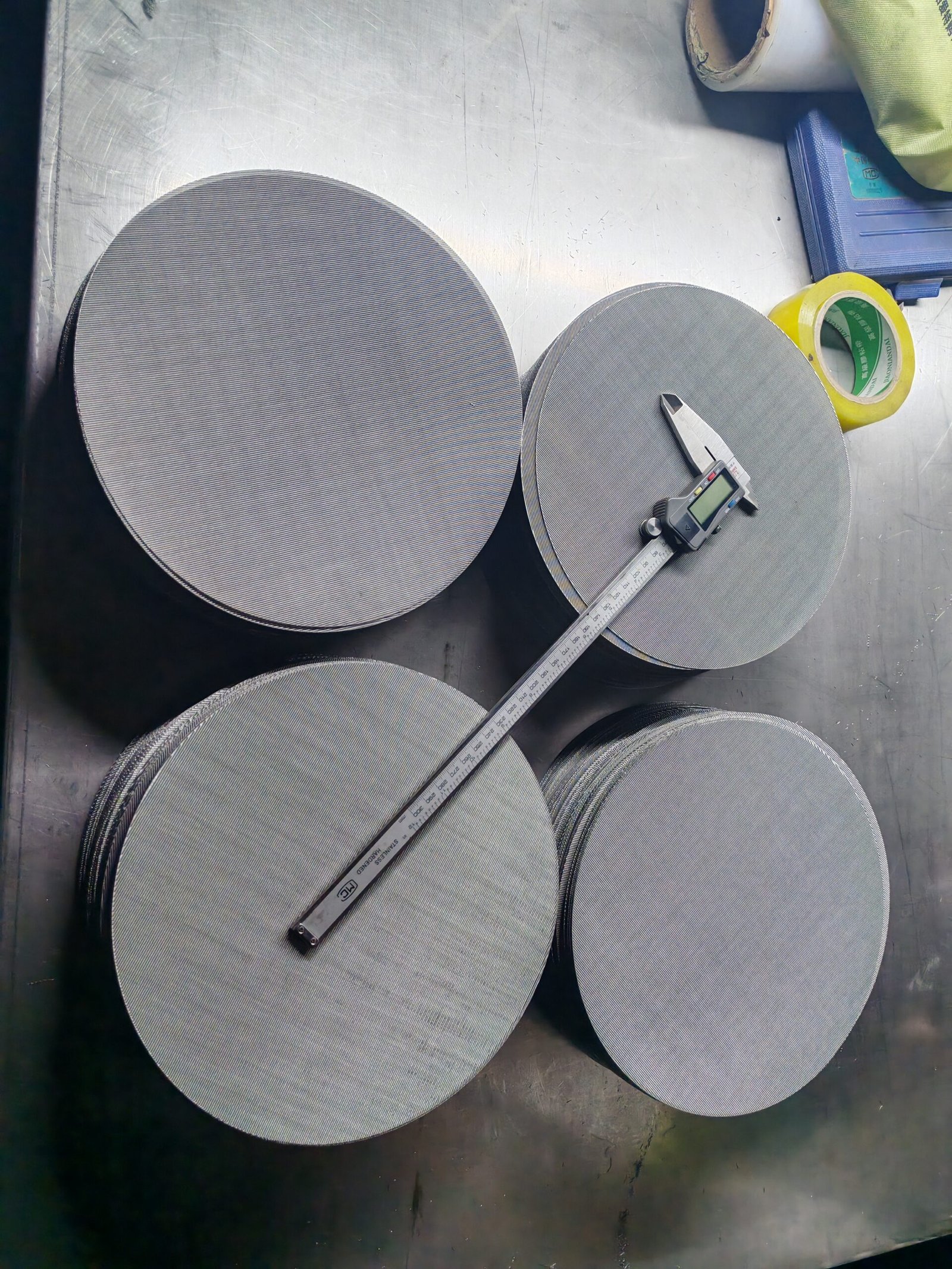
Custom Wire Mesh Disc Shapes
Circular discs are a common form. Other drawing-defined geometries can include rings with center openings, squares, rectangles and irregular outlines. When reviewing a part, we distinguish its outside dimensions, any internal holes, slots, corners and special profiles.
Round, Ring and Center-Hole Discs
A round disc is usually defined by its outside diameter and edge requirement. Ring-shaped pieces also need the inner diameter and any concentricity requirements. Thin wires, narrow bridges or small internal features may require a specific tooling or cutting assessment.
Square, Rectangular and Irregular Mesh Parts
For noncircular pieces, include the outline and any alignment features in the drawing. Complex geometry should be reviewed for shape retention, loose wires and practical handling after cutting.
Woven Wire Mesh Materials and Specifications
Mesh selection determines the open structure of a finished part. Specify the metal grade where known, weave type, mesh count, wire diameter and/or opening size. The finished part specification should also identify any support or secondary layers if required.
Material and Weave Options
Plain, twill or Dutch woven constructions can be discussed according to the requested part and filtration task. Availability of a particular alloy, wire diameter or combination of layers is confirmed against the actual manufacturing specification.
Mesh Count, Wire Diameter and Opening Size
For square-opening woven mesh, wire diameter and clear opening are key dimensions. Dutch weave behaves differently: a visible opening alone should not be treated as a verified micron retention rating. Where filtration performance is critical, define the required rating and supporting test evidence separately.
Stamping, Blanking and Custom Tooling
Stamping or blanking can be considered for repeated profiles and production quantities. The most appropriate approach depends on mesh construction, outline complexity, edge condition and batch size. Tooling decisions should follow review of the drawing or sample—not an assumption that every mesh can be made with the same die.
Production from Drawings or Samples
We can start the technical discussion from a customer drawing, old part or clear product photo. Before manufacture, agree the key dimensions, mesh construction, quantity, edge requirements and any approval samples.
Tooling and Batch Production Considerations
A repeated outline may justify dedicated tooling, while other jobs may be handled differently. Tooling cost, sampling arrangements and minimum order quantity are confirmed for the particular project rather than published as universal values.
Dimensions, Tolerances and Edge Quality
Inspection should follow the measurement datums specified on the drawing. Circular parts may need outside diameter and roundness checks; center-hole parts may also require hole size and positional control. Loose wires, sharp projections, deformation and burrs are evaluated in relation to the intended fit and handling.
Outer Diameter, Inner Diameter and Cut Profiles
State the outside dimension, internal openings and profile details clearly. Where the drawing is incomplete, a sample and principal measurements can establish a starting point for clarification.
Burrs, Loose Wires and Edge Inspection
Cutting woven mesh may leave loose wire ends depending on weave and method. Discuss what edge condition is acceptable, how the part is handled and whether further edge fixing is required. A specific tolerance or zero-loose-wire claim is not assumed without an agreed inspection method.
Applications of Stamped Wire Mesh Parts
Possible uses include extruder screens, equipment filter discs and other mesh parts made to a defined footprint. Suitability depends on mesh specification, material, operating conditions, flow and installation. The application name alone does not establish a filtration rating or performance approval.
How to Order Custom Wire Mesh Discs
You can start with a drawing, sample or photo and the approximate quantity. If available, add the material grade, weave, mesh count or opening, dimensions, tolerance and edge condition. We can identify missing details during the next engineering discussion rather than requiring a long questionnaire at first contact.
Frequently Asked Questions
Do I need a complete engineering drawing?
No. A sample or clear photos with the main dimensions can start the discussion. The final production and inspection requirements are agreed before manufacture.
Can you make discs with a center hole?
Center-hole and ring-shaped profiles can be reviewed as custom parts. Feasibility and achievable dimensions depend on the submitted design.
Are stamped discs always free of loose wires?
Not necessarily. Loose wire ends depend on weave, cutting method and edge treatment. Define acceptance requirements for the intended installation.
Can you produce a small trial batch?
Send the quantity and part details for review. Whether dedicated tooling or a minimum batch applies depends on the design.
Related Wire Mesh Products
Looking for finished mesh components with a retained perimeter rather than plain cut mesh? See our wire mesh filter components. Sintered mesh discs use a different bonded construction; explore our sintered mesh filter elements for that product family.
Discuss Your Wire Mesh Part
Send your drawing, sample photos or existing part details together with the expected quantity. Contact Our Engineers to review a practical manufacturing approach.