
Mesh insert molded filters combine woven metal mesh with a molded plastic frame for custom filtration components made to drawing. The mesh provides the filtering surface, while the molded section helps define the component shape, perimeter retention and installation features. This construction is different from a plain cut mesh disc or a metal-rimmed wire mesh filter disc.
Alloyfilter can review molded-frame wire mesh filter components from a customer drawing, existing part or sample photographs. Share the main dimensions, expected quantity and application details so the mesh, molded geometry and manufacturing route can be assessed before production.
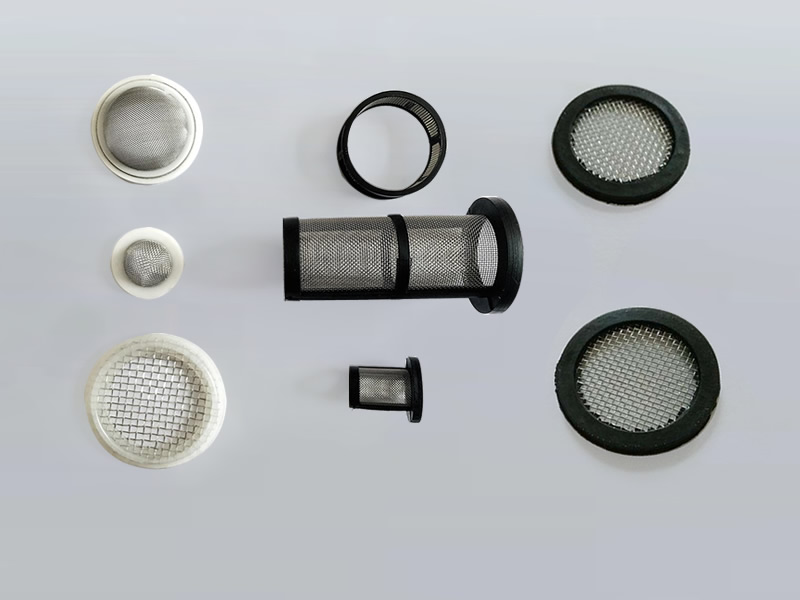
Mesh Insert Molded Filter Construction
A molded mesh filter combines two functional parts: the woven metal mesh and the surrounding molded component. The mesh opening, wire diameter, weave and number of layers determine the open filtering structure. The molded frame provides the designed perimeter, mounting profile or other part features.
- Woven mesh insert: selected according to the required opening, wire diameter, weave and material grade.
- Molded frame or body: shaped to retain the mesh and fit the customer’s assembly.
- Mesh-to-frame interface: designed to keep the mesh positioned during handling and intended service.
- Mounting features: holes, tabs, lips, profiles or other geometry are reviewed against the drawing.
The exact retention method, polymer grade and mesh arrangement must be agreed for the part. A molded frame should not automatically be treated as a pressure seal or as proof of a specified filtration efficiency.
Woven Mesh and Molded Material Options
Stainless steel woven mesh is a common insert option. Other metal mesh materials and weave constructions can be reviewed when the application requires them. Specify the metal grade, mesh count, wire diameter, opening size and layer arrangement where known.
The molded material should be selected with the operating temperature, process medium, chemical exposure, mechanical loading and installation conditions in mind. The suitable polymer grade and its compatibility need to be confirmed for the actual application; do not select a material based only on appearance or a generic product photograph.
Custom Shapes and Design Details
Mesh insert molded filters can be considered for round, rectangular and drawing-defined profiles. The shape and dimensions depend on the customer’s housing or assembly rather than a universal standard size.
- Overall length, width, diameter and thickness.
- Usable mesh area and the boundary retained inside the molded frame.
- Frame width, height, profile and any locating features.
- Mesh grade, weave, opening, wire diameter and layer count.
- Critical tolerances, flatness and fit with mating components.
- Expected service temperature, medium and cleaning requirements.
Tooling and Custom Manufacturing Review
For repeat production, dedicated tooling may be considered after the part geometry and production quantity have been reviewed. Tooling feasibility, sampling, mold arrangements, production quantity and inspection criteria are project-specific and should be confirmed before an order is placed.
- Review the part: submit a drawing, existing component or clear photographs with principal dimensions.
- Confirm the mesh: agree the metal grade, weave, mesh opening, wire diameter and layer arrangement.
- Review the molded section: confirm the polymer requirement, frame geometry, mesh retention and mounting details.
- Agree the sample and inspection: define critical dimensions, fit checks and any required approval sample.
- Confirm production: agree the approved specification, quantity, tooling responsibility and delivery requirements.
Inspection Considerations
Inspection should be based on the drawing and the function of the finished component. Typical checks may include overall dimensions, frame profile, mesh position, exposed mesh area, visible damage, loose wires and fit with the mating part. Any filtration-performance test, pressure test or sealing test must be separately specified with its method and acceptance criteria.
How to Request a Custom Mesh Insert Molded Filter
You do not need to prepare a long technical questionnaire before making an initial enquiry. A drawing or existing sample is the best starting point. If available, include the expected quantity, metal mesh specification, polymer requirement and operating conditions. Missing details can be clarified during the engineering review.
Frequently Asked Questions
What is a mesh insert molded filter?
It is a component in which woven metal mesh is incorporated into a molded plastic frame or body. The mesh acts as the filtering medium and the molded section provides the designed shape and retention features.
Is this the same as a rimmed wire mesh filter disc?
No. A rimmed disc uses a metal perimeter structure such as a crimped, joined or framed edge. An insert molded filter uses a molded polymer component to retain or surround the mesh. See our Rimmed Wire Mesh Filter Discs page for metal-edge constructions.
Can you manufacture from a sample instead of a drawing?
An existing part or clear photographs with the principal dimensions can start the review. Critical dimensions, mesh specification and acceptance requirements must be agreed before production.
Do you provide standard sizes?
These are custom components. Dimensions, molded geometry and mesh construction are reviewed against the intended assembly and order quantity.
Related Wire Mesh Products
For plain woven mesh parts cut or stamped to a specified outline, see Custom Stamped Wire Mesh Discs. For fabricated wire mesh filter elements in cylinders, sleeves and other forms, visit our Wire Mesh Filter page.
Discuss Your Molded Mesh Filter Component
Send a drawing, existing part or sample photographs together with the expected quantity. Contact Our Engineers to review the mesh insert, molded frame and practical manufacturing requirements.