Custom Sintered Wire Mesh Filter Plates for ANF/ANFD and Fluid Beds
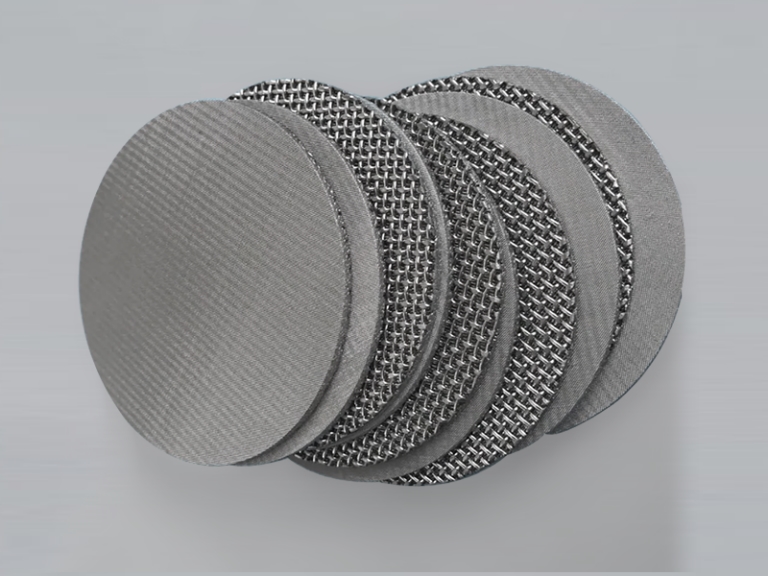
Filtalloy manufactures sintered wire mesh filter plates for ANF/ANFD equipment, small filter discs and conical mesh components. One-piece, welded and segmented assemblies, flanges and supports are made to the equipment drawing.
The nominal filtration rating range is 1–300 μm. Send your drawing or sample details to discuss the required material, geometry and assembly.
Supply Forms and Product Configurations
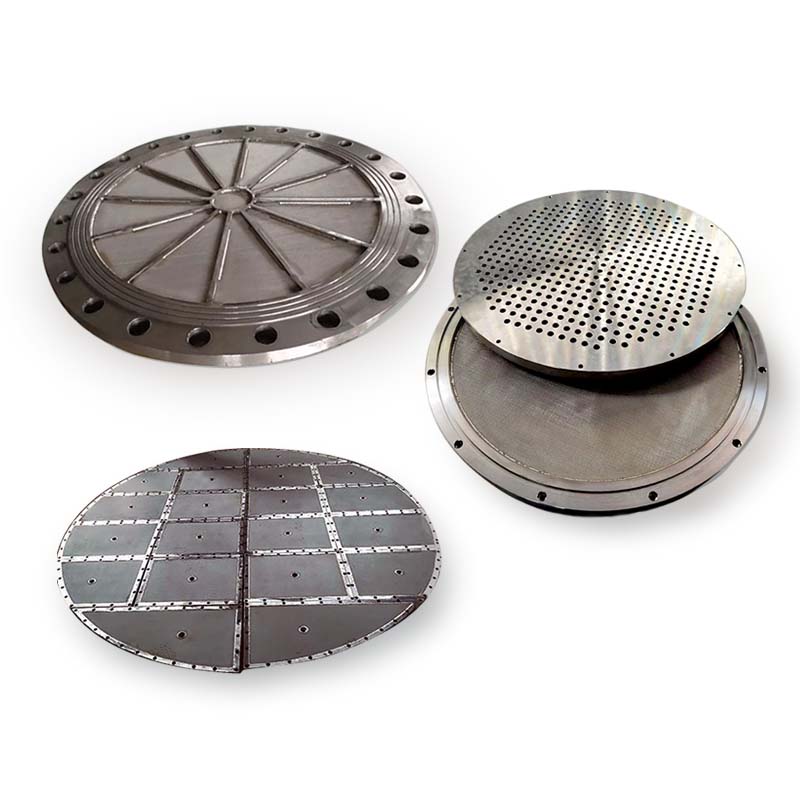
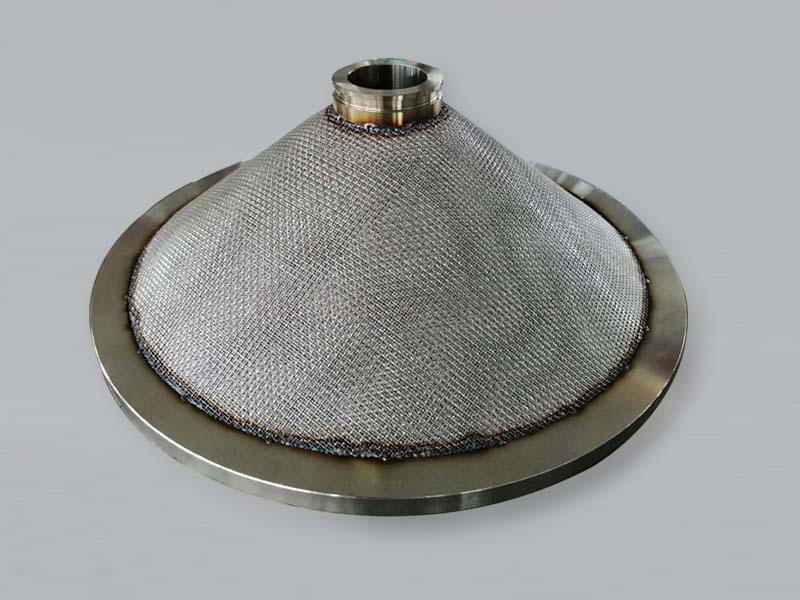
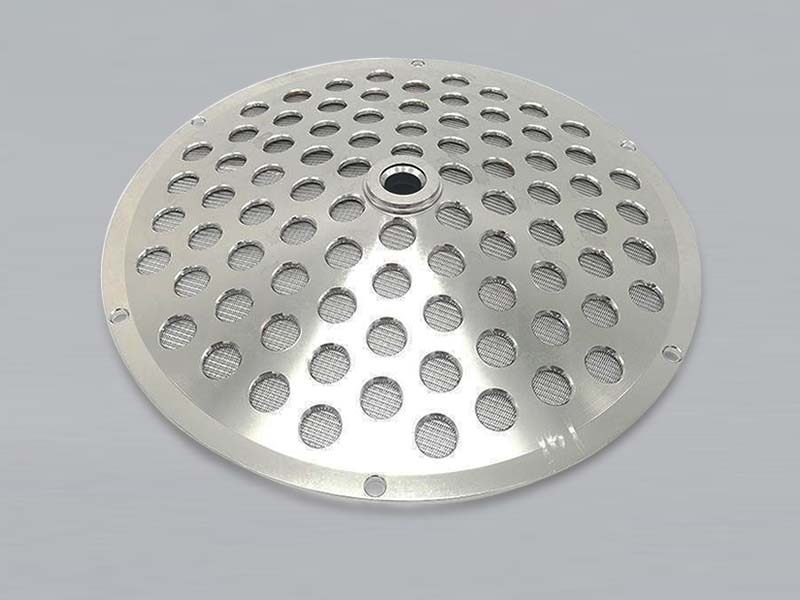
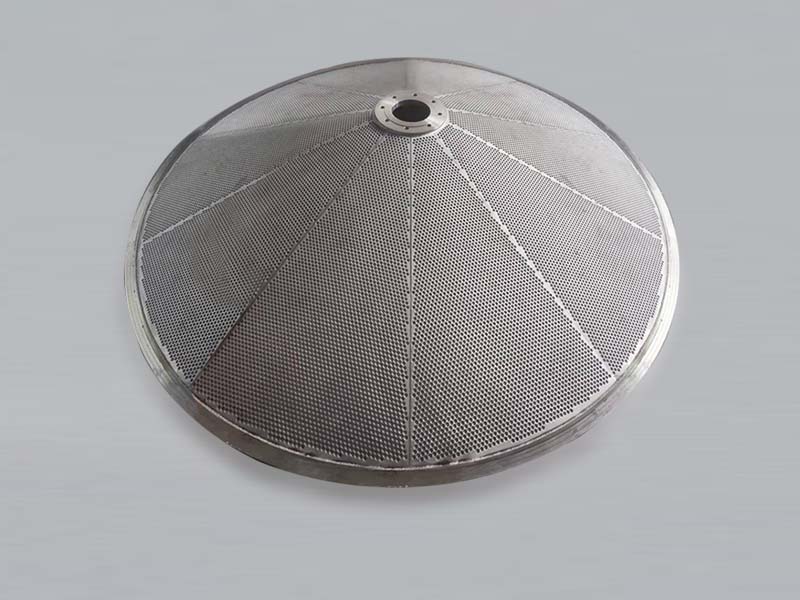
The views below show product forms and construction details. Send the drawing or existing specification for the configuration you need.
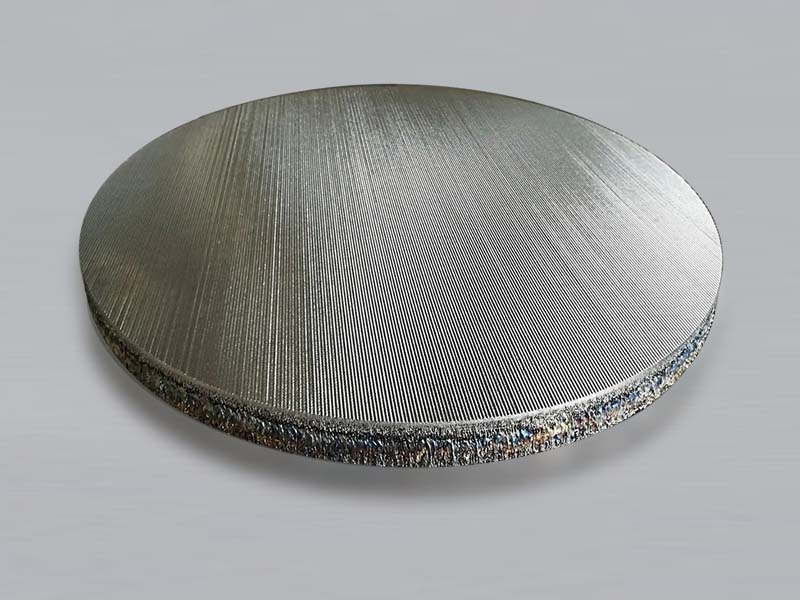
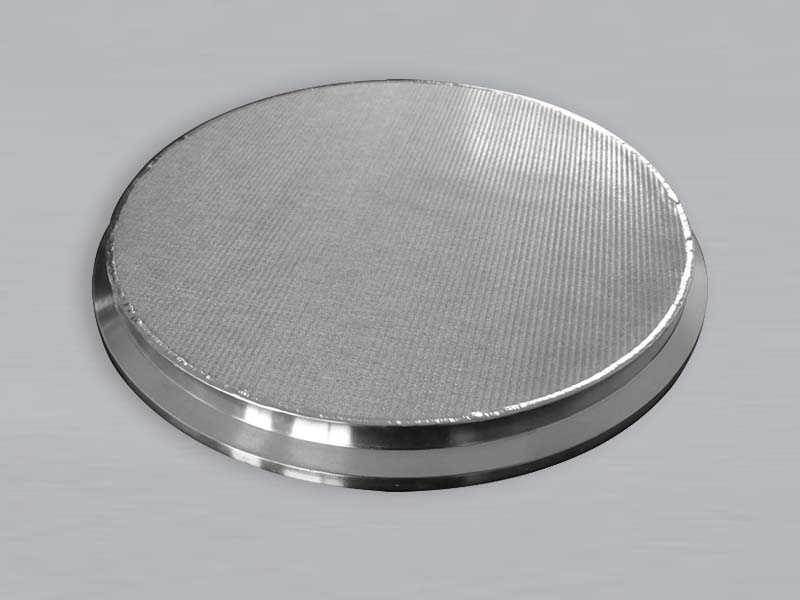
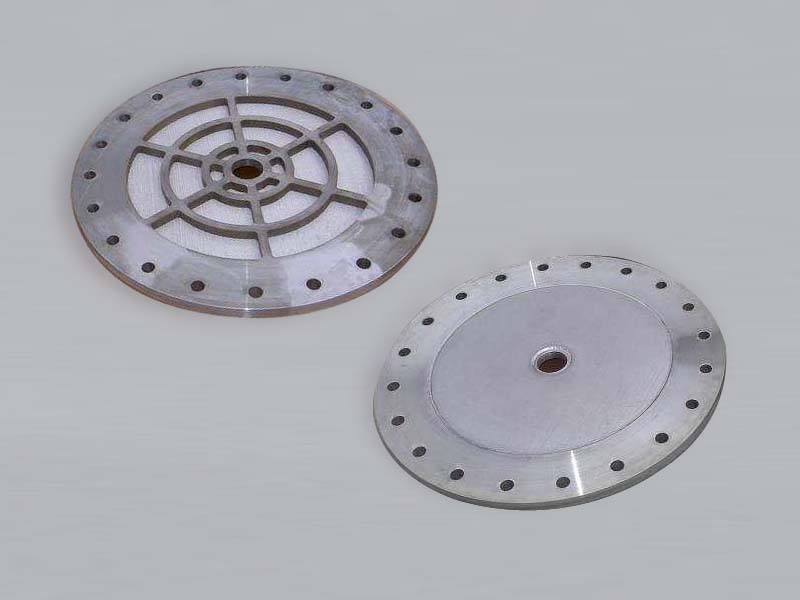
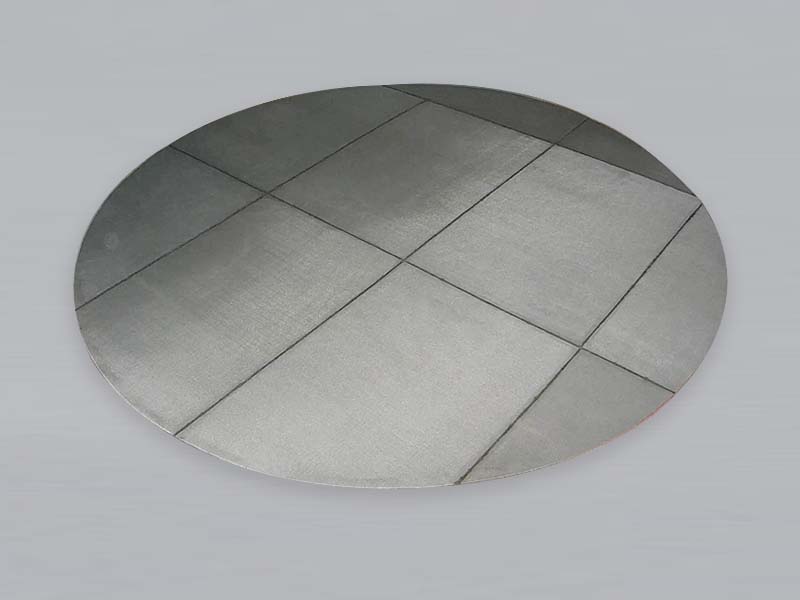
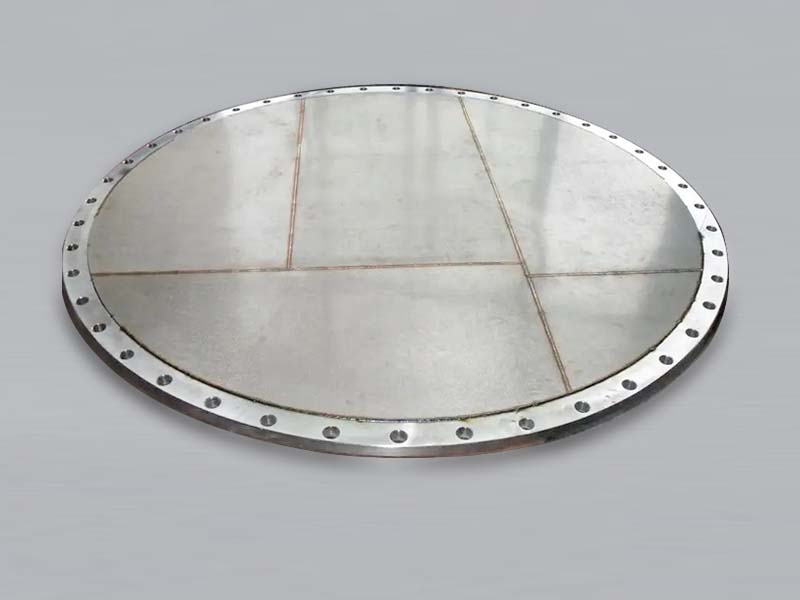
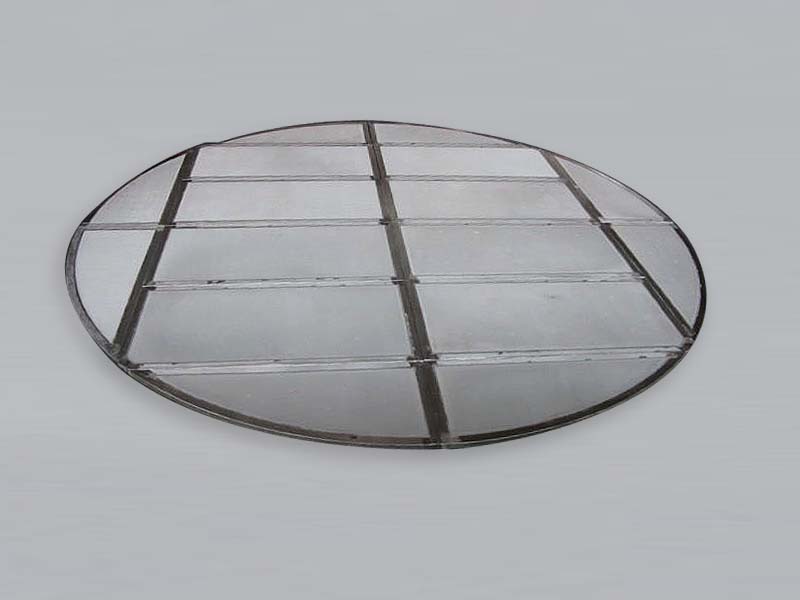
View more product configurations
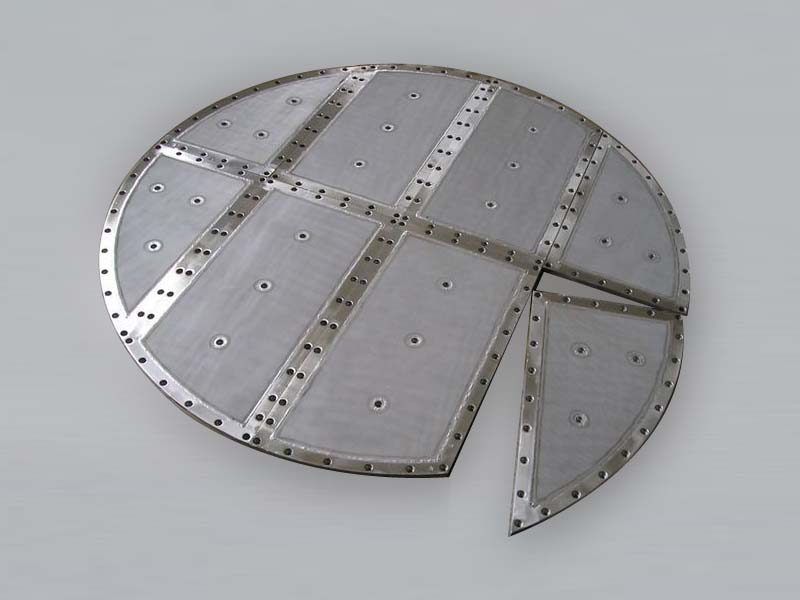
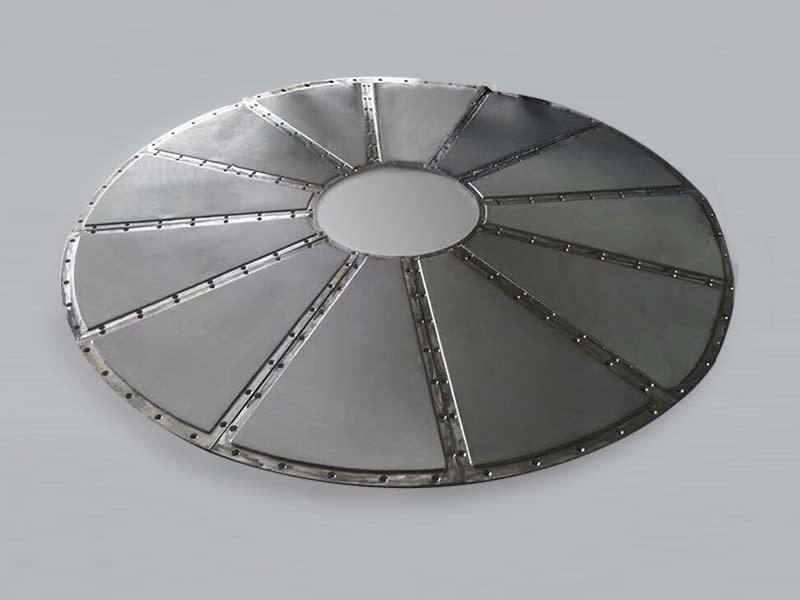
Filter Plate Drawing and Installation Dimensions
Use the guide below to identify the installation details on your drawing. Specify the filter-medium diameter separately from the overall flange diameter. Center openings, bolt circles, sealing faces, support members and segment joints are included only where required by the design.
- Plate and flange: filter-medium diameter, overall outside diameter, center opening, mesh thickness and overall assembly thickness.
- Mounting and sealing: bolt-circle diameter (PCD), hole count and size, flange thickness, sealing-face dimensions and any groove details.
- Welded or segmented construction: section outlines, joint locations, attachment, support layout and interface sealing.
- Acceptance: drawing tolerances, flatness requirement, inspection datum and agreed installation checks.
Custom Sintered Wire Mesh Filter Plate Specifications
| Item | Custom requirements |
|---|---|
| Filter medium | Multi-layer sintered metal wire mesh. |
| Nominal filtration rating | 1–300 μm; project-specific grade. |
| Shape and dimensions | Circular, annular, conical and drawing-specified configurations. |
| Flange | Diameter, thickness, bolt pattern and sealing surface to customer requirements. |
| Assembly | One-piece, welded or segmented. |
| Support and connections | Frame, perforated support layer and connections specified by the equipment drawing. |
| Tolerances | Dimensions, flatness and assembly tolerances agreed in the drawing. |
| Operating duty | Material, temperature, differential pressure and flow reviewed together. |
Available Materials and Grades
304 / 304L stainless steel.
316 / 316L stainless steel.
310S and 347 stainless steel.
2205 / 2507 duplex stainless steel.
904L high-alloy stainless steel.
Monel 400.
Inconel 600 / 625.
Hastelloy C276 / X.
Titanium TA1, Grade 1 and Grade 2, supplied to the grade and material standard specified in the order. Grades from different standards are not treated as automatically equivalent.
Bronze and brass.
Material selection considers fluid composition, concentration, operating temperature, cleaning chemicals and corrosion conditions. The materials for the filter medium, flange, frame and seals are specified separately for each order.
Fluidizing Media Reference Tables
These existing catalog reference tables are retained pending confirmation of the airflow unit notation and the high-/low-flow labels. Confirm the original measurement basis and the required acceptance values with us before using either table as an order specification.
| The Specification of High Flow Fluidizing Media | ||||
| Item | Air flow | Nominal thickness | ||
| CFM/ft² @ 2inches water | m³/m² @50.8mm water column | mm | inch | |
| FA-SFP-0005 | 5 | 1.524 | 1.37 | 0.054 |
| FA-SFP-0010 | 10 | 3.048 | 1.47 | 0.058 |
| FA-SFP-0025 | 25 | 7.62 | 1.57 | 0.062 |
| FA-SFP-0050 | 50 | 15.24 | 1.65 | 0.065 |
| Note: Other specifications could be customized and test. | ||||
| The Specification of Low Flow Fluidizing Media | ||||
| Item | Air flow | Nominal thickness | ||
| CFM/ft² @ 2inches water | m³/m² @50.8mm water column | mm | inch | |
| FA-SFP-0200 | 200 | 1.524 | 1.02 | 0.04 |
| FA-SFP-0400 | 400 | 3.048 | 1.19 | 0.047 |
| FA-SFP-0600 | 600 | 7.62 | 1.32 | 0.052 |
| FA-SFP-1000 | 1000 | 15.24 | 1.63 | 0.064 |
| Note: Other specifications could be customized and test. | ||||
Sintered wire mesh filter plates are made from multiple layers of metal wire mesh bonded by sintering and fabricated into filter assemblies with flanges, support structures or segmented connections. Filtalloy supplies custom plates for agitated Nutsche filters and filter dryers (ANF/ANFD), together with conical sintered mesh components for fluidized beds. Nominal filtration ratings range from 1–300 μm.
Plate size, material, rating, flange diameter and thickness, mounting holes and one-piece, welded or segmented construction are specified by the customer. We work from drawings, existing samples or new-project operating requirements to confirm manufacturing, installation and inspection details for the finished component.
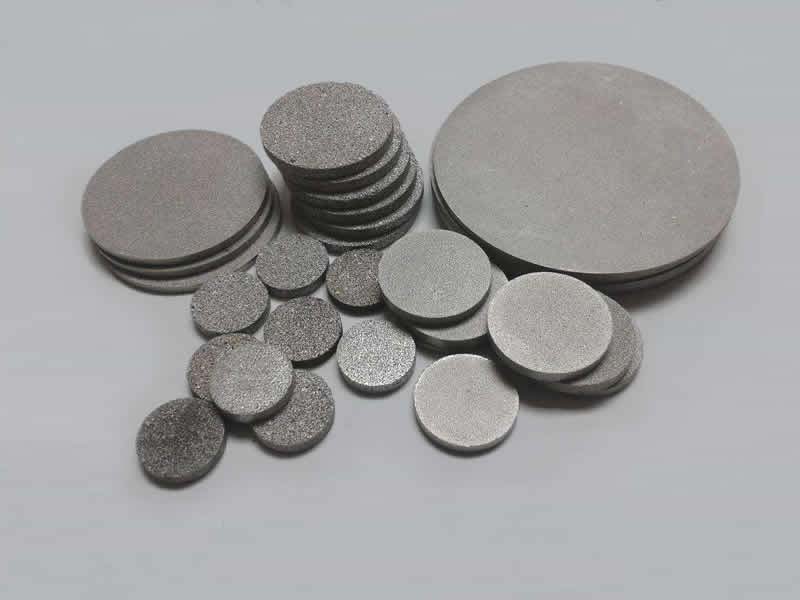
Small sintered mesh filter discs and small conical filters are also supplied to customer drawings. Discs can include an outer ring or support structure; the plate, disc and cone options below help you identify the drawing details to provide.
On this page: Small filter discs · Plate dimensions · Conical filters · Manufacturing and inspection
Nominal filtration rating: 1–300 μm; the required grade is specified for each project.
Filter media: Multi-layer sintered metal wire mesh.
Custom dimensions: Plate diameter, thickness, flange, mounting holes and sealing surfaces to your requirements.
Assembly options: One-piece, welded or segmented designs specified by the customer.
Operating conditions: Material, temperature, forward and reverse differential pressure, flow and support structure are reviewed together.
Sintered Mesh Filter Components for ANF/ANFD and Fluid Beds
Small Sintered Mesh Filter Discs
Small filter discs are supplied on an ongoing basis in round, annular, square, fan-shaped and drawing-defined profiles. An outer ring or support structure can be included where specified. These are cut and fabricated sintered wire mesh components; this page does not describe powder-sintered filter plates.
For a small disc, provide the outside diameter or outline, center opening if present, mesh thickness, material, nominal rating, edge requirements and quantity. Where a ring or support is required, include its dimensions, material, attachment and mating details.
For sheet material and other finished-element configurations, see our sintered wire mesh and filter elements page.
ANF/ANFD Filter Plates
Custom sintered mesh plates provide the filter medium in agitated Nutsche filters and filter dryers. The plate works with the equipment’s support, sealing and drainage structures. Material properties, nominal filtration rating, operating differential pressure, cleaning method and installation details are reviewed for each project.
Round, annular, one-piece, welded and segmented assemblies can be fabricated with flanges, central openings and mounting holes. Filtering, washing and drying are performed by the equipment system; the plate structure and rating must match the process.
One-Piece, Welded and Segmented Filter Plates
One-piece plates: Manufactured to the required dimensions, with an outer frame, flange or central mounting structure where specified.
Welded plates: Multiple sintered mesh sections are welded into a complete assembly. Weld locations, flatness and installation dimensions are checked against the drawing.
Segmented plates: Individual sections are fitted using the customer-specified connections and fixing arrangement. Segment dimensions, joint areas and sealing requirements are reviewed.
The customer specifies the dimensions and assembly format. Before production, we review material, fabrication, welding, fit and inspection requirements and discuss any manufacturing details that need adjustment.
Segment joints, supports and drainage interfaces
For a segmented or welded ANF/ANFD plate, the equipment assembly drawing should identify which surfaces carry the load and which interfaces prevent unfiltered liquid from entering the filtrate side. A welded panel joint and a removable joint sealed by a separate gasket need different details; the segment outline alone does not define either boundary.
- Connections and seals: define the joint form, fixing arrangement, seal location and mating geometry; identify seals or hardware supplied separately.
- Support and clearance: show support contact areas and spans, locating points and any required clearance to moving equipment parts. A support change can alter the load on the filter medium.
- Drainage: show the intended filtrate passages and outlets so joints, support members and sealing regions do not close the required paths.
Our component drawing covers the plate or segments and the agreed manufacturing checks. Equipment-side supports, seals and drainage need to match the assembly drawing; any assembled sealing or flow verification has its own agreed scope. Existing drawings can establish these details without a new full process questionnaire.
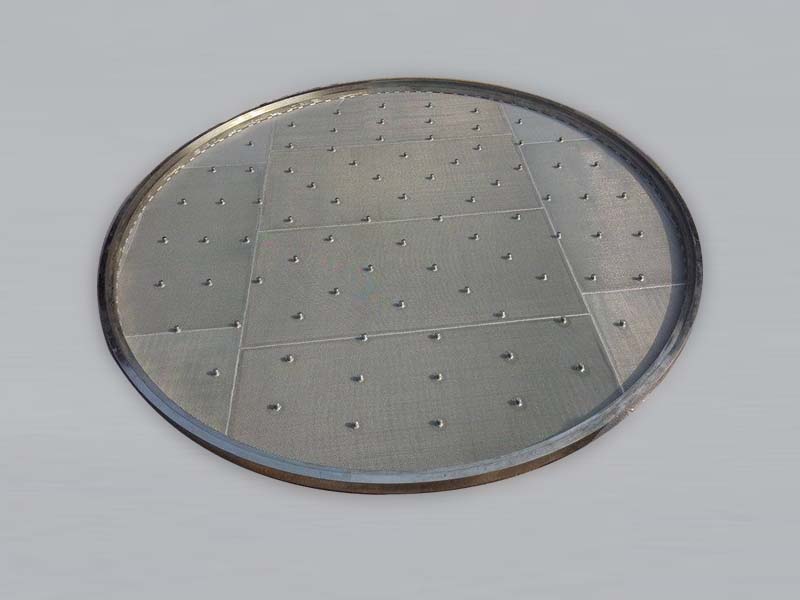
SFP-6: Reverse view of a sintered mesh filter plate showing its outer frame and support structure.
Conical Sintered Mesh Components and Small Cone Filters
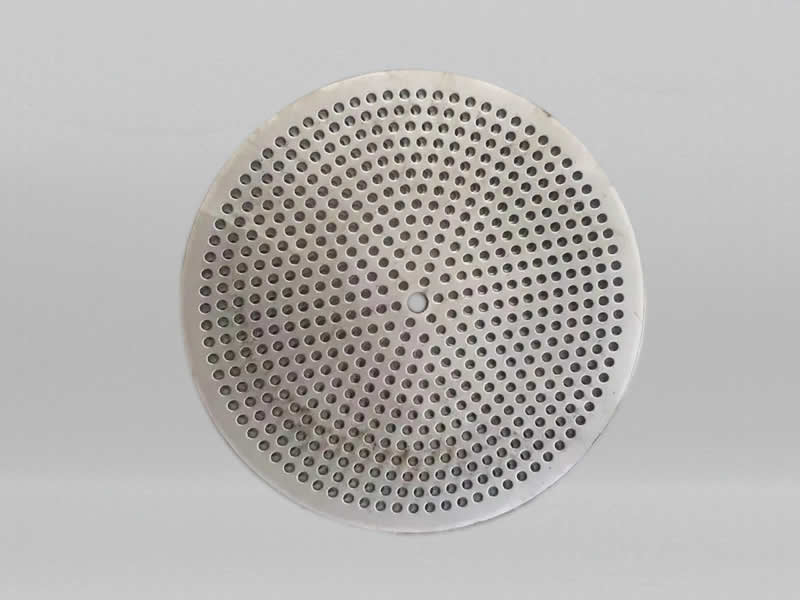
Large conical equipment components: sintered mesh cones can be supplied with perforated support layers and customer-specified connection structures. Their role as gas distributors, particle-retention components or other parts of a fluidized-bed system is defined by the equipment drawing. We supply the component rather than the complete fluidized-bed system.
Small sintered mesh cone filters: also available to drawing. Specify the conical profile, open or closed tip, end dimensions, support and mounting or connection details. These small filters are a separate supply option from the large fluidized-bed assemblies shown in the existing photographs below.
For either type, provide the process medium, flow, allowable pressure drop, particle characteristics, temperature and normal flow direction. Any reverse-flow or cleaning duty must be specified separately.
- Geometry: large-end and small-end diameters, cone height, mesh thickness, and open or closed tip.
- Assembly: flange dimensions, hole pattern, sealing surface, support layer and connection details.
- Duty: normal flow direction, allowable forward differential pressure and any reverse-flow or cleaning limit.
Existing product photographs: the following images show large fluidized-bed components and a perforated support cone. They do not represent small cone filter dimensions.
Operating Temperature and Differential Pressure
A material’s reference temperature capability does not define the rated operating temperature of the complete filter plate assembly. Atmosphere, process fluid, continuous or intermittent duty, differential pressure, supports, welds and seals must be reviewed together.
Forward and reverse differential pressures are confirmed separately, with the direction of pressure and support conditions defined. Customer-specified flange and frame dimensions are reviewed for their fit with the filter assembly.
High- and low-temperature projects require defined operating conditions, material standards and inspection requirements. A single temperature range is not applied to every material and assembly.
Manufacturing and Quality Inspection
We select the sintered mesh material, assembly structure and fabrication dimensions from the drawing, then carry out cutting, forming, fit-up or welding. Assembly dimensions, flatness and filter-medium integrity are checked. Inspection and reporting requirements are defined in the order.
| Inspection | Factory requirements | Conditions to record |
|---|---|---|
| Bubble-point testing | 100% inspection using the applicable ISO 4003 method to assess bubble-point pore size and identify abnormal leakage. | Wetting liquid, test conditions and acceptance limit. |
| Flow / permeability | 100% or batch inspection; flow tolerance is generally ±10%–15%. | Test fluid, temperature, specified differential pressure, effective test area and reference flow. |
| Flow after cleaning | At least 90% of the initial flow under comparable test conditions; integrity is also checked. | Initial and repeat test conditions and filter condition. |
| Clean pressure-drop curve | Batch inspection with water or air at 20°C and specified calibration points. Replacement pressure drop is within ±10% of the original reference. | Reference curve, test fluid, flow, temperature and effective area. |
| Proof-pressure testing | Sampling inspection with a hold at 1.5 times the rated pressure. | Definition of rated pressure, direction, temperature, hold time, support and acceptance criteria. |
| Critical dimensions | 100% inspection. | Plate dimensions, hole locations, flange, sealing surfaces and drawing-specified flatness. |
| Material verification | Batch sampling against the material requirements. | Test method and material documents; the method must verify the required elements. |
| Filtration performance | Type testing with the standard test dust and method agreed for the project. | Particle-size definition, particle type, flow and performance metric. |
Material documentation, a certificate of conformity and bubble-point reports can be supplied as agreed. Individual reports are available for specified critical orders. EN 10204 3.1 documentation is arranged according to the order and the available material documents.
Bubble-point pore size, nominal filtration rating and particle-retention efficiency are reported separately. Quantitative efficiency, burst pressure or forward and reverse differential-pressure data at a specified temperature require a defined assembly and test basis. Proof-pressure holding is not a burst-pressure result.
Cleaning and Service Life
Solvent cleaning and ultrasonic cleaning are recommended. The contamination, filter material, welded structure and seals determine the cleaning agent, temperature and operating conditions. Inspect the plate after cleaning and, where needed, recheck flow and integrity.
Customer email feedback has reported service exceeding 20,000 hours in a specific application. Service life varies with the process fluid, temperature, differential pressure, cleaning and maintenance conditions.
For layer edges and joints, see sintered mesh checks after cleaning. Pharmaceutical CIP/SIP and documentation requirements are addressed on our pharmaceutical filtration page; the appropriate test object and method are described in the test methods and their scope. These requirements are agreed for the supplied component and do not establish an unlimited cleaning-cycle life.
Sintered Mesh Filter Plate FAQ
Can you supply small discs with outer rings or supports?
Yes. Small sintered mesh discs are a regular supply product and can include an outer ring or support structure made to the drawing. Specify the shape, dimensions, material, mesh requirement and attachment details.
Do you supply small sintered mesh cone filters?
Yes. Small cone filters are supplied to drawing as well as larger fluidized-bed components. Provide the cone dimensions, tip or opening, connection, support and operating conditions.
Can you make filter plates and flanges to our dimensions?
Yes. We manufacture to your drawings or technical requirements. Dimensions, tolerances, material, mounting holes and sealing details are reviewed before production.
Can you supply welded or segmented filter plates?
Yes. The customer specifies the assembly format. We review section dimensions, weld locations, connections, fit and inspection requirements.
Is the 1–300 μm range an absolute filtration rating?
No. It is a nominal filtration rating range. The grade and verification requirements are agreed for each project; it is not an absolute retention guarantee for every particle.
Can you replace an existing ANF/ANFD filter plate?
We can assess a replacement from drawings or an old sample. Installation dimensions, sealing, material, nominal rating and the original flow and pressure-drop requirements must be matched.
How should sintered mesh filter plates be cleaned?
We recommend solvent cleaning and ultrasonic cleaning. The cleaning agent and operating conditions depend on the contamination, material, welds and seals. Flow and integrity can be checked after cleaning.
Which inspection documents can you provide?
Material documentation, a certificate of conformity, bubble-point reports and other inspection reports can be supplied as agreed. The report scope and individual or batch reporting requirements are confirmed before production.
Send Your Drawing, Specification or Sample Photos
Send the drawing or existing specification you have, together with the quantity and the parts you need. Sample photos and main dimensions are a useful starting point when a drawing is unavailable.
If you are still defining the product, briefly describe its intended use. We will clarify the additional manufacturing and inspection details with you.