Quick Definition
Epoxy coated wire mesh is woven metal support mesh with a powder coating cured onto its surface. In pleated air filters, selection must address bare and coated dimensions, effective flow space, condition after pleating and compatibility with service conditions. Support performance and particle filtration efficiency require separate verification.
By Jack Sun. Our company is based in Anping, Hengshui, Hebei, China, a region known for wire mesh manufacture. Jack Sun works in metal mesh weaving and industrial filter manufacture. This guide focuses on support mesh production, pleating and procurement inspection.
Airflow, pressure changes and vibration can deform filter pleats. A support layer helps the media retain its shape and spacing. The useful choice balances strength, coating performance, processing, durability and cost against the complete filter requirements.
1. What Is Epoxy Coated Wire Mesh?
We manufacture the mesh by weaving first, then applying epoxy powder and curing it. Q195 carbon steel is a common substrate; stainless steel or aluminum substrates can be customized as required. The main duty discussed here is media support. The media and complete filter tests establish particle retention.
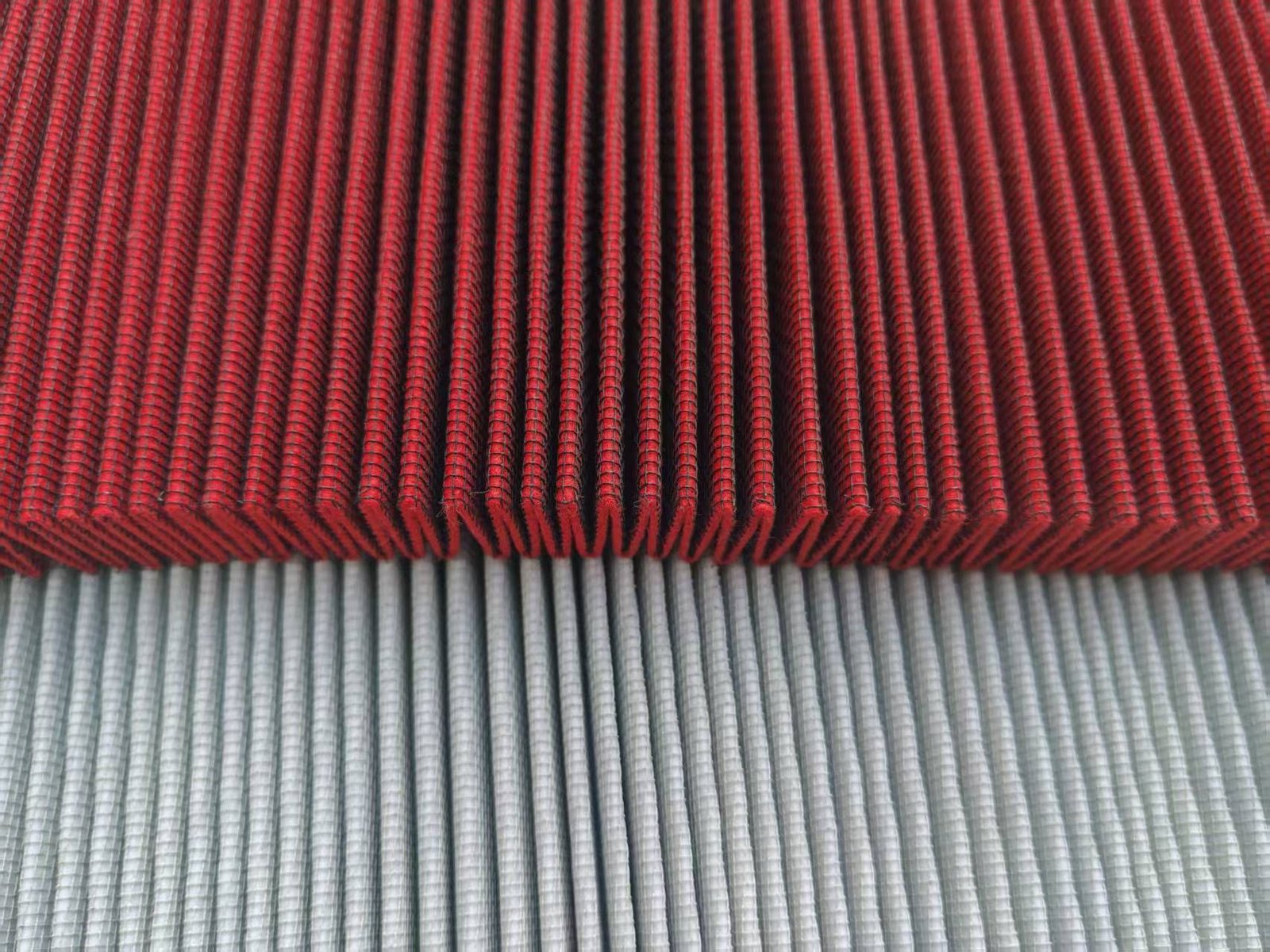
The metal provides structural support, while the coating protects the substrate and supplies the required surface properties. This is part of the broader coated wire mesh product category.
2. The Role of Coated Mesh in Pleated Filters
Maintain pleat shape
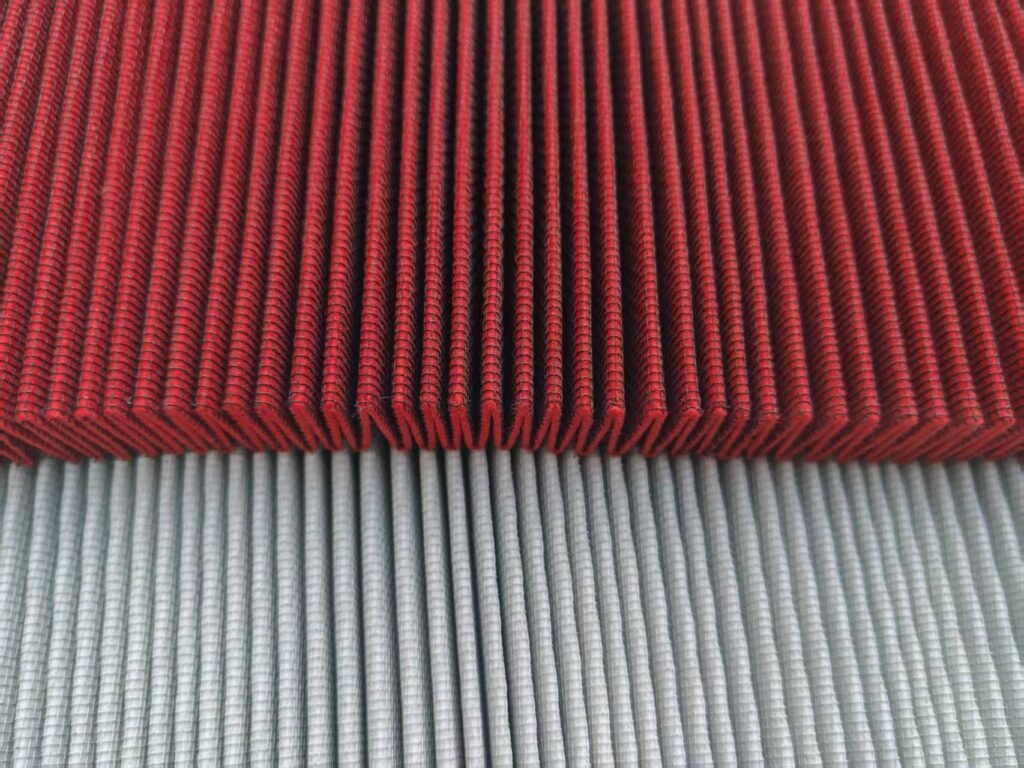
Pleating increases media area within limited space. Collapsed pleats reduce effective area and airflow channels; an appropriate support helps maintain spacing and shape.
Provide mechanical support
The support needs adequate stability under differential pressure and vibration, matched to the complete filter element.
Support manufacturing
Cutting, pleating, bending and assembly can change the material. Strength before forming does not prove acceptable condition afterward.
Protect the substrate
A complete coating compatible with water, oil or other contact media can reduce direct exposure. Inspect cut edges, forming damage, wire crossings and defects. Coating does not guarantee freedom from corrosion.
3. Why Use Epoxy Coated Wire Mesh?
Performance depends on the substrate, preparation, powder formulation, deposited quantity and cure. Production must control workpiece temperature, hold time and coating uniformity, with traceable batch records. Use sample validation and process records, including coverage and appearance after pleating.
Corrosion protection
Validate oil, humidity or salt spray exposure as relevant. One test does not cover every environment or directly predict service years.
Pleating capability
The actual bend angle, inside radius, wire diameter and forming speed depend on the filter and equipment. Do not apply a universal 180° bending requirement. Brittle coating, poor adhesion or too small a radius can cause cracking or loss. Inspect peaks, valleys and crossing points after actual pleating.
Performance and cost
Where the coating cannot meet temperature or chemical demands, assess a suitable stainless steel grade. Coated carbon steel can be economical where service conditions and samples support it. Include processing, scrap and validation in the comparison.
4. How the Mesh Is Manufactured
Our production route is plain weaving → substrate preparation → epoxy powder spraying → curing → inspection, slitting and packing. Looms and coating equipment perform separate operations.
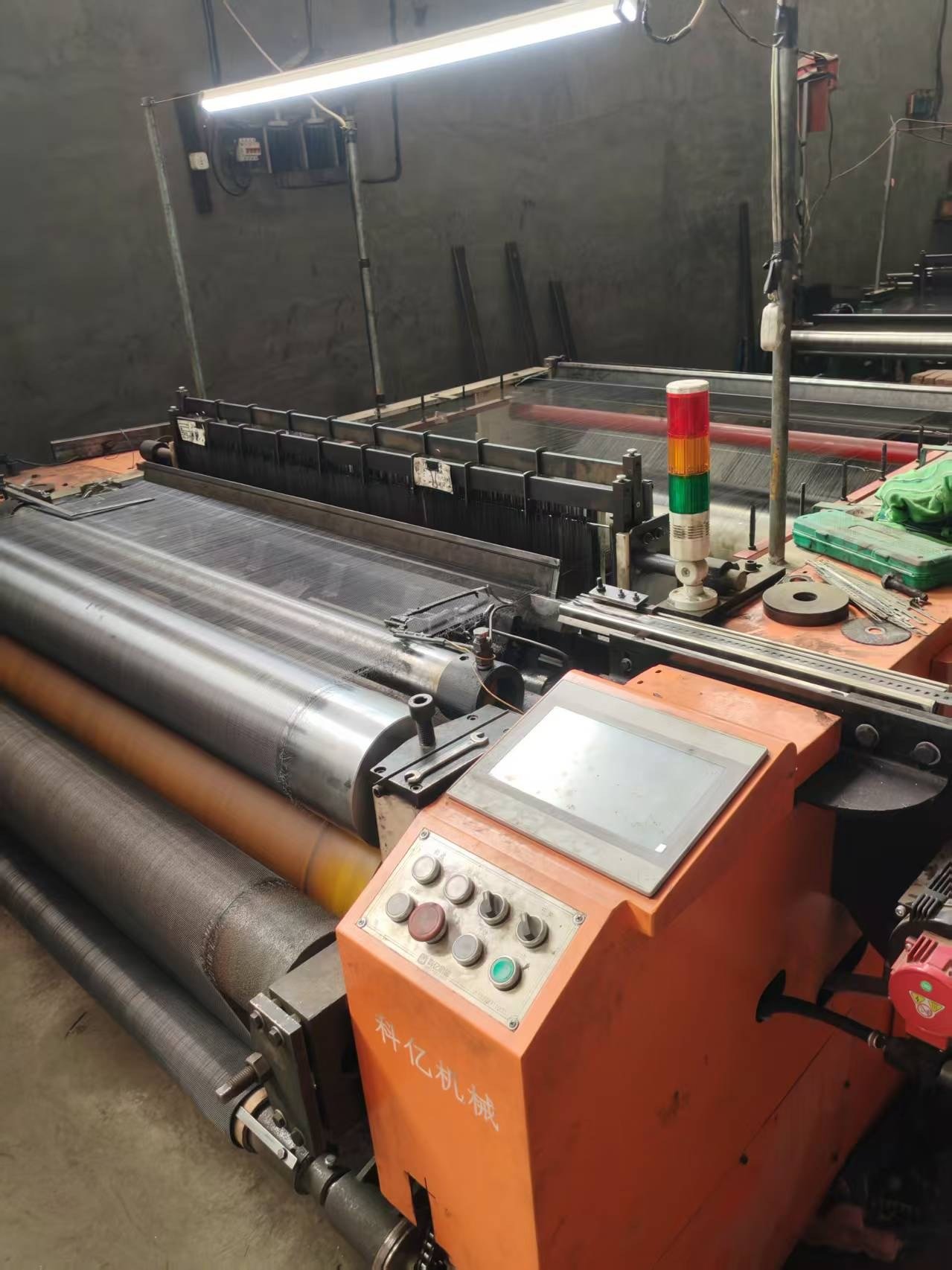
Weaving and preparation
Control warp and weft diameters, mesh counts, weave and flatness before removing contamination that would impair adhesion. Match preparation to the substrate and powder, and check coverage at crossings and edges.
Powder application
Specify coating by an agreed mass increase in g/m² or thickness. State whether mass is measured per projected mesh area or actual wire surface area. Powder consumed is not the deposited quantity. Different mesh counts, wire diameters and coating densities prevent a universal conversion from g/m² to film thickness. Agree the measurement basis and acceptance values for each project.
Curing
Use the actual powder technical data window. Verify the hold time after the workpiece reaches the required temperature, and correlate oven temperature, line speed and workpiece temperature in records. Do not apply one temperature and time to every formulation. Cure temperature is not the filter’s long term service temperature.
Adequate cure develops the formulation’s intended properties, but does not automatically provide UV resistance. Conventional pure epoxy powder is mainly used indoors or as a primer; sunlight exposure requires separate coating and weathering assessment. See reference 1.
5. Common Problems After Pleating
- Insufficient or uneven cure.
- Inadequate substrate preparation or contamination.
- Formulation incompatible with the application.
- Coating thickness or cure condition unsuitable for the bend geometry.
- Uneven coverage at wire crossings.
Compare specimens before and after forming and record the test method and acceptance criteria.
6. Select Mesh for the Complete Filter
Match the specification to media, pleating equipment and service environment. Even within a wire mesh filter element, a support opening is not automatically the element’s filtration rating.
Wire diameter
Distinguish bare wire diameter from coated outside diameter. Bare wire controls stiffness, weight and forming; coated diameter with warp and weft pitch determines remaining flow openings. Inspect the finished coated mesh. The wire mesh size calculator can assist with geometric checks; account for the finished coating and both mesh directions.
Mesh count and uniformity
Specify both directions and both wire diameters. A 12 × 10 mesh is not an equal count square mesh. Coating buildup and blocked crossings change airflow; inspect openings, blocked area and uniform contact with media.
Coating quantity
Balance coverage, adhesion and formability. Excess coating can narrow openings or accumulate at nodes; inadequate coating may expose metal. Measure thickness, mass gain and appearance separately by agreed methods.
Substrate
Choose the substrate before finalizing wire and opening dimensions. Carbon steel, stainless steel and other options differ in corrosion, strength, cost and processing.
Forming and compatibility
Use actual equipment to check bend angle, radius, pleat spacing and springback. Check that the mesh and cut edges do not abrade or puncture media, and verify adhesive, end cap and seal compatibility.
Environment
Confirm temperature, moisture, oil, chemicals, pressure changes, vibration and intended service life before procurement.
7. Compare Other Support Materials
Stainless steel mesh
A suitable grade may serve higher temperature or chemical demands. Disposable automotive filters can still encounter moisture, salt or oil mist; disposable use does not remove corrosion validation. Compare complete requirements and total cost.
Aluminum mesh
It offers low weight, subject to mechanical strength, long term corrosion, temperature stability and assembly compatibility.
PP mesh
It can suit some low temperature, low pressure conditions. Greater mechanical or thermal loads may call for metal support.
Galvanized mesh
Inspect zinc layer continuity after pleating, cut edges and particle shedding requirements. Application data are needed before making downstream safety claims.
8. Validation Before Volume Production
- Check wire diameter, opening dimensions and uniformity.
- Inspect coverage, pinholes, contamination and surface defects.
- Test adhesion using an agreed method.
- Bend or pleat with the intended production process.
- Inspect cracking, coating loss, delamination and exposed substrate.
- Validate relevant oil, humidity, salt spray and temperature cycles.
- Test the complete filter assembly.
Agree methods, specimen form, quantities, pass criteria and batch records before testing. ISO 2409 and ASTM D3359 provide adhesion methods, but are not technically equivalent. Confirm whether prescribed cuts apply to fine wires, crossings and nonplanar mesh surfaces. Our confirmed acceptance requirements are ISO 2409 grade 0 and ASTM D3359 Method B grade 5B. Orders and reports should identify each method, specimen and result separately; formal reports remain to be supplied. These criteria do not establish certification or an issued report.
At the specified airflow, measure initial pressure drop and assess resistance after dust loading, structural stability and particle efficiency as applicable. Passing support mesh inspection does not replace complete filter validation, and mesh count alone cannot establish a filter grade.
9. Information for a Quotation
- Substrate: carbon steel, stainless steel or another specified material.
- Bare and coated wire diameters; warp and weft mesh counts or openings.
- Width, roll length, sheet or strip dimensions.
- Coating system, thickness or mass gain and measurement basis.
- Color and identification requirements.
- Automotive, industrial or another filter application.
- Pleating process and equipment requirements.
- Temperature, oil, water, chemicals and other exposure conditions.
- Required inspection, samples, tests and reports.
10. Custom Supply Specifications
The following are confirmed factory supply data. Validate individual combinations of wire, openings and coating with samples.
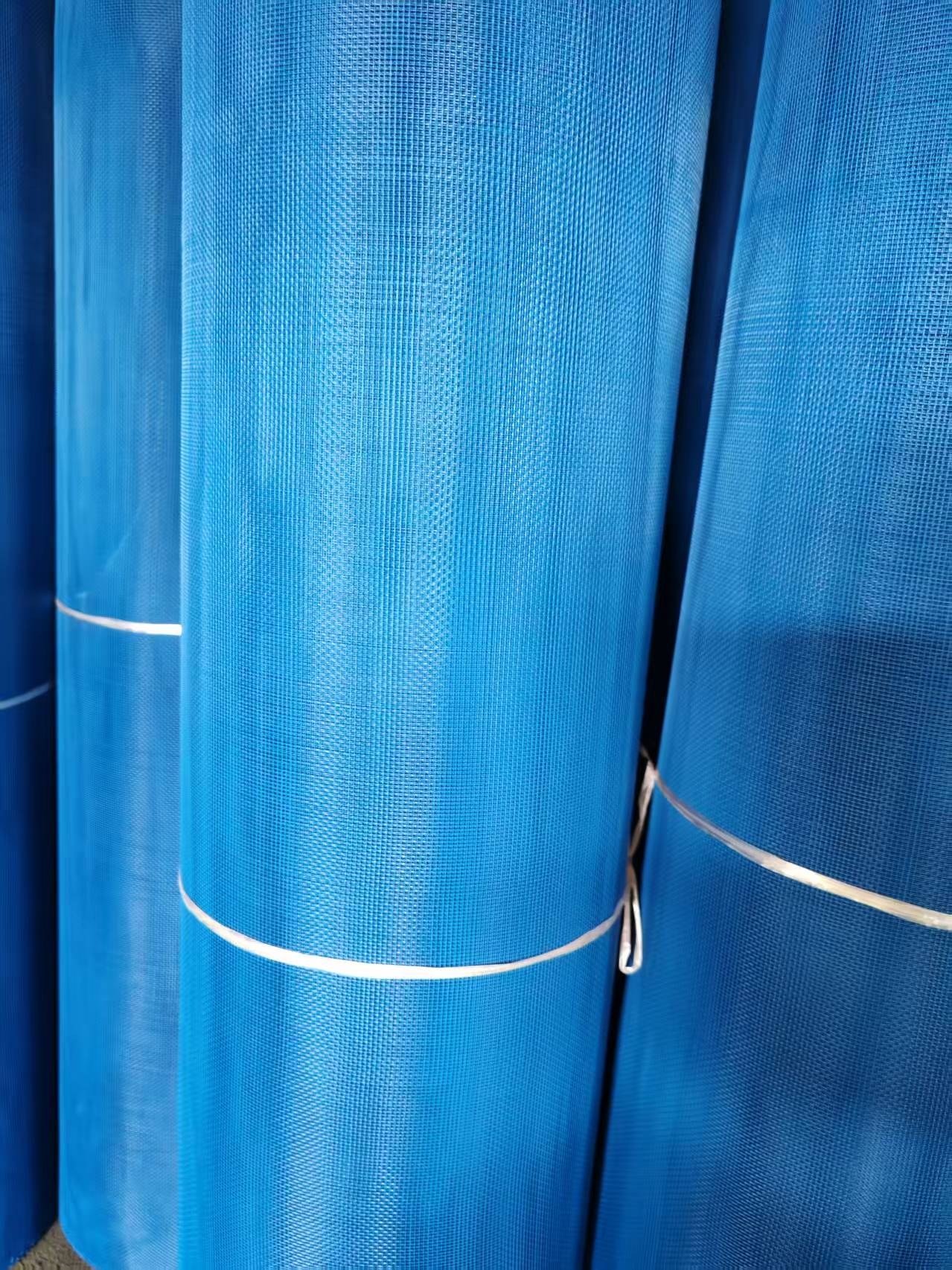
- Common bare wire diameter: 0.18–0.50 mm.
- Common warp × weft mesh counts: 12 × 10, 16 × 14, 18 × 14 and 22 × 20. Custom 5 mm openings are available by agreement; specify bare or coated condition.
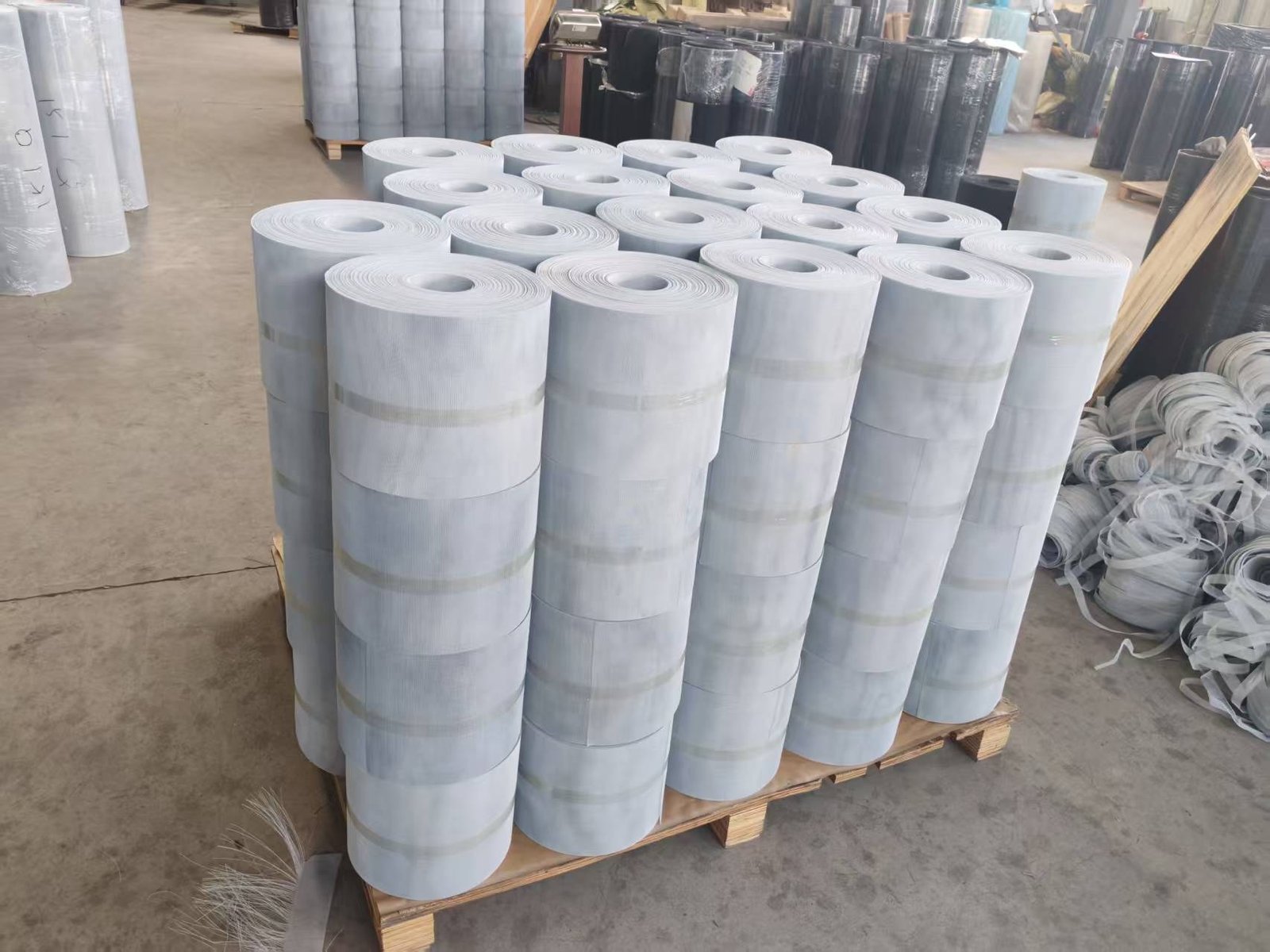
- Common width: 130 cm; other cut sizes by project.
- Colors: black, gray, green, white and red.
- Supply forms: rolls, sheets and strips.
- Maximum roll length: 300 m. Continuous rolls without joins can be supplied as required; confirm slitting and packaging in the order.
11. Other Industrial Filtration Applications
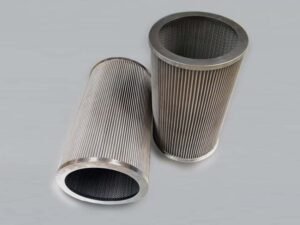
Coated mesh can be considered for other systems, but specifications are application dependent. Hydraulic service requires separate assessment of oil, temperature, differential pressure, coating loss and assembly structure. Air filter acceptance does not automatically qualify hydraulic service. See our stainless steel pleated filter cartridges for another construction to evaluate against the application.
12. Why There Is No Universal Support Mesh
Some environments favor stainless steel; others permit epoxy coated steel to balance performance and cost. Use the sequence: environment → substrate → wire and openings → coating → forming validation → complete element testing.
13. Frequently Asked Questions
What is the main use?
Support for pleated media, helping maintain its shape. Direct filtration duty must be established by the design.
Can it be used in pleated air filters?
Yes, where substrate, coating, mesh geometry and forming fit the application.
Is a thicker coating better?
No. Excess coating may narrow openings and complicate forming. Balance protection and processing.
Can stainless steel replace it?
In some environments it may offer useful temperature, corrosion or reuse capability. Compare service conditions and total cost.
How is quality checked?
Inspect openings, wire, coverage and adhesion, then coating condition after forming. Add relevant environmental and complete filter tests.
Can it be customized?
Yes, including wire diameter, mesh count, width, roll length, color, resin system and cut format.
Can it serve hydraulic filters?
Some designs may allow it, subject to oil compatibility, pressure, temperature, adhesion and life assessment.
14. Select Against Finished Filter Requirements
Match substrate, openings, coating, forming, environment and cost to the finished filter. Epoxy coated wire mesh can offer useful support and surface protection in appropriate pleated air filters. Confirm suitability through forming, assembly and functional tests.
Discuss Your Support Mesh
For a quotation, provide the application, substrate, wire diameter, openings, width, coating, environment and testing requirements.
References
- AkzoNobel Interpon: Epoxy Technology — general UV exposure boundaries, not proof of our specific powder formulation.
- ISO 2409:2020, Paints and varnishes — Cross-cut test.
- ASTM D3359-23, Rating Adhesion by Tape Test.