By Jack Sun
Our company is based in Anping County, Hengshui, Hebei, China, a center of wire mesh manufacturing. I work with metal wire mesh weaving and industrial filter element manufacture. This guide focuses on filtration requirements, assembly and custom manufacturing.
Quick Definition
A wire mesh filter cap is a compact metal mesh filtering component formed to suit an equipment flow path and interface. Select it by mesh structure, effective area, allowable differential pressure, material and fit. Mesh count alone cannot establish its actual retention performance. Use the wire mesh size calculator for geometry, then validate the complete component.
1. Introduction
A small filter cap may sit directly in a pump, valve, nozzle, pipe inlet or another equipment assembly. It can intercept particles, protect components from foreign material or provide preliminary filtration. Its small size does not make selection simple.
Performance depends on the combination of wire diameter, opening, open area, effective filtering area, flow, pressure drop, material and installation. Overly fine mesh, insufficient active area and an unsuitable interface can lead to excessive resistance, rapid blockage or assembly failure. When replacing a cap, confirm the old part’s dimensions, operating conditions and failure cause together.
2. What Is a Wire Mesh Filter Cap?
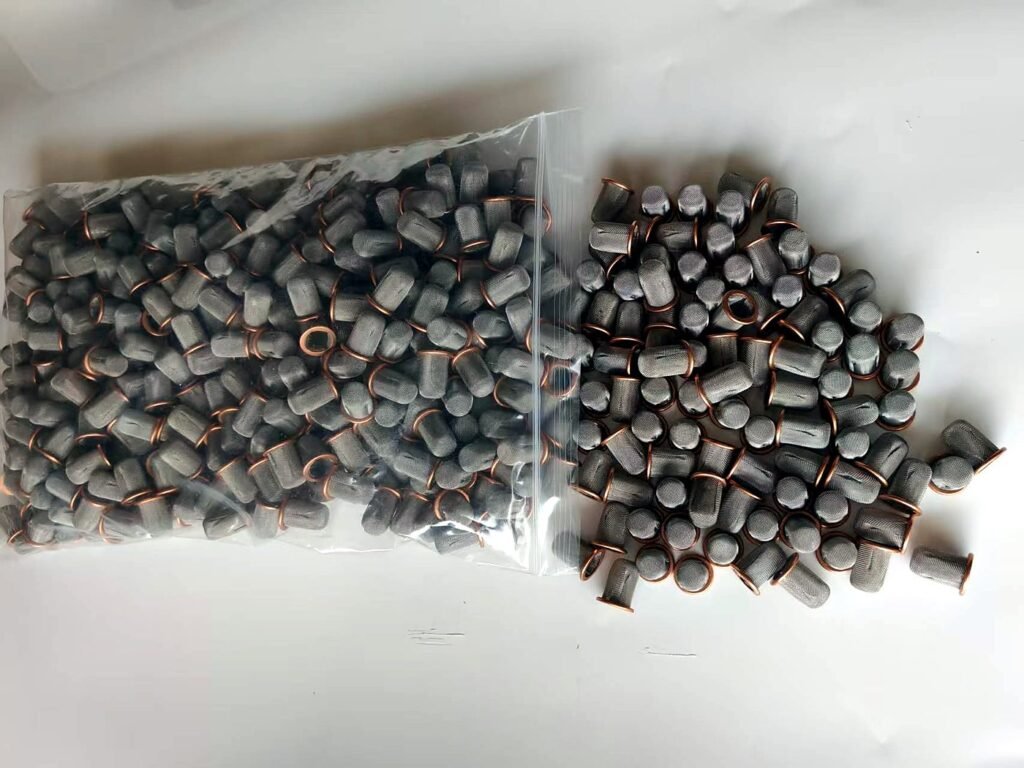
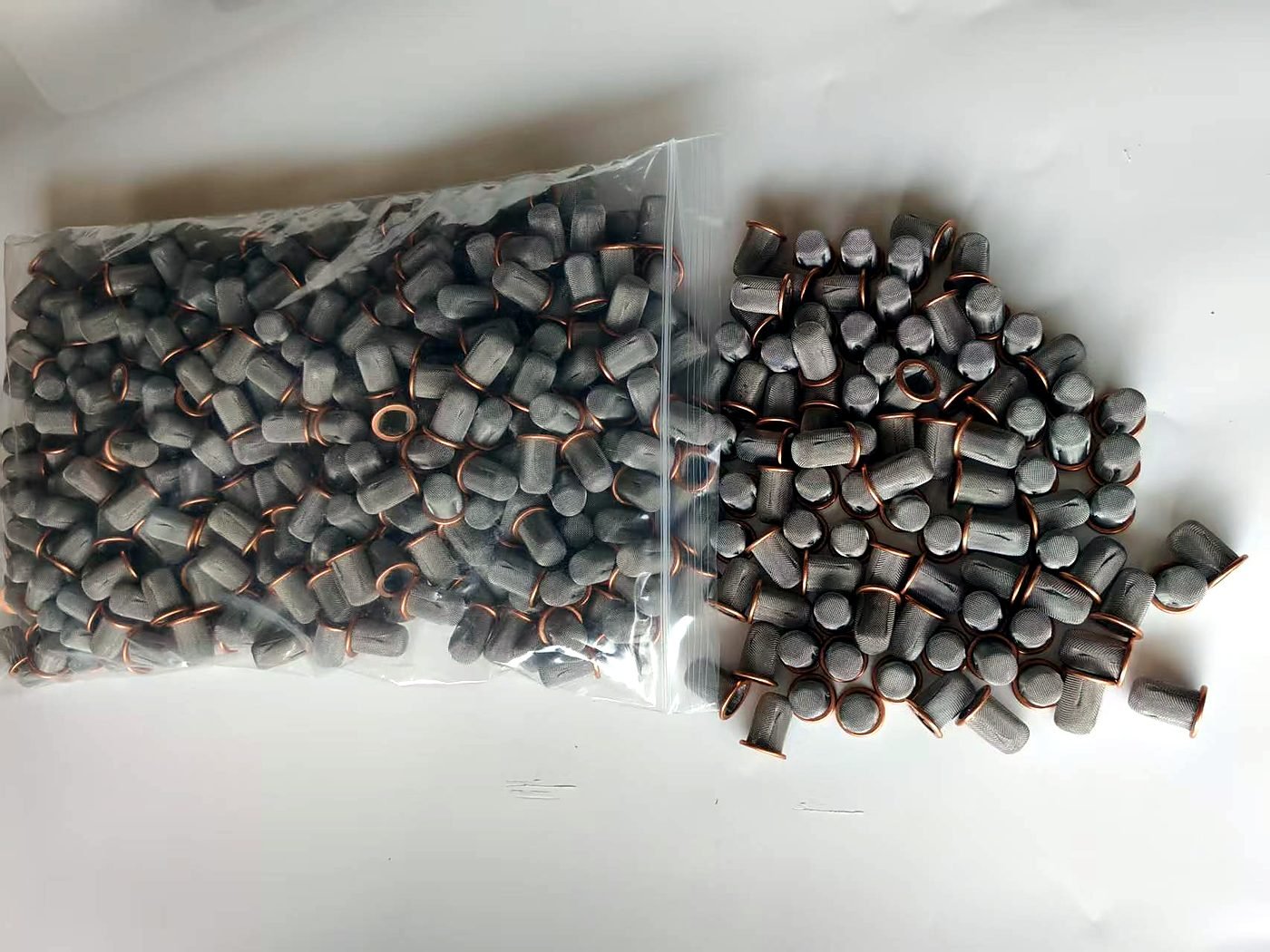
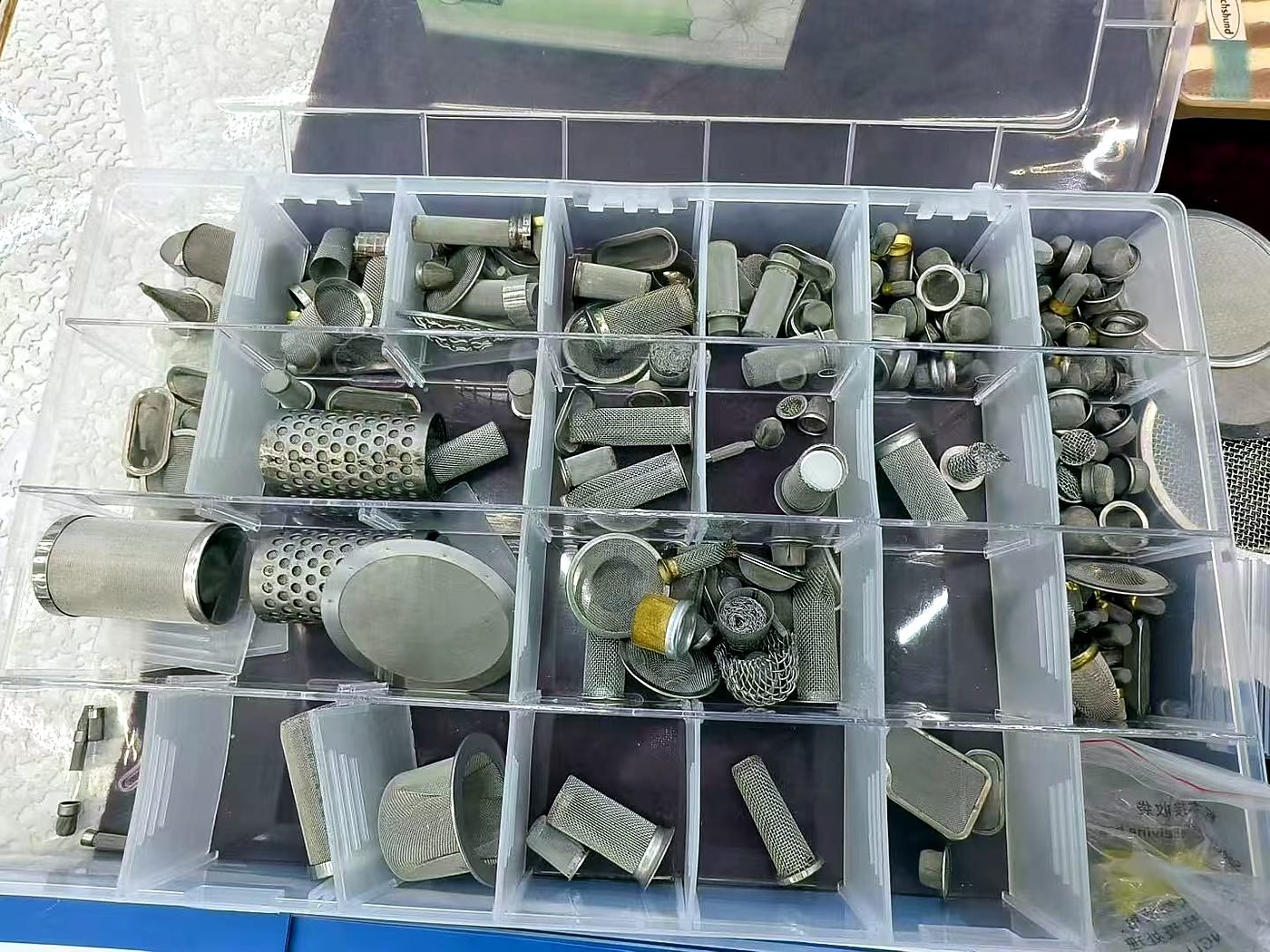
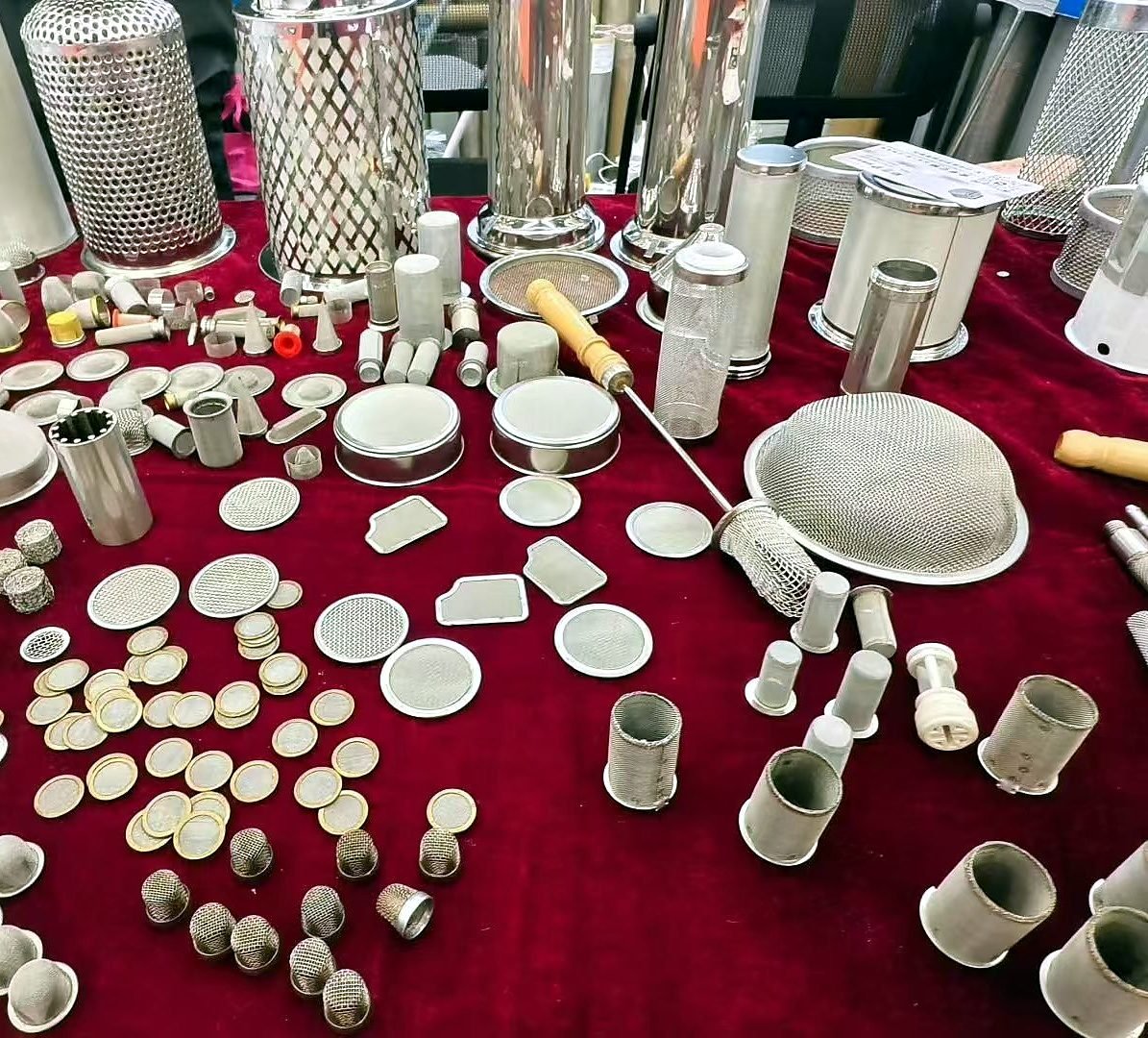
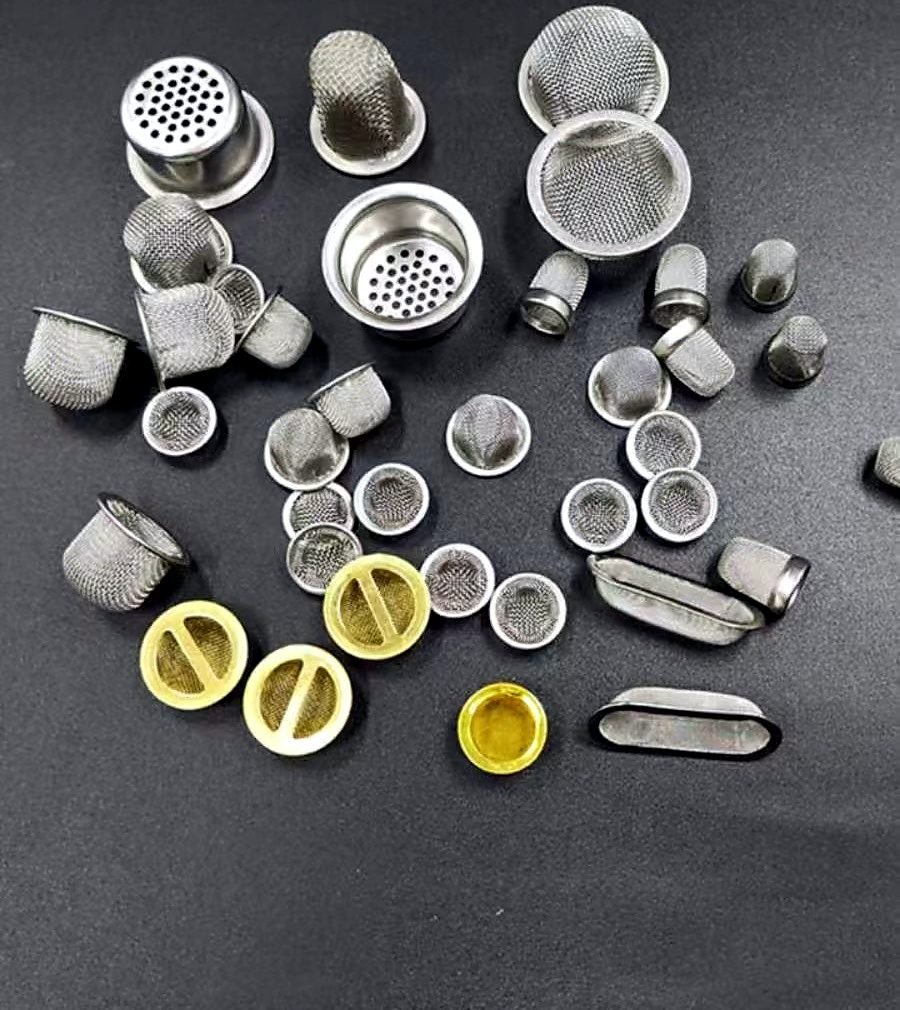
A wire mesh filter cap is made by forming, welding, edging or crimping metal mesh. It may use a single layer, multiple layers or a support combination. Within the broader product family, it is a wire mesh filter or one of the available wire mesh filter elements.
Common shapes include cups, cylinders, circular or oval forms and custom geometries. Installation space, the flow path and the equipment interface normally determine the final shape.
3. Which Parameters Determine Performance?
Evaluate the cap as four connected parts:
- Filtering medium: mesh count, wire diameter, weave and opening.
- Load-bearing structure: body, rim, reinforcement and joints.
- Flow path: effective filtering area, open area and entry direction.
- Installation interface: outside diameter, inside diameter, height, flange and mating dimensions.
Finer openings may improve interception of some particles while increasing resistance. A smaller cap may fit the equipment but reduce active area. Material affects corrosion resistance, temperature compatibility and manufacture; geometry affects fit, sealing and mechanical stability.
4. Mesh Count, Wire Diameter and Opening
Mesh count is not a final filtration rating
Here, mesh count M means the number of openings per inch. It must be used with wire diameter. For regular square-opening mesh with equal warp and weft specifications, the same mesh count with different wire diameters gives different openings and open areas. Specify both warp and weft counts, wire diameters and weave.
Particle shape, size distribution, fluid viscosity, flow direction and contamination also influence performance. A higher count alone does not establish a better filter.
A square-opening geometry example
For equal warp and weft regular square mesh, estimate the opening using a = 25.4/M − d, where a and wire diameter d are in mm and M is in openings per inch. The theoretical open area is OA = [a/(a + d)]² × 100%.
- 100 mesh with 0.10 mm wire: opening 0.154 mm (154 μm), open area approximately 36.8%.
- 100 mesh with 0.15 mm wire: opening 0.104 mm (104 μm), open area approximately 16.8%.
These are geometric examples, not fixed supply specifications or guaranteed filtration performance. Do not apply the formula directly to Dutch weave, multilayer media or unequal warp and weft structures. Check whether forming has stretched or distorted the openings.
Geometric opening and actual retention
A geometric opening describes mesh structure; it is not an absolute retention rating confirmed by a specified test. Particle shape, opening distribution, forming distortion, bypass gaps and operating conditions all matter. Critical applications should define the test method, particles and allowable pressure drop, then verify samples in representative conditions.
An enquiry for “a 100 mesh filter cap” is incomplete without wire diameter, the filtration requirement, medium and flow. Important projects also need allowable pressure drop and test conditions.
5. Balancing Flow, Open Area and Pressure Drop
A cap must intercept the relevant particles while allowing sufficient fluid through. Evaluate open area, active area, mesh structure, fluid properties and contamination together.
- For high flow, check effective area, open area and the flow path.
- For low allowable pressure drop, check active area, openings and flow restrictions.
- For high particle loading, assess blockage rate, cleaning and service life.
- For restricted space, check geometry, interfaces and the remaining filtering area.
Distinguish clean-element pressure drop from pressure drop after loading. Particles accumulate during use and can progressively increase resistance. Neither the finest mesh nor the highest open area is a universal solution.
Effective filtering area excludes mesh covered by edging, welds or installation parts. Support coverage also affects the flow path. Actual volume flow Q divided by effective mesh area A gives superficial velocity, not local velocity inside each opening, and does not by itself calculate total cap pressure drop.
System operating pressure and differential pressure across the cap are different requirements. Deformation depends strongly on differential pressure, flow direction and support. Specify the maximum differential pressure at blockage, possible reverse flow and pressure fluctuations separately.
6. How to Choose Materials
Start with the medium, temperature, corrosion environment, strength and manufacturing method.
- 304 stainless steel: a candidate for many industrial conditions, subject to compatibility with the actual medium and temperature.
- 316L stainless steel: a candidate for some corrosive conditions; assess composition, chlorides, pH, temperature and cleaning. It is not universally suitable for every corrosive medium.
- Copper or brass: possible for specific fluids and equipment, with compatibility and strength checks.
- Carbon steel or surface-treated material: potentially economical where corrosion exposure and long-term surface stability permit.
Frequent cleaning, elevated temperature and assembly stress require material selection to be assessed with forming, welding and structural strength.
7. Dimensions, Structure and Installation
Outside diameter is only the starting point
Also specify inside diameter, cap height, wall or body dimensions, flange, rim construction, clearance and critical tolerances.
Match the installation method
- Press-fit or clip-fit: mating dimensions, tolerance and assembly force.
- Welded assembly: weld location, heat effects, distortion and final dimensions.
- Threaded connection: thread standard, diameter, pitch, handedness, effective length, space and sealing method.
- Combined filtering layers: support, contact area and the complete flow path.
An old sample shows the existing construction but does not automatically explain its design. Supply dimensions and operating information with it.
8. Typical Applications
Filter caps can be used for compact liquid or gas filtration, pump, valve or nozzle protection, inlet foreign-object protection, and preliminary filtration in some fuel, lubrication and process-fluid systems. This compact mesh filter must be checked against the medium, flow and assembly requirements.
Metal construction, limited space, some degree of cleanability or a custom interface may make a cap useful. Heavy particle loading, extremely low allowable pressure drop or demanding fine filtration may require more active area, multiple layers or another element type.
9. Common Selection Mistakes
- Treating mesh count as a filtration rating.
- Considering only clean pressure drop.
- Choosing by material price without checking medium and temperature.
- Providing outside diameter but omitting fit and installation.
- Copying an old part without investigating its failure.
- Ignoring burrs, joints, roundness and forming accuracy.
- Using finer mesh without reassessing flow and pressure drop.
10. Customization, Samples and Replacement
Non-standard dimensions, special shapes, materials, connections or active-area requirements can justify custom filter elements. A filter element manufacturer needs the interface, tolerances, material and validation method.
If the old cap blocks quickly, deforms, corrodes or develops joint damage, copying it may reproduce the same problem. Diagnose the cause before changing openings, wire diameter, active area, material or structure.
- Confirm the sample or drawing.
- Confirm operating conditions.
- Select mesh and material.
- Make a first article.
- Inspect dimensions and appearance.
- Perform trial assembly or filtration testing.
- Release the agreed design for production.
11. Quality Control and Technical Requirements
Understand the scope of mesh standards
ISO 9044:2016 addresses industrial woven wire cloth with square apertures for screening, including terms, tolerances, requirements and tests. Other uses may need separately agreed requirements. It does not specify the formed cap’s interface, sealing, load capacity or final filtration performance. [1]
ASTM E2016-22 covers general-purpose industrial woven wire cloth and excludes special structures such as filter cloth and Dutch weave. Specify purchasing and testing requirements for the actual medium. Citing a standard does not establish product certification; the order should identify the applicable edition and requirements. [2]
Suggested inspection items
- Material grade and certification where required
- Mesh count, wire diameter and critical openings
- Outside and inside diameters, height and mating dimensions
- Burrs, welds, flange and surface condition
- Assembly verification or representative filtration tests where needed
12. Information to Provide Before Purchasing
- Existing sample or engineering drawing
- Outside diameter, inside diameter, height and connection dimensions
- Target filtration requirement or particles to intercept
- Mesh count and wire diameter, if known
- Medium, flow and allowable pressure drop
- Temperature, system pressure and differential pressure
- Corrosive or special chemical conditions
- Installation and cleaning method
- Expected service life, order quantity and annual demand
If mesh count or wire diameter is uncertain, provide the old part, photos, key dimensions and actual conditions instead of guessing a specification.
13. Frequently Asked Questions
Is higher mesh count better?
No. Assess count together with wire diameter, opening, open area, flow and pressure drop.
How many microns can a filter cap retain?
The product name does not establish a fixed value. Performance depends on mesh, construction and defined test conditions.
Can a cap be customized without a drawing?
A sample, photographs, key dimensions and operating conditions can usually support an initial specification.
Can a cap be cleaned and reused?
Some can, subject to inspection of blockage, corrosion, deformation, joints and recovery of the openings.
14. Quick Selection Checklist
- Finer interception: target opening, wire diameter and test conditions.
- Higher flow: active area, open area and pressure drop.
- Corrosive service: material, medium and temperature.
- Limited space: body dimensions, interface and flow path.
- Repeated cleaning: material, joints and strength.
- Replacement: sample, operating conditions and failure cause.
15. Conclusion and Engineering Support
Correct selection is a matching exercise across several parameters. Mesh count, material and dimensions cannot be selected independently of operation and fit. Start with the filtration requirement, flow, pressure drop and material; add the sample, drawing and failure history for custom or replacement projects.
Discuss Your Filtration Needs
Share your sample, dimensions and operating conditions. We can discuss drawing-based manufacture, sample review and the inspection requirements for a custom filter cap.
References
- ISO 9044:2016 — Industrial woven wire cloth: Technical requirements and tests. Scope reference for square-opening woven wire cloth, not certification of a complete cap.
- ASTM E2016-22 — Standard Specification for Industrial Woven Wire Cloth. Scope reference for general industrial woven wire cloth and its exclusions.