Author: Jack Sun
We are based in Hengshui, Hebei, China, and manufacture metal wire mesh and filter elements. This article examines biomass flue gas filtration from the perspectives of element fabrication and plant operation. It covers operating conditions, technology selection and the checks needed before retrofitting an existing fabric baghouse.
Quick definition
Sintered metal fiber felt is a porous filter medium made by forming fine metal fibers into a web, layering them and bonding them by sintering. Whether a finished element suits a biomass flue gas system depends on the alloy, fiber structure, support and sealing design, and actual operating conditions. The discussion follows the path from gas conditions and filter selection to element design and retrofit verification.
Contents
1. Biomass Boiler Flue Gas Filtration and Operating Data
Fuel moisture, ash and chemistry vary by feedstock. Combustion method, boiler design and downstream treatment also change the gas reaching the filter. “Biomass power” alone is therefore not a sufficient specification for filter media.
Collect continuous, peak and startup/shutdown temperatures; dust loading, particle size, stickiness and ash chemistry; moisture and relevant gas components; gas flow, allowable pressure drop and cleaning method; and housing, tube sheet, mounting dimensions and seals.
Combustion flue gas and producer gas from biomass gasification require separate assessments. Tar condensation can matter in some tar-bearing gasification streams; it is not a universal feature of combustion flue gas.
2. Pressure Drop, Cleaning and Acid Dew Point in Hot Gas Filtration
2.1 A temperature rating does not define the entire safe operating range
The chosen fabric bag material has an operating temperature range. Gas approaching or exceeding that range may need cooling or other protection, which can affect heat recovery and equipment layout. A metal element also needs more than a nominal maximum temperature rating: continuous and peak temperatures, exposure time, startup and shutdown, alloy and joints all matter.
2.2 Dust buildup and rising pressure drop
Dust accumulating on or within the filter can increase pressure drop. Review the initial pressure drop, its trend during operation and recovery after cleaning. A clean medium permeability value cannot replace an assessment under actual dust and gas conditions.
2.3 Acid dew point, local cold spots and corrosion
A single duct temperature reading cannot establish acid dew point risk. Housing walls, hoppers, duct sections and other metal surfaces may be cooler than the bulk gas. Where gas composition and local surface temperature permit acidic condensation, these cold spots can be the first places to corrode.
The water dew point and an acid dew point are different concepts. Feedstock sulfur and chlorine, ash alkalinity, gas moisture, air ingress and downstream equipment can all change the risk. There is no single acid dew point for every biomass boiler, and sulfuric acid dew point corrosion should not be assumed in every biomass plant. Other low-temperature corrosion mechanisms also need to be distinguished by chemistry.
Inspect the filter medium, supports, welds, end connections, tube sheet, housing and hopper. Where condensation, corrosion or damp deposits have already occurred, identify their location and operating conditions before choosing the alloy, insulation and element design. Record low-load and startup temperatures, fuel variation, gas composition, moisture, likely cold-surface temperatures and any corrosion history.
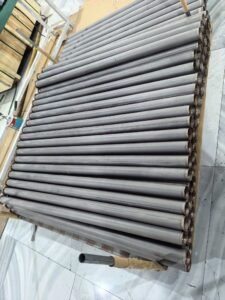
The customer-supplied photo below shows the arrangement and assembly of the filter elements. A photograph cannot establish acid dew point resistance.
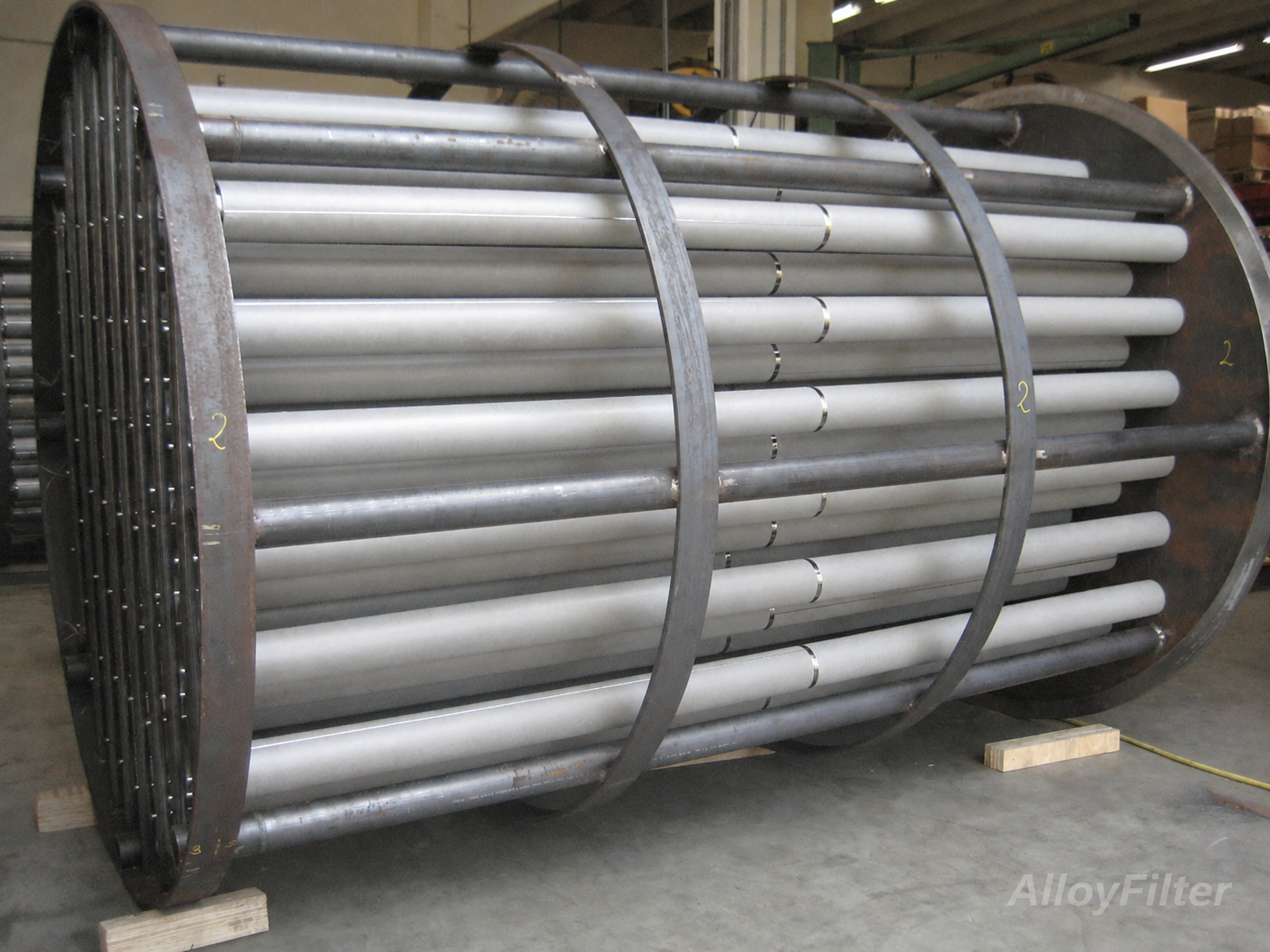
Figure 1. Customer-supplied sintered felt filter assembly and mounting structure.
2.4 Repeated cleaning and structural loads
Pulse-jet cleaning repeatedly loads the filter layer, supports, welds and seals. Changes in dust or operation may call for new pulse pressure, duration or frequency settings. Evaluate the medium together with its support, end connection and actual pressure drop trend.
3. Choosing Among Fabric, Ceramic and Sintered Metal Fiber Felt Filters
These options differ in material, construction and operating conditions. No one metric ranks them for every plant.
| Option | Reason to evaluate it | Check before selection |
|---|---|---|
| Fabric baghouse | Selected fabric suits the gas temperature; existing operation is stable | Temperature variation, bag life, pressure drop, cooling |
| Ceramic filter | Higher-temperature filtration is under consideration | Thermal cycling, mechanical impact, installation, cleaning |
| Sintered metal fiber felt element | Temperature, permeability, cleaning and metal construction all matter | Alloy compatibility, supports, seals, pressure drop, investment |
The table is a qualitative starting point, not a guarantee of efficiency, service life or cost. For material differences, see sintered wire mesh versus sintered metal fiber felt. Tar condensation in some gasification streams should be assessed separately from acid dew point concerns in combustion flue gas.
4. Metal Fiber Felt Structure and Filter Element Manufacturing
Fine metal fibers are formed into a porous web and sintered. Fiber size, layer structure, pore distribution, alloy and sintering conditions jointly influence the medium. The mesh shown in the illustration is a mechanical support layer; actual layer counts and pore structures depend on the product design.
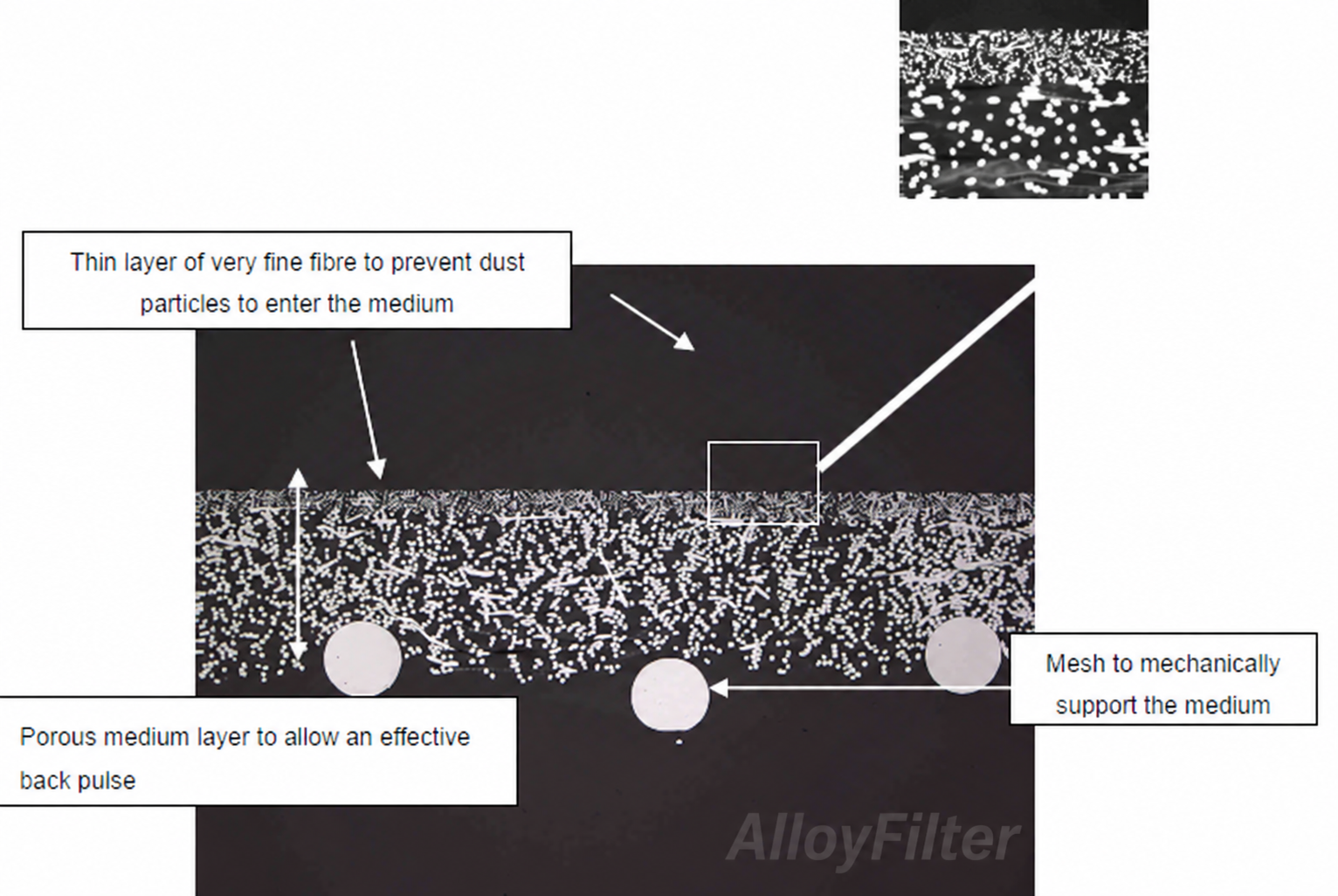
Figure 2. Illustration of graded metal fiber filter layers, porous medium and support layer.
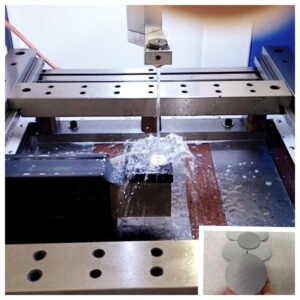
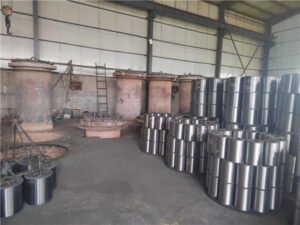
Typical fabrication and inspection cover fiber preparation and distribution, web and layer design, controlled sintering, forming with support structures, end connections, and dimensional, weld and seal checks. The medium must become a hot gas filtration element that can be installed, supported and cleaned.
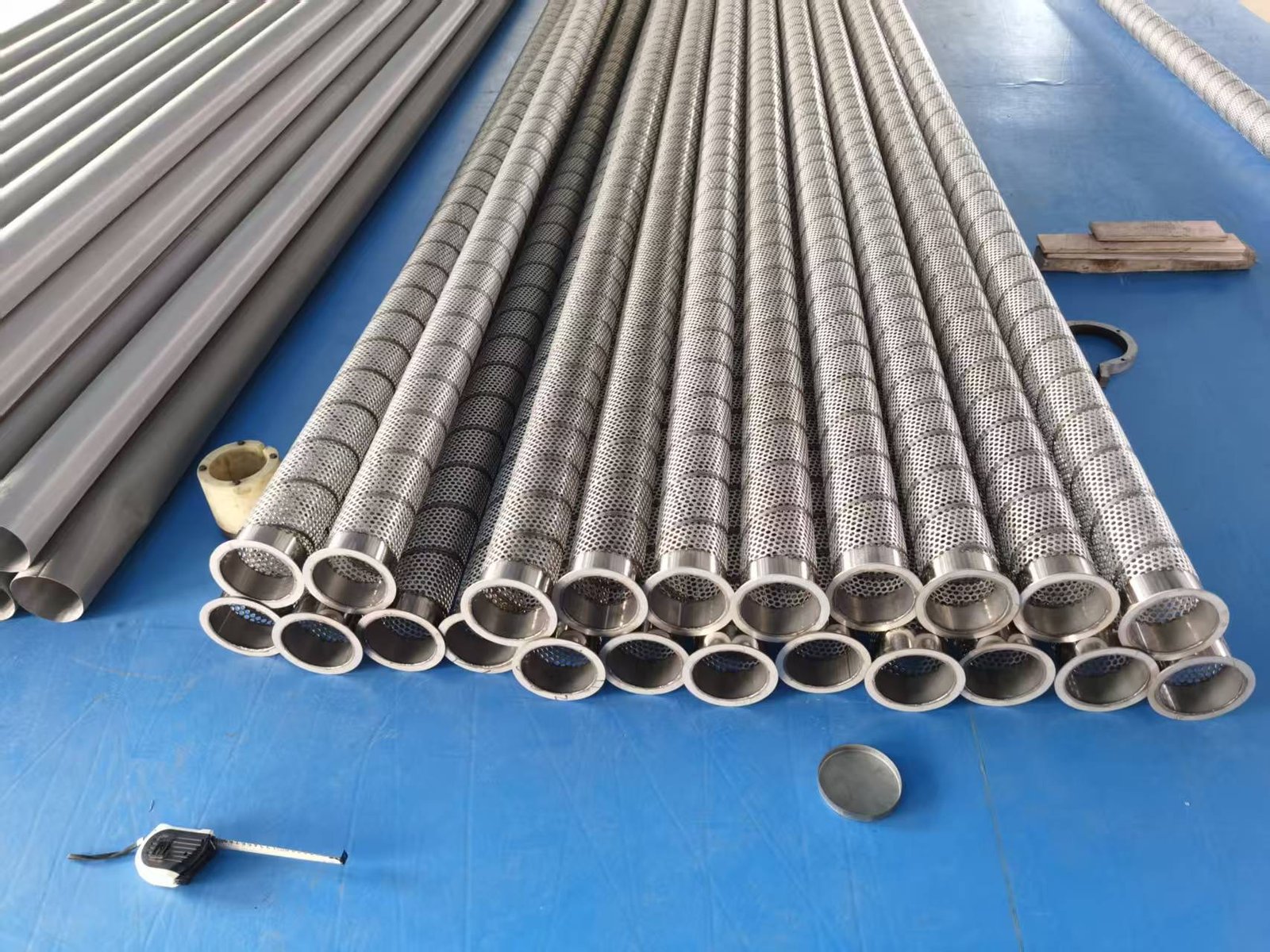
Figure 3. Sintered metal fiber felt element components before assembly.
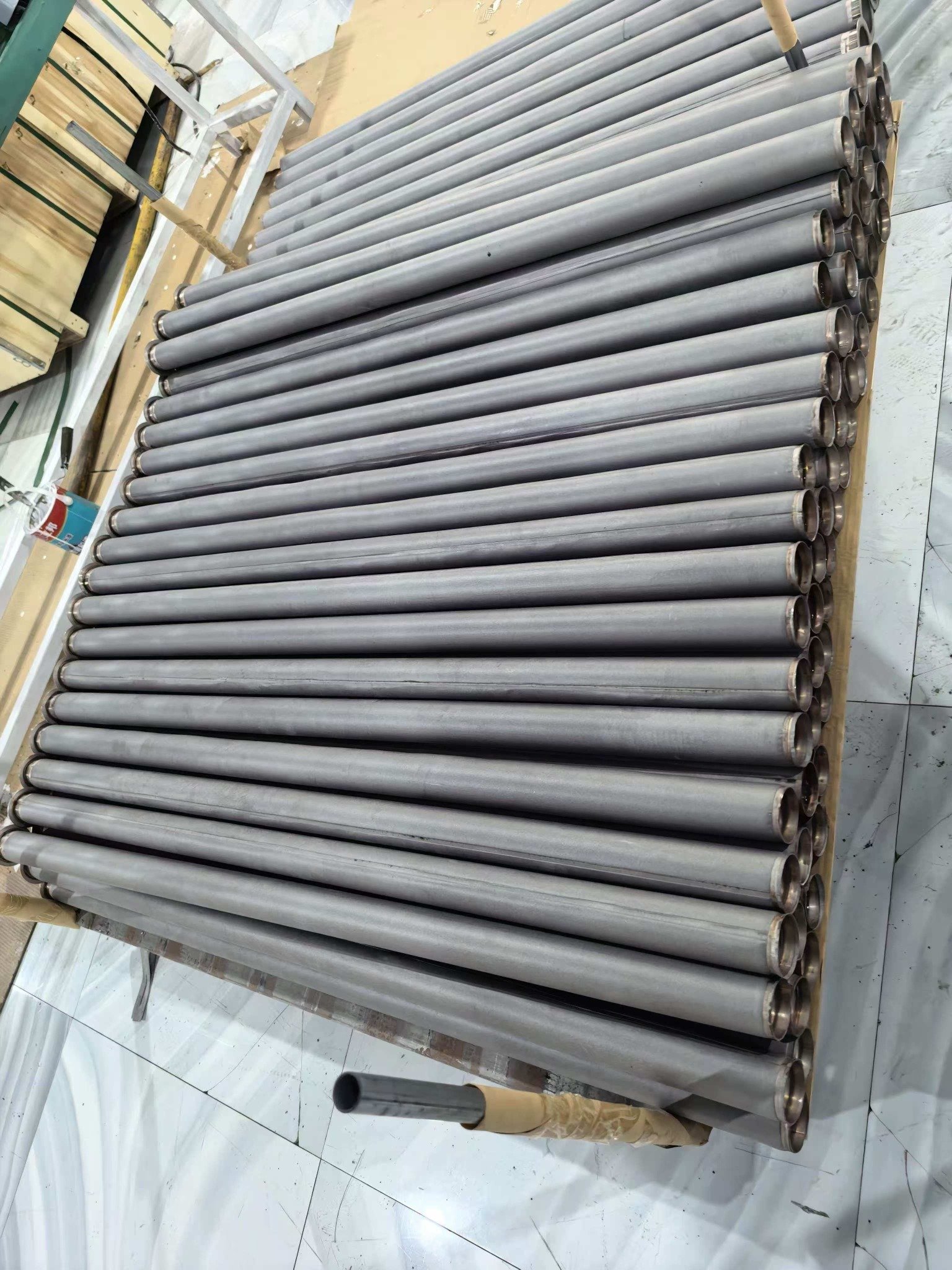
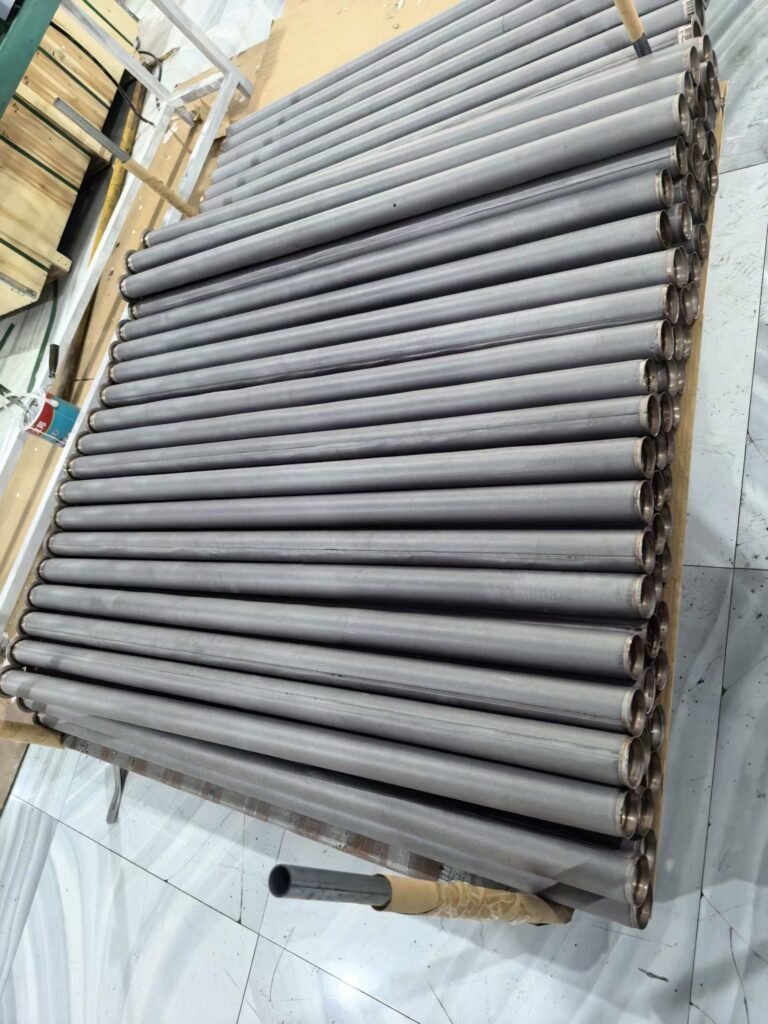
Figure 4. Finished sintered metal fiber felt filter elements.
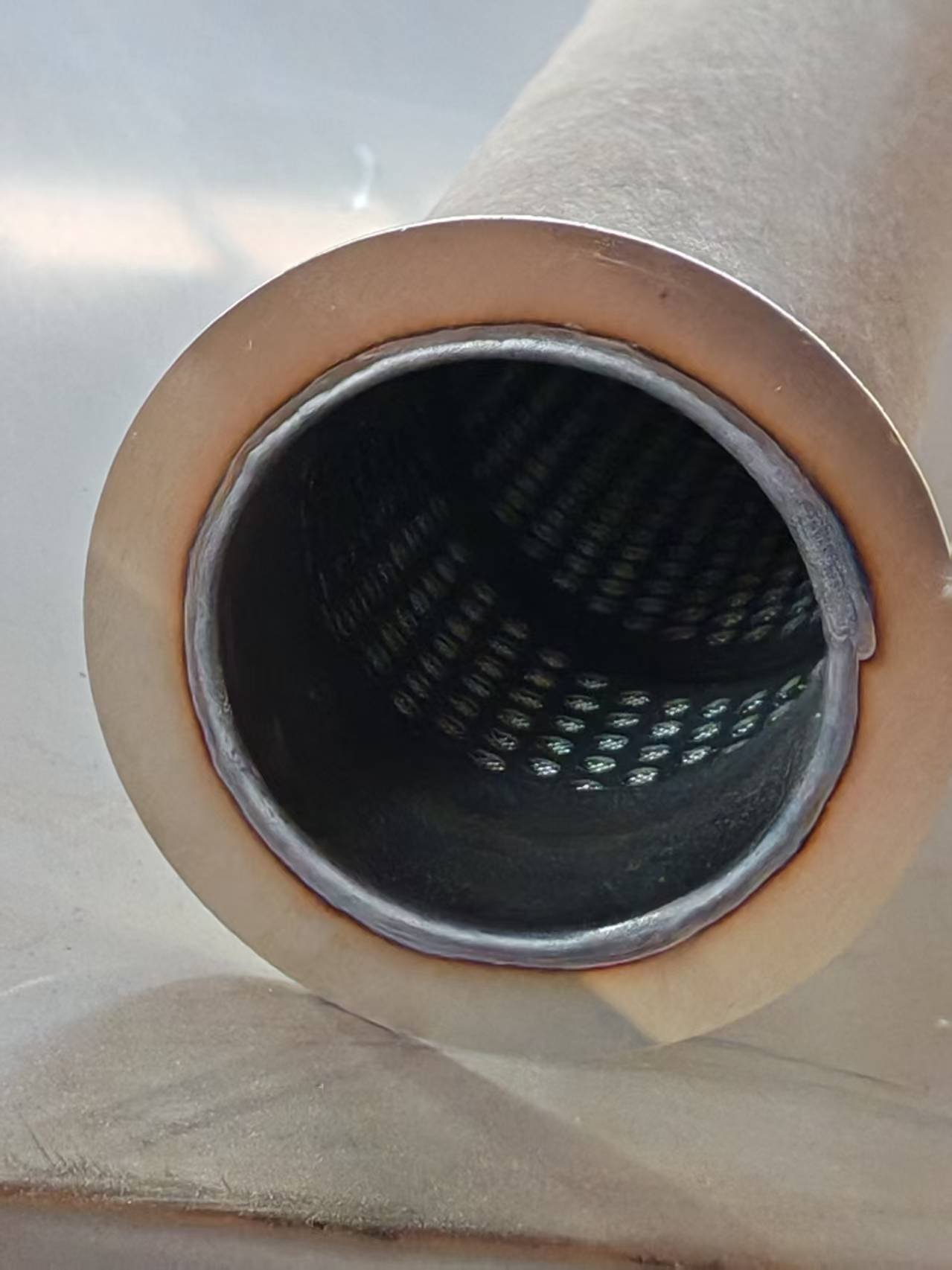
Figure 5. End connection of a sintered felt filter element.
These production images show assembly, finished appearance and an end connection. Appearance alone cannot prove filtration efficiency, corrosion resistance or service life.
5. Assessing a Biomass Baghouse Retrofit
Converting fabric bags to metal elements requires more than matching the old bag dimensions. Review continuous and peak temperatures, cold spots during low-load operation, gas and dust composition, pressure drop, housing and tube sheet, mounting space, seals, structural loads, cleaning settings and compatibility of the alloy and welded joints.
Calculate lifecycle costs for elements, cooling equipment and energy, pressure-drop energy, maintenance, replacement, downtime and usable heat. A reliable baghouse at moderate temperature may have little reason to change. Persistent temperature limits, frequent replacement or significant cooling requirements can justify an engineering assessment.
A suitable metal element may reduce the cooling requirement in some systems, but whether it can do so, and by how much, must be established from process, condensation and equipment data.
6. Applications and Data Needed for Selection
For a new plant, design filtration together with thermal management, flue gas treatment and ash handling. For an existing plant, first determine whether failures are driven by fabric temperature, dust, corrosion, seals or cleaning.
Give the manufacturer continuous and peak temperatures, gas and dust data, flow, allowable pressure drop, existing element and tube-sheet dimensions, cleaning details and failure photos. This provides more useful design information than a nominal filtration rating alone.
7. Frequently Asked Questions
Is sintered metal fiber felt suitable for every biomass flue gas system?
No. Select and verify the alloy and element structure against temperature, gas composition, dust, cleaning and condensation risk for the particular plant.
Does a gas temperature above the water dew point prevent acid dew point corrosion?
Not necessarily. Check gas chemistry, local surface temperatures and actual operation. Different low-temperature corrosion mechanisms should not be treated as identical.
Can metal fiber felt eliminate flue gas cooling?
This cannot be promised from the medium rating alone. Condensation risk, equipment design and other process requirements still need review.
Can sintered felt elements directly replace fabric bags?
A direct swap should not be assumed. Check the tube sheet, housing, seals, structural loads, mounting dimensions and cleaning system.
How should a filter element be specified?
Start with process conditions, flow, gas and dust data, allowable pressure drop, cleaning method and mounting dimensions. Then select the alloy, fiber structure, supports and end connections.
8. Conclusion
Biomass flue gas filtration cannot be selected by nominal temperature or efficiency alone. Temperature changes, possible cold spots and corrosion, dust, cleaning, equipment construction and lifecycle cost can all affect operation. Sintered metal fiber felt is one candidate medium; the medium, finished element and plant equipment should be assessed as a system.
If you are evaluating a new installation or an existing baghouse retrofit, share operating temperatures, gas and dust data, element dimensions and cleaning conditions with our engineers to discuss a suitable metal filter element design.