By Jack Sun
Our company is based in Anping County, Hengshui, Hebei, China, a center of wire mesh manufacturing. I work with metal wire mesh weaving and industrial filter element manufacture. This guide explains operating-condition checks and custom element selection for biomass flue gas.
Quick Definition
Sintered metal fiber felt is a porous filtering medium made by forming fine metal fibers into a web and sintering them together. For biomass flue gas particulate filtration, confirm the alloy, filtration face velocity, ash and corrosion conditions. A nominal micron rating or temperature label cannot establish suitability for an entire dust-control system.
Introduction
Biomass is used in power generation, heating and industrial energy systems. Fuel moisture, ash, alkali compounds and acidic components can vary with the source and operating conditions. Filtration must address particle removal, temperature changes, chemical exposure, repeated cleaning and long-term operation.
Compare cooling requirements, pressure drop, maintenance and lifecycle cost alongside the purchase price. Where temperature compatibility, permeability, durability and cleaning performance all matter, sintered metal fiber felt can be evaluated as an alternative to conventional media.
1. Biomass Flue Gas Characteristics and Filtration Requirements
This article discusses biomass flue gas filtration after combustion. Fuel, boiler design, combustion conditions and downstream treatment change the operating environment. Raw synthesis gas produced by gasification is a different medium and cannot automatically use the same materials or cleaning design. [1]
Check fly ash, particle-size distribution, dust concentration, alkali-containing compounds, acidic components and moisture. Raw gasification gas may also present tar-related fouling, which requires separate treatment and compatibility assessment. Tar is not a universal normal condition for every combustion flue gas filter. [2]
- Appropriate temperature resistance
- Stable permeability and controlled pressure drop
- Compatibility with chemical exposure
- Suitable dust-loading and cleaning behavior
- Mechanical strength and dimensional stability
No filtering material automatically fits every biomass system. Choose against the actual temperature range, dust, chemical environment, cleaning method and equipment structure.
2. Main Challenges in Hot Gas Filtration
The temperature limit for hot gas filtration must be confirmed for the alloy, media layers, welds, seals and equipment together. This guide gives no universal maximum temperature, fixed differential pressure or service-life guarantee.
Temperature limits and thermal aging
Polymer-based filter media have defined temperature limits. If the actual gas approaches or exceeds the selected media’s limit, cooling or protective measures may be necessary. Check continuous operation, peaks, startup, shutdown and abnormal temperature changes.
Cooling does not always mean losing all useful heat. Lowering gas temperature after heat recovery through an exchanger differs from quenching or adding cold air. Evaluate each arrangement’s heat balance and operating cost.
Dust blockage and rising pressure drop
Biomass ash may include fine particles and different mineral constituents. Some deposits release poorly from the medium. Accumulation reduces permeability and increases resistance, raising the energy needed to maintain gas flow.
A three-dimensional porous structure does not mean dust should continually penetrate deep into the felt. A surface dust layer may contribute to collection. Record differential pressure before and after cleaning together with outlet particle concentration; a pressure-drop reduction alone does not prove effective cleaning. [4]
Chemical corrosion
Alkali compounds, acidic gases, moisture and other reactive species can affect the media and surrounding components. Metal media may offer a broader high-temperature range than some polymers, but metal is not inherently immune to corrosion. Check composition, temperature, moisture, exposure time and possible condensation.
Pulse cleaning and structural durability
A dry flue gas filter may use reverse gas, pulse-jet or a specified mechanical cleaning method. Offline liquid washing is a maintenance operation and should not be confused with online pulse cleaning.
Repeated cleaning imposes mechanical stress. An unsuitable structure can fatigue, deform or fail at its joints. Assess filtration with support, connections and cleaning loads.
Changing fuel and operating conditions
Fuel moisture, ash characteristics, particles and heating value can vary. Gas temperature, dust loading, pressure-drop curves and cleaning demand may change accordingly. Design for the operating range, rather than one nominal point.
3. Four Filter Structures to Compare
The following are candidate structures for purchasing and engineering review. They are not equally prevalent in every biomass application and are not direct substitutes for one another.
Fabric filters
Fabric filters are widely used because the technology is established, initial cost can be relatively low and properly designed operation can achieve high particle removal. Their media-specific temperature and chemical limits remain important.
Cooling may require additional equipment and operating cost. Whether useful heat is lost depends on the recovery arrangement. Acid-containing gas can condense at lower temperatures, causing corrosion and blinded bags. EPA identifies temperature, differential pressure and outlet particulate concentration as important monitoring information. [3] Gasification tar requires a separate treatment route. [2]
Ceramic filters
Porous ceramics can be attractive for high-temperature gas filtration. Assess the particular material and structure, including brittleness, thermal shock, handling, installation and vibration. Both ceramic and metal systems require checks of thermal cycles, seals and pulse loads; the material-family name alone cannot establish system durability.
Sintered wire mesh filters
Sintered mesh generally combines woven metal layers with filtering and support functions. The layered construction can provide mechanical strength and dimensional stability. For flue gas service, verify face velocity, dust conditions, pressure drop and cleaning recovery. A nominal micron rating cannot predict outlet emissions.
Sintered metal fiber felt filters
Fine metal fibers form a three-dimensional porous network with bonded contact points. Fiber diameter, layering and sintering can adjust porosity, permeability and particle capture. Dust penetration into pores is not always beneficial for online cleaning; test loaded resistance and recovery. Select the alloy for temperature, chemical exposure, gas composition and required durability.
4. Manufacturing Sintered Metal Fiber Felt and Filter Elements
Performance depends on the alloy, fiber diameter and distribution, layer structure, porosity, sintering and final element construction.
- Prepare fibers: control the required fine fiber dimensions and distribution.
- Form the web: create the specified porous felt structure.
- Design the layers: combine layers for permeability, filtering requirements and strength.
- Sinter: form stable metallurgical bonds at contact points under controlled conditions.
- Fabricate the element: form the media and connect the supports and end fittings for the application.
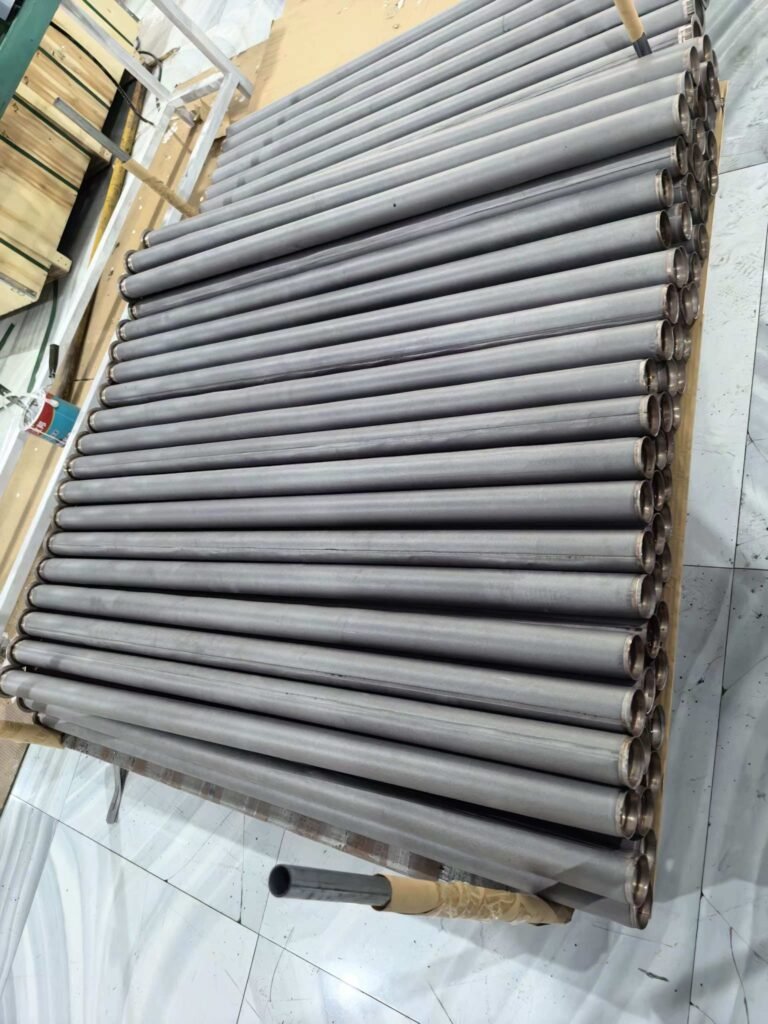
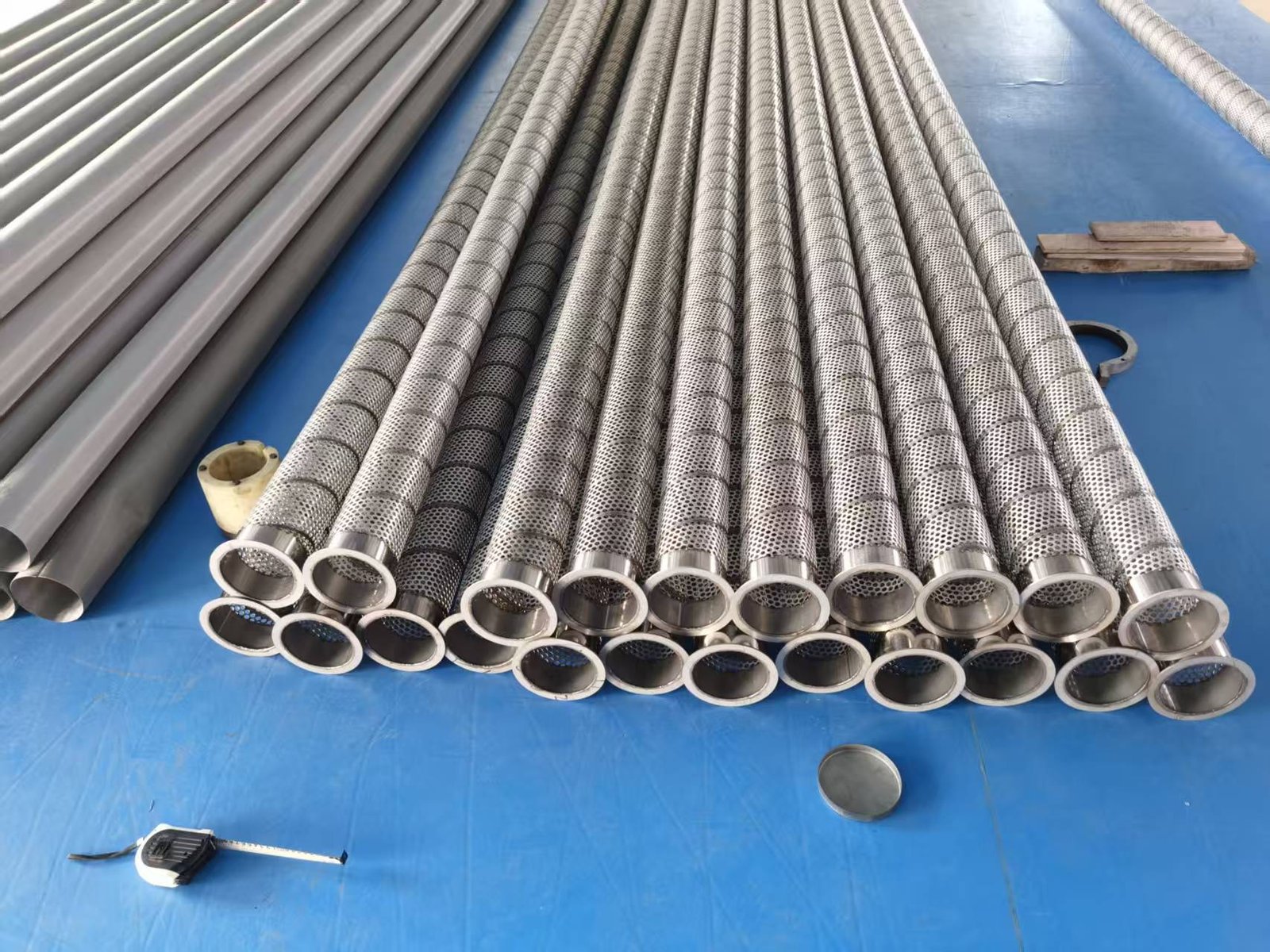
Figure 1 shows perforated supports and end connections awaiting assembly. Load and pulse resistance depend on thickness, perforations, welds and the combined construction. The photograph is not a strength-test result.
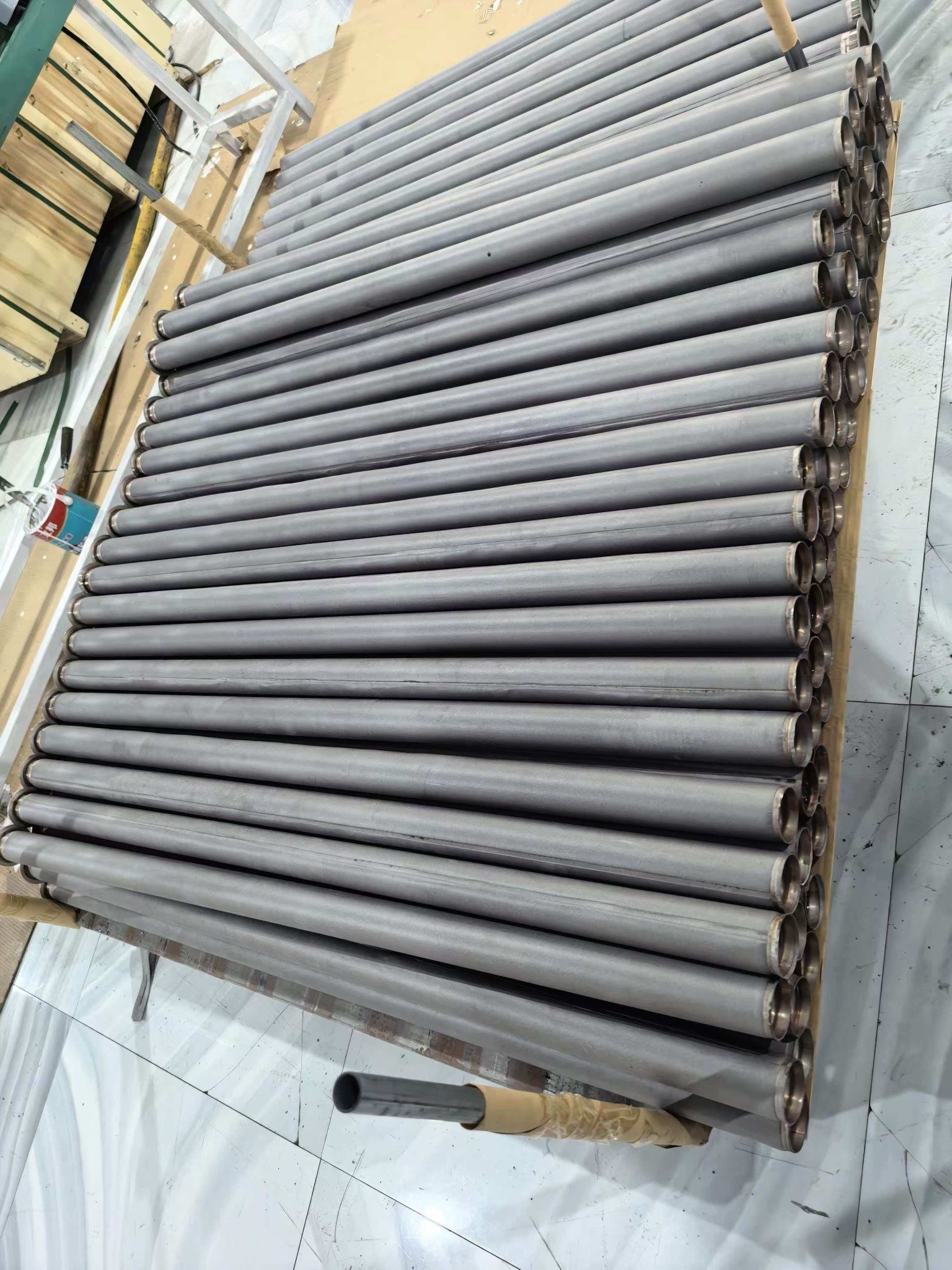
After forming, media integration and end connection, inspect dimensions, straightness, surface damage and joints against the drawing. Uniform appearance cannot replace an integrity or leak-tightness check and does not establish particulate removal efficiency.
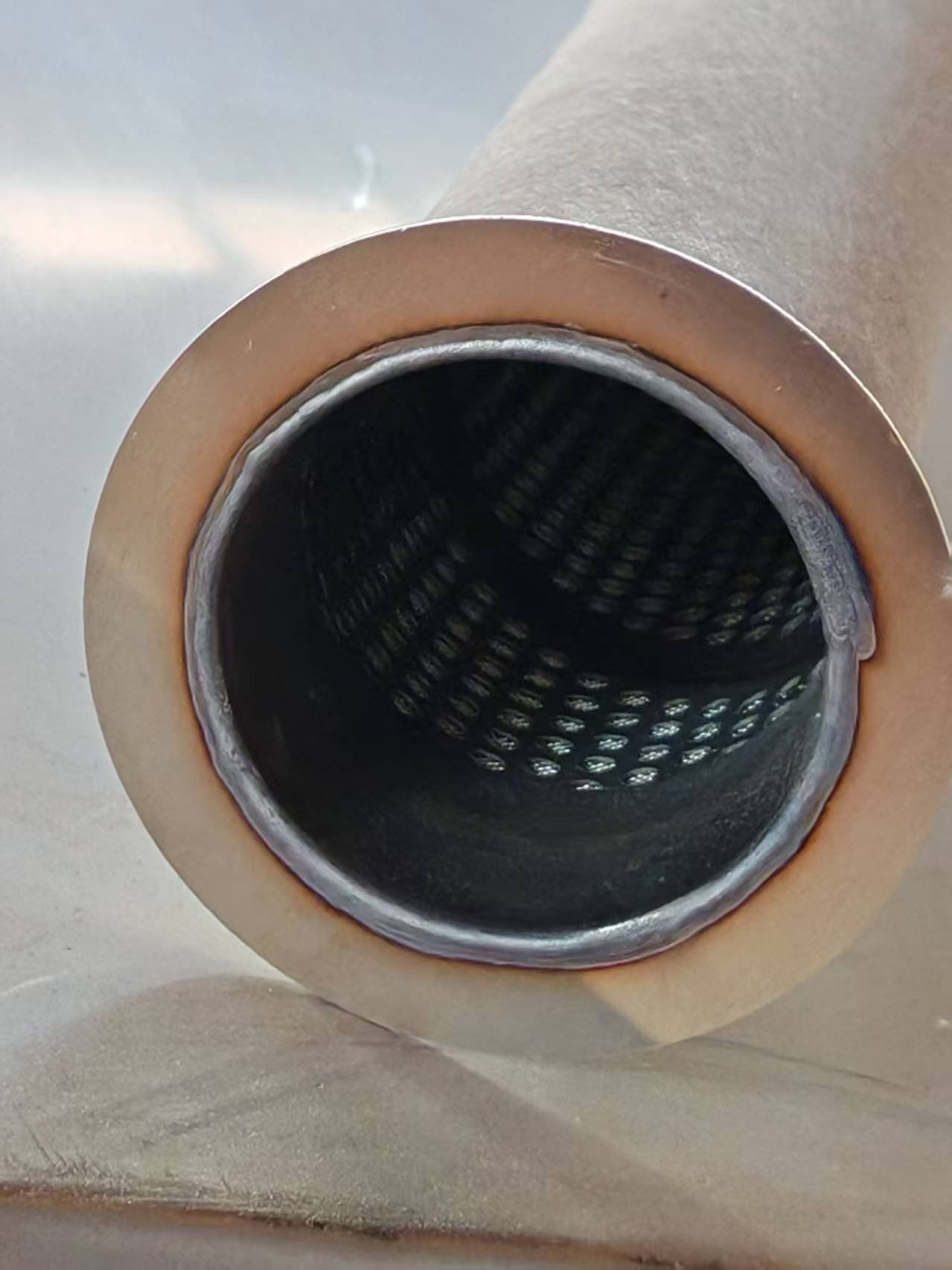
The end connection interfaces with the tubesheet or sealing arrangement. Inspect the end ring, weld area and internal support with the sealing method, filtering direction, pulse direction and loads. Weld appearance alone cannot prove a gas-tight joint.
Terms such as sintered felt, sintered fiber felt and sintered filter felt are used for this family of porous metal fiber media. Selection must still identify the alloy, pore structure, dimensions and operating conditions.
5. Purchasing Checks for the Four Options
Compare results under equivalent gas conditions, effective filtering area, face velocity and cleaning arrangements. Useful evidence includes outlet particulate concentration, differential-pressure changes and maintenance records.
- Fabric filter: verify media temperature limits, dust-cake behavior, blinding and bag damage. Key boundaries include overheating, condensation and chemical incompatibility.
- Ceramic filter: verify the specific porous material, pulse cleaning, thermal cycles and sealing. Check brittle damage, thermal shock and connections.
- Sintered mesh: verify the filtering/support layer combination, loaded resistance and cleaning recovery. Check alloy suitability, layer structure and blockage.
- Metal fiber felt: verify fiber and layer structure, surface loading, deep blockage and recovery. Check alloy compatibility, construction and cost.
Temperature resistance is only one selection factor. Pressure drop, cleaning consistency, corrosion, maintenance and lifecycle economics also determine suitability.
6. Assessing a Baghouse Retrofit
An existing biomass plant may consider changing its filtration while retaining parts of the equipment. A baghouse retrofit is an engineering assessment, rather than a simple bag replacement.
Operating conditions to assess
- Temperature: continuous and peak values, startup/shutdown condensation and thermal shock.
- Gas composition: oxygen, moisture, acidic components, alkali compounds and other corrosive species.
- Dust: size distribution, concentration, stickiness, ash chemistry and loading.
- Existing equipment: housing, tubesheet, element dimensions, seals, installation space and support.
- Cleaning: pulse pressure, duration, frequency and sequence, subject to the redesigned system.
Gas flow and face velocity
Provide minimum, normal and maximum flow and state whether values are actual or standard-condition volumes, together with temperature and pressure. Divide actual operating volume flow by effective filtering area to check face velocity. Do not treat Nm³/h as operating m³/h without the appropriate conversion.
Acceptance and testing
Agree the outlet particle-concentration requirement and its wet/dry basis, standard conditions and oxygen correction where applicable. Record stable operation and cleaning transients. Sample tests should represent the dust, velocity, temperature and cleaning conditions. A nominal micron rating cannot be converted directly into an emission concentration.
Retrofit limitations
The existing tubesheet, dimensions, seals, structural capacity, cleaning system and internal space may restrict feasibility. Media designed for one temperature and gas composition cannot automatically be transferred to another, particularly where water, acids or alkali compounds are present.
Metal elements generally require a higher initial investment than conventional fabric bags. Compare the complete operating system rather than purchase price alone.
Potential benefits and lifecycle cost
A higher-temperature element may reduce a cooling requirement when the process permits. Confirm the benefit through a heat balance and check downstream equipment, seals, valves, insulation and fans. Replacing the elements does not raise the allowable temperature of the original housing.
Lifecycle cost includes element replacement, cooling equipment and operation, fan energy associated with pressure drop, maintenance labor, downtime, cleaning-system maintenance and any loss of useful heat. A higher-priced element may be economical if verified operating improvements justify it.
7. Application Scenarios and Selection
New biomass projects
Design filtration with heat management, gas treatment and ash handling. This makes it easier to match the medium and structure to the full operating range.
High-temperature service
When gas exceeds a polymer medium’s actual operating limit, metal or ceramic filtration may be candidates. Compare mechanical loads, thermal cycles, corrosion, cleaning and maintenance.
Existing baghouse upgrades
Frequent bag failure, strong temperature restrictions, repeated replacement or high cooling and maintenance cost can justify a retrofit assessment. A reliable baghouse operating at a stable, moderate temperature may not gain enough benefit to justify metal elements.
When to consider sintered mesh or fiber felt
Consider sintered mesh when a defined woven filtering layer and multilayer support are useful. Consider fiber felt when its fiber and layer structure can help balance face velocity, initial resistance, loaded resistance and cleaning recovery. Validate either in the intended flue gas conditions; liquid-filtration results are not automatically transferable.
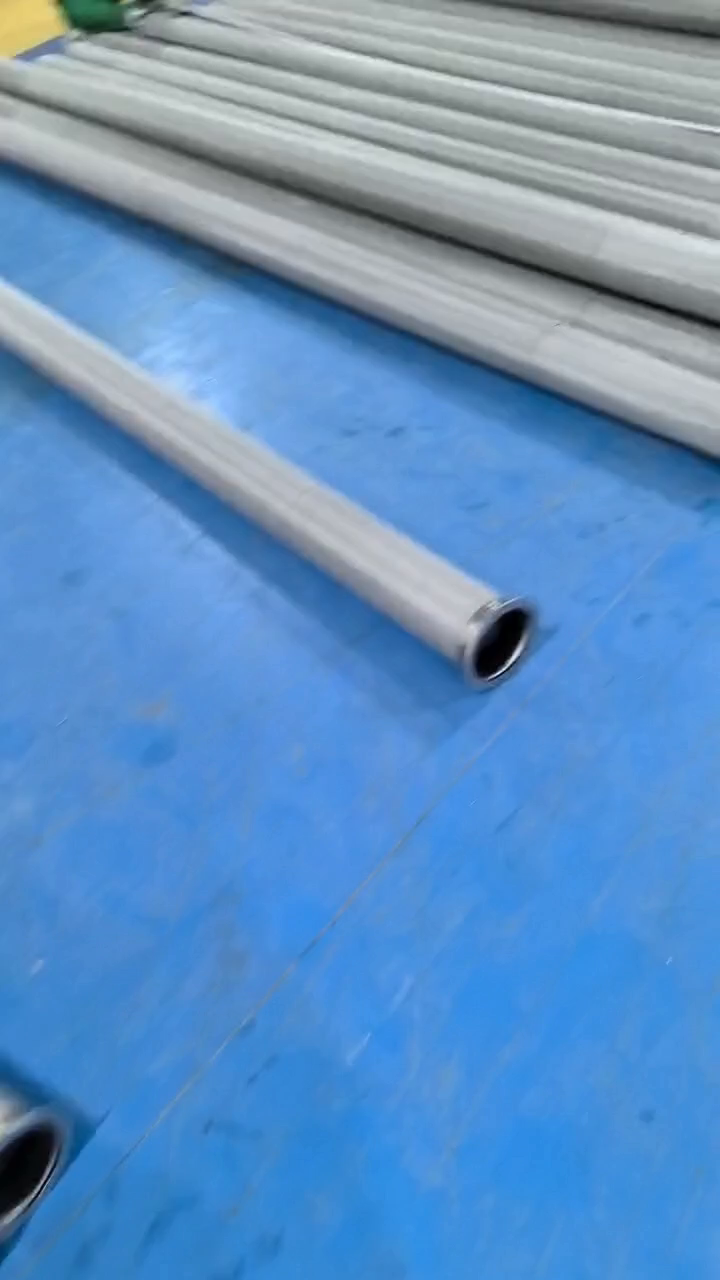
The workshop still below illustrates cylindrical elements and end construction. It does not establish biomass-site operation or validated filtration performance.
8. Frequently Asked Questions
Is sintered metal fiber felt suitable for biomass flue gas filtration?
It can be when the alloy, fiber structure and element construction fit the actual conditions. Confirm temperature, gas composition, dust loading, cleaning and condensation risk.
Can a baghouse be upgraded to metal fiber felt?
Some projects can be assessed, but feasibility cannot be assumed. Check the housing, tubesheet, element dimensions, sealing, cleaning and structural capacity first.
Is metal fiber felt better than fabric filters?
There is no universal ranking. Fabric filters remain competitive for stable, moderate-temperature service with an emphasis on initial investment. Where temperature or maintenance limits the existing bags, compare alternatives using site data and costs at equivalent performance.
How do sintered mesh and metal fiber felt differ?
Sintered mesh uses woven layers for filtering and support. Fiber felt uses fine fibers and layering to form a three-dimensional pore network. Pressure drop, efficiency, loading and cleaning behavior must be tested for the actual structure and dust.
Can metal felt eliminate gas cooling?
Not necessarily. Assess process temperature, alloy, exposure time, composition, equipment design and margins. Greater media temperature resistance does not remove condensation, corrosion or other process limits.
Which parameters determine the suitable felt?
Start with temperature and peaks, gas composition, dust concentration and size, target pressure drop, cleaning, required life and element dimensions. Then evaluate alloy, fiber diameter, layering, porosity and the final construction.
9. Conclusion
Biomass flue gas filtration requires more than a nominal filtering grade. Temperature, dust, composition, cleaning, equipment and lifecycle cost all matter. Fabric, ceramic, sintered mesh and fiber felt each have conditions that must be checked.
Sintered metal fiber felt can be a useful option where its material and structure match the application. Confirm permeability, loading behavior and durability with representative testing and operating records. Base system changes on engineering data.
Discuss Your Filtration Needs
For custom element manufacture, provide the operating range, interfaces, installation dimensions, material requirements and acceptance method. We can discuss media, supports, end connections and forming. Confirm changes to the complete flue gas treatment process with the equipment designer.
New projects can begin with media and element requirements; replacement parts can follow drawings or an old sample. The original material, performance and conditions still need verification.
References
- U.S. DOE: Hydrogen Production — Biomass Gasification. Background for distinguishing gasification synthesis gas from combustion flue gas.
- NETL: Benchmarking Biomass Gasification Technologies. Background on particles, tar and chemical constituents in gasification gas.
- U.S. EPA: Monitoring by Control Technique — Fabric Filters. Temperature, condensation and performance-monitoring considerations.
- Yang et al. (2014): Performance Assessment of Sintered Metal Fiber Filters in Fluid Catalytic Cracking Unit. Background for assessing dust layers and cleaning together; FCC results do not directly establish biomass flue gas performance.
For related construction options, see our hot gas filtration elements. Product selection still requires the site conditions described above.