By Jack Sun — Manufacturing perspective from Anping, Hengshui, Hebei, China, a center for wire mesh production.
Quick definition
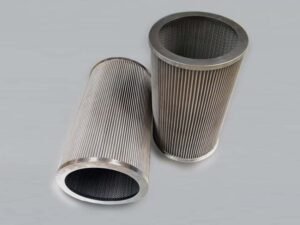
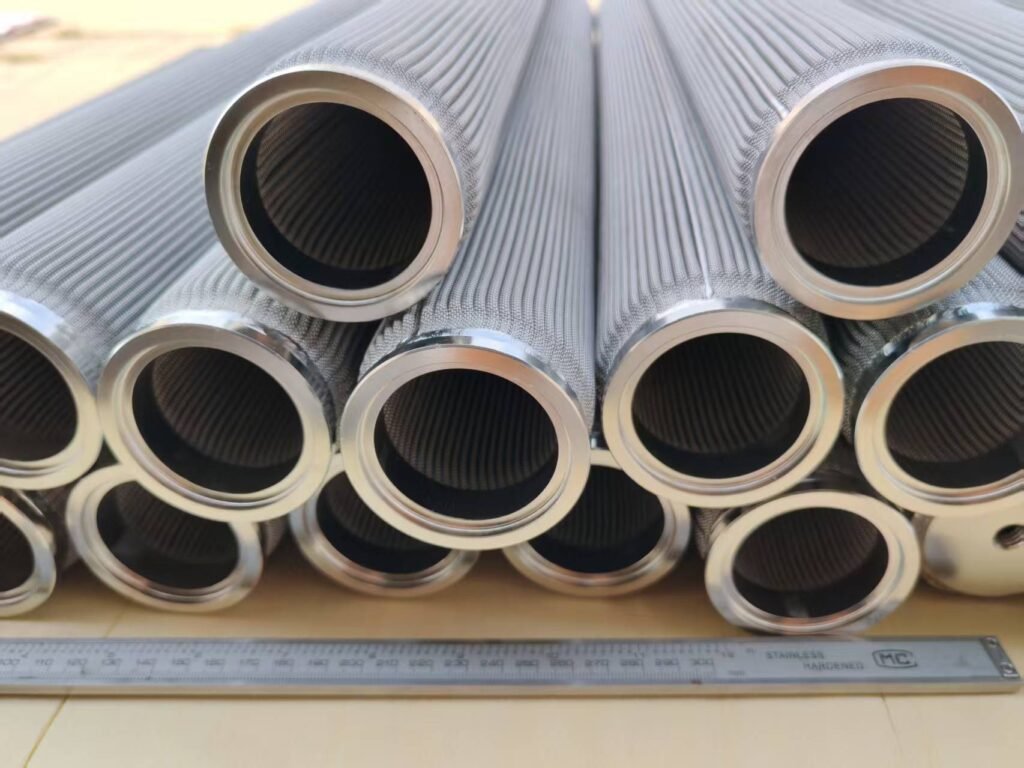
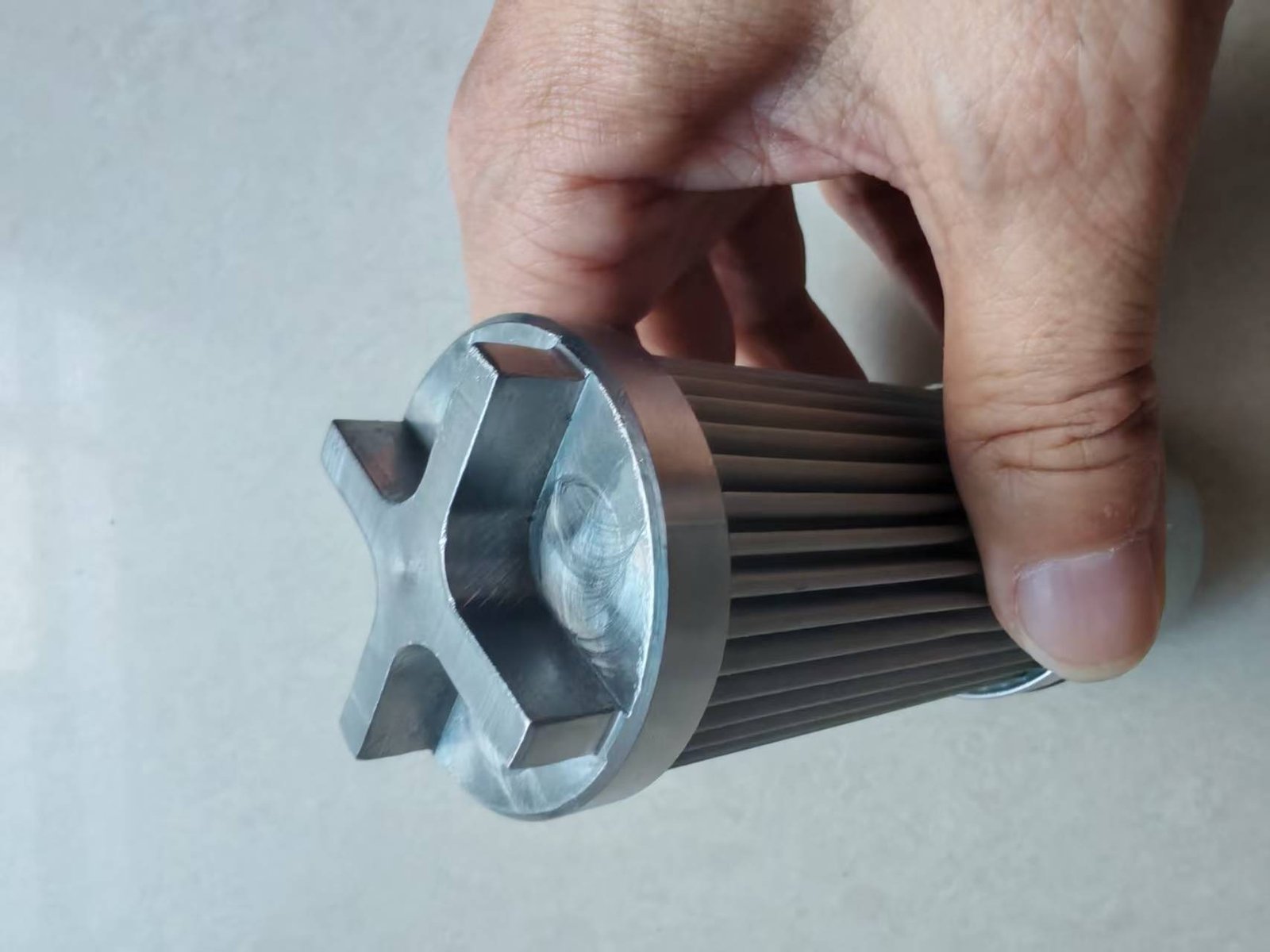
A stainless steel wire mesh pleated filter cartridge is a cylindrical filtration element made by folding woven or suitable sintered wire mesh into pleats. The mesh retains particles, while support layers, a core, welded joints and end connections help the element withstand its specified operating conditions and seal into the housing.
“10 μm, 316L” is a useful starting point for an inquiry, but it does not define a complete cartridge. Mesh count does not uniquely determine aperture. Two products marked “10 μm” may use different rating definitions. More pleats do not automatically mean better service life, and 316L does not suit every corrosive fluid.
This guide explains how to turn the filtration duty into specifications for manufacture, purchasing, installation and operation, including petrochemical liquids, viscous oils, polymer melts and replacement elements.
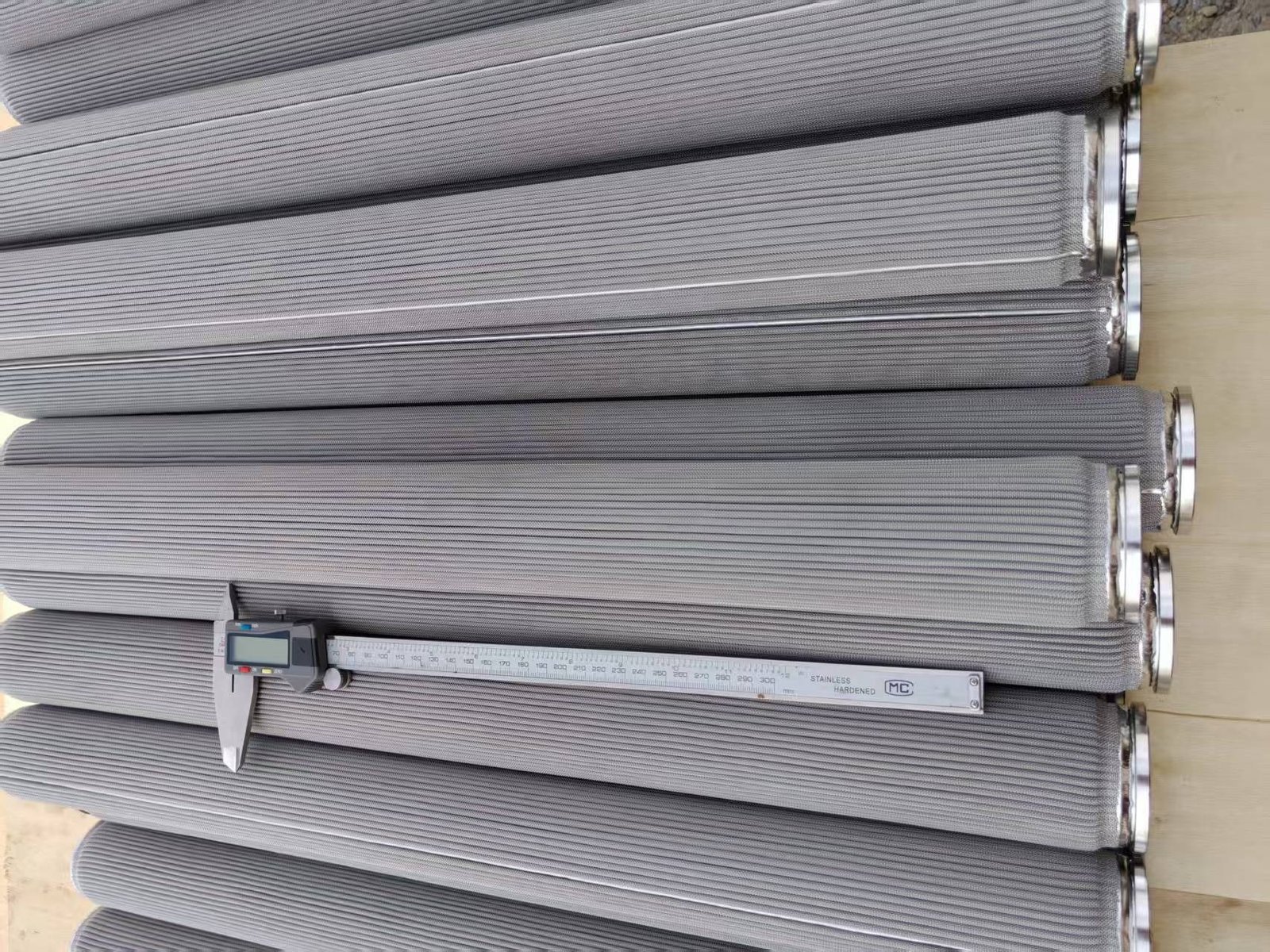
1. How a metal wire mesh pleated cartridge works
The filtering mesh intercepts particles as fluid passes through it. A support mesh protects the finer medium and helps maintain the pleats. Folding the medium increases its area within a limited envelope. A core or outer support carries mechanical loads, while end fittings and seals connect the element to the housing. Welds join the relevant metal components.
These components are not a fixed recipe for every product. Flow direction, dimensions, medium construction, differential pressure and the housing interface determine which supports and connections are required.
The terminology describes different aspects of the element: wire mesh identifies the medium; pleated describes its folded form; candle describes a slender cylindrical format; and melt filter identifies an application. A candle element may use wire mesh or another filtration medium.
2. Pleats and usable filtration area
Pleating puts more medium into the same cartridge envelope. Where the additional area remains accessible to fluid, it reduces flow per unit of medium area. This can help manage clean pressure drop and contaminant loading, but capacity and service life still depend on the fluid, contaminants and operating conditions.
Do not select a pleated filter cartridge by pleat count alone. Closely packed folds can restrict flow channels or become difficult to clean. Review pleat depth, spacing, medium thickness, support layers, flow distribution and the characteristics of the deposits. The useful design target is accessible filtration area with adequate mechanical support.
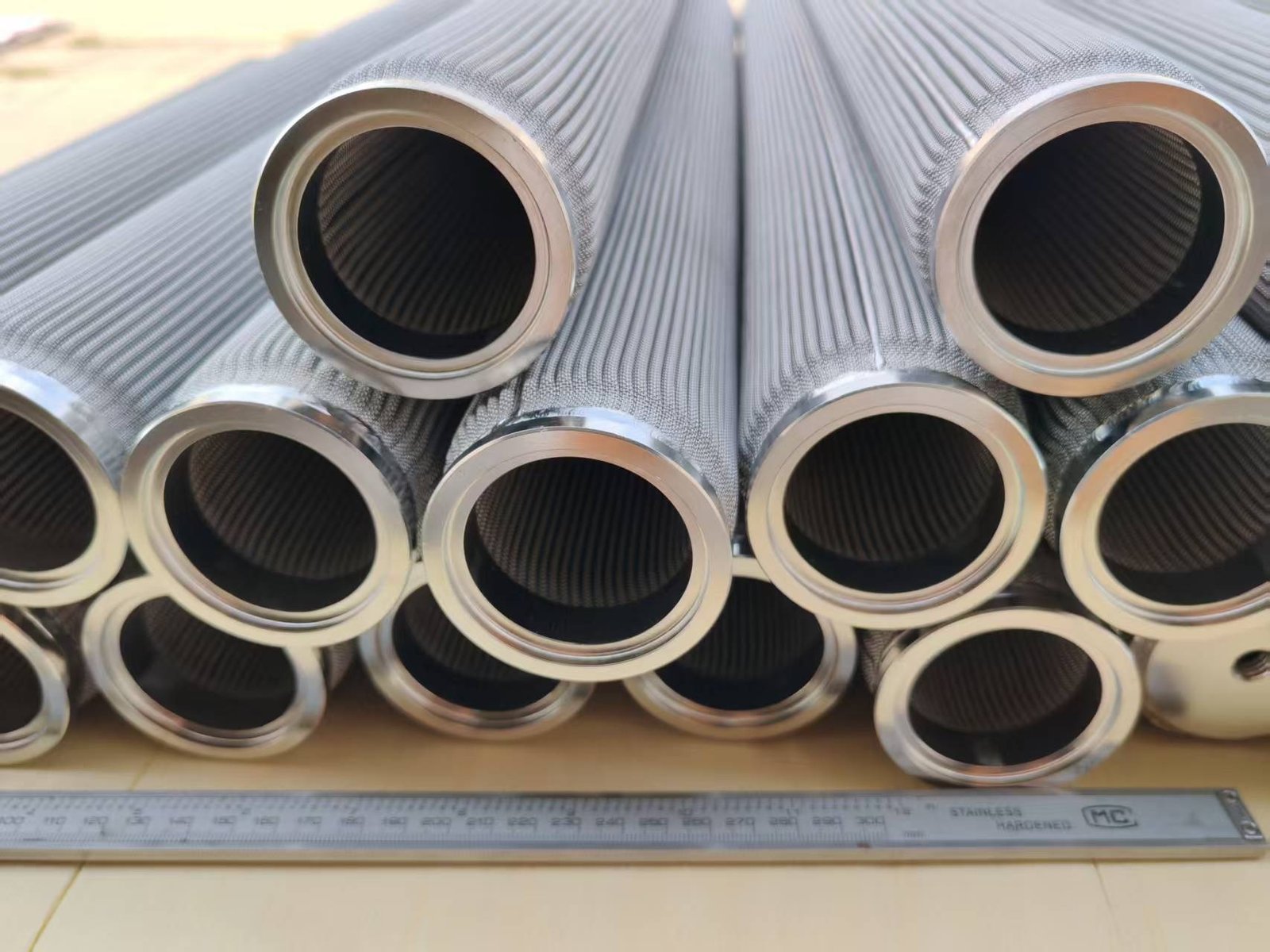
3. Selecting the filtration rating and wire mesh
Start with the contaminant and the downstream protection requirement. Identify the particle sizes that must be controlled, their concentration and the required retention performance. Then select a medium and validate it under an agreed test method.
For a square-opening woven mesh, aperture depends on both mesh count and wire diameter. Plain, twill and Dutch weaves have different structures. Dutch weave does not use the same simple square-opening relationship, so mesh count alone cannot establish its filtration performance.
A micron value needs a definition. Ask whether it refers to a geometric opening, a nominal rating or a retention rating measured under specified conditions. “Absolute” should also be accompanied by the supplier’s definition, test method and efficiency criterion. Two wire mesh filter elements marked with the same micron value are not necessarily equivalent.
Selection sequence: contaminant → retention target → medium structure → defined rating → application validation.
4. Flow, viscosity and differential pressure
Filtration rating is only one factor in hydraulic performance. Flow, viscosity at operating temperature, accessible area, medium resistance, support layers, pleat geometry and the housing passages all affect pressure drop.
Clean pressure drop
Measure or obtain the clean differential pressure at the intended flow and fluid conditions. A pressure drop recorded with water or in another process cannot be transferred directly to a viscous oil or polymer melt. Record the measurement points: a pressure drop across the complete housing includes losses beyond the cartridge itself.
Pressure drop during loading
As retained material builds up, resistance generally rises. A rapid increase calls for a review of contamination, available area, element quantity, upstream filtration and the cleaning interval. Coarsening the mesh is appropriate only if the downstream retention requirement still permits it.
Specify operating and maximum allowable differential pressure separately from line pressure. The cartridge’s differential pressure rating and the housing’s pressure rating describe different loads and must be checked at the relevant temperature.
5. Choosing between 304 and 316L stainless steel
316L contains molybdenum and can offer improved resistance to localized corrosion in many environments compared with 304. Nevertheless, material selection requires the actual fluid composition, temperature, pH, chloride content, hydrogen sulfide exposure and cleaning chemicals. Review the mesh, supports, end caps, welds and seals together.
A corrosion study listed by NIST tested 316L coupons in a simulated oilfield environment containing 50,000 ppm chloride at 110°C, with varying H₂S partial pressure. The results showed that the environment and surface condition affected localized corrosion. Those figures describe the experiment; they are not safe operating limits or selection thresholds for a filter cartridge.
The practical lesson is to assess the combined service conditions rather than treating the grade name as a corrosion guarantee. See the NIST publication on 316L localized corrosion in H₂S-containing environments.
6. Pleated filter cartridges for petrochemical liquids
Define which solids must be removed and which equipment or product quality requirement the filter protects. Catalyst fines, corrosion debris, pipe scale and other particulate contamination can require different ratings and loading capacity.
| Contaminant | Selection goal | Information to provide |
|---|---|---|
| Catalyst fines | Control downstream particle carryover | Particle size distribution and solids concentration |
| Corrosion debris | Reduce particulate contamination | Composition, size and expected loading |
| Pipe scale or fragments | Protect pumps, nozzles and other equipment | Largest expected debris and downstream requirements |
| Other process solids | Meet the specified process or product requirement | Particle characteristics and required retention |
A conventional wire mesh particle filter does not automatically remove dissolved contaminants or separate water from oil. Water separation or removal of dissolved substances requires a process and medium designed for that purpose.
Viscous oils and corrosive fluids
Use viscosity at operating temperature, with its units, rather than a value measured under unrelated conditions. Fine filtration, high flow and limited area can produce excessive clean pressure drop. Review area, element quantity and upstream filtration before changing the rating. If chlorides, H₂S or other corrosive constituents are present, evaluate every wetted component and the cleaning procedure.
7. Pleated candle filters for polymer melts
Polymer melt filtration combines elevated temperature with high viscosity and potentially significant flow resistance. Select the retention requirement, operating temperature, melt viscosity, flow and allowable pressure drop together. There is no single micron range suitable for all polymer processes.
A pleated candle filter can provide additional area within the housing, provided the folds remain accessible. Fine mesh may require support layers and a mechanically suitable core. Specify the complete assembly rather than only “316L + 20 μm.”
Distinguish hard particles from deformable gels or other defects. Retention of a deformable contaminant depends on its behavior under the actual temperature and pressure conditions; a mesh aperture alone cannot guarantee its removal.
8. Woven wire mesh versus sintered mesh
Sintering bonds wire contact points and can stabilize the mesh structure. It does not automatically produce a finer rating, lower pressure drop or longer life. Those properties depend on the selected medium and the complete cartridge.
| Selection factor | Woven wire mesh | Sintered mesh |
|---|---|---|
| Structure | Interwoven wires, with support as required | Mesh structure with bonded contact points |
| Mechanical behavior | Depends on weave, wire diameter and support | Bonding can help limit movement of the mesh structure |
| Pleating | Depends on medium and forming design | Depends on thickness, layer structure and formability |
| Hydraulic performance | Assess the actual medium and assembly | Assess the actual medium and assembly |
| Cost | Compare the complete manufactured design | Additional processing may increase cost |
| Decision | Use when filtration and mechanical requirements are met | Consider when greater structural stability is required |
For a broader comparison of media, see sintered wire mesh versus sintered metal fiber felt.
9. Support, flow direction and end connections
Filter failure can involve collapsed pleats, a deformed core, damaged welds, seal failure or bypass leakage. The mesh rating alone does not address these failure modes.
Mechanical support
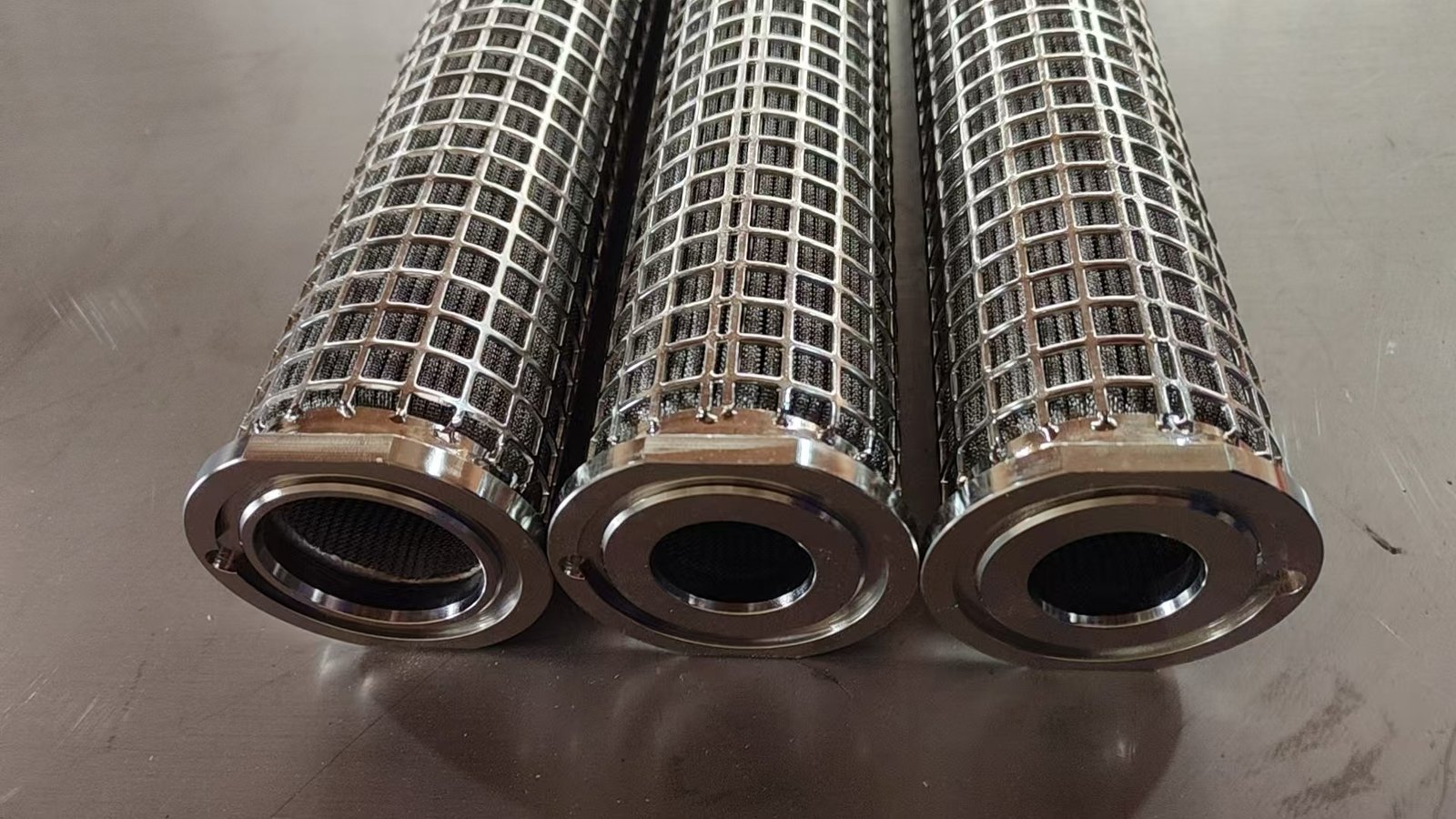
A differential pressure loads the medium and support structure. Depending on the design, supports may include perforated tubes, coarse mesh, expanded metal or other engineered components. Confirm the allowable differential pressure and any reverse-flow or backwashing loads.
Flow direction and housing fit
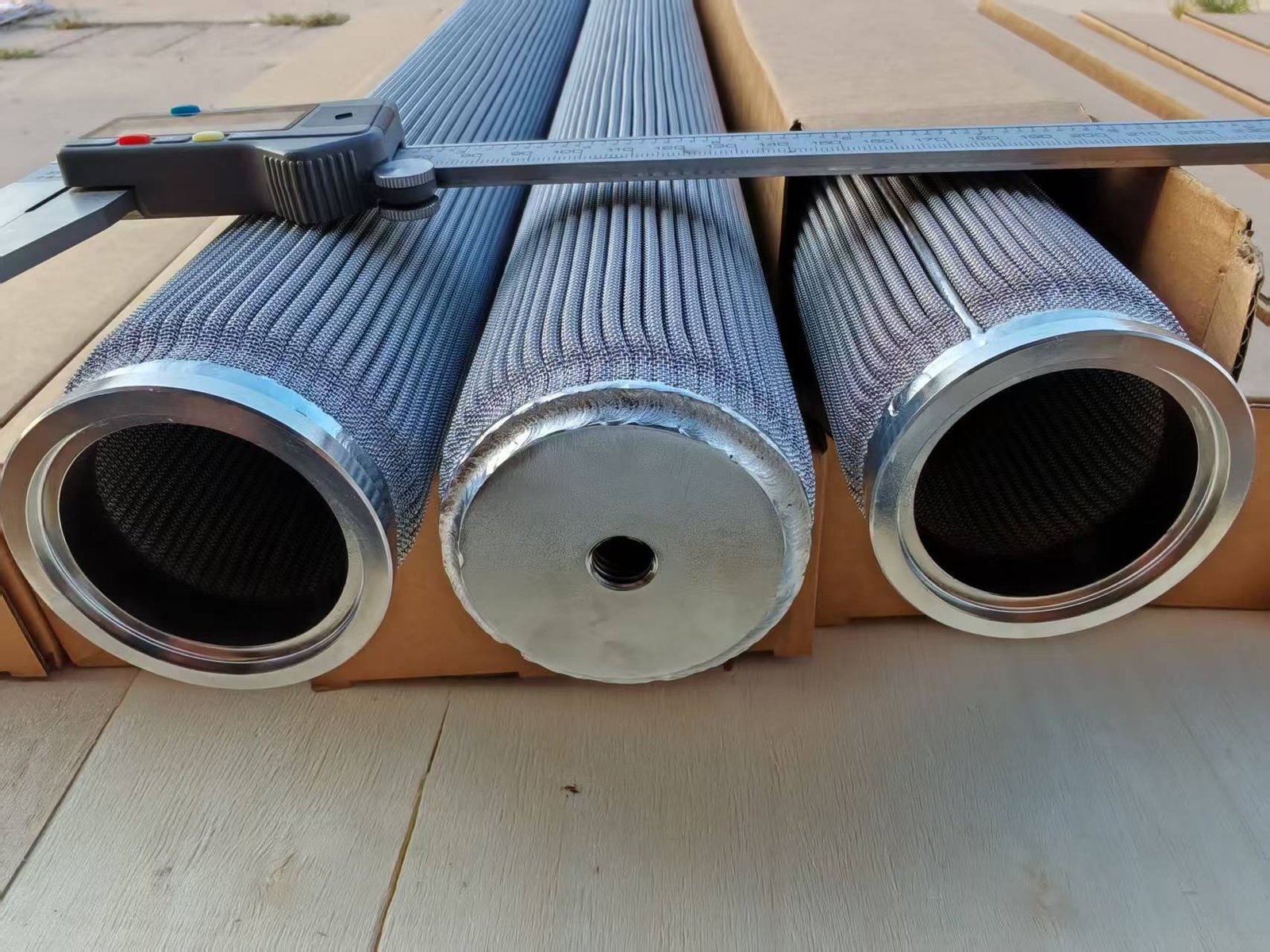
Outside-to-inside and inside-to-outside flow place deposits on different surfaces and load the structure differently. Supports must suit the intended direction. Thread, flange, clamp, fitting, seal face and open or closed end details determine installation and sealing.
Matching outside diameter, length, material and micron rating does not prove interchangeability. Confirm fitting tolerances, seal engagement and the available installation space.
10. Cleaning and reuse
Many metal cartridges can be cleaned and reused when the assembly and deposits suit the chosen method. Possible methods include backwashing, ultrasonic cleaning, chemical cleaning and controlled thermal treatment. None is suitable for every medium, weld, metal grade or seal.
Agree the procedure with the manufacturer. Chemicals can attack components, and thermal treatment can damage seals or alter the metal assembly. Do not assume that an all-metal appearance establishes compatibility with a cleaning process.
Record clean pressure drop, loaded pressure drop and the pressure drop after cleaning under comparable flow and temperature conditions. Recovery of flow resistance is useful evidence, but it does not prove that retention or integrity has recovered. Inspect the mesh, pleats, welds, supports and seals, and use an agreed integrity or performance test where required. Replace elements with unacceptable deformation, corrosion or damage.
11. Replacement and custom cartridges
A replacement project may begin with an old sample, drawing, photograph or OEM part number. Identify dimensions, medium construction, connection details, sealing and flow direction before defining an equivalent element.
If the original cartridge performed well, accurate replication may be the objective. If it clogged quickly, corroded, deformed or cleaned poorly, provide the process conditions and failure history so the design can be reviewed. Copying the visible dimensions alone may reproduce the original problem.
12. Selection matrix and a complete purchasing specification
| Application | First priority | Further checks | Main risk |
|---|---|---|---|
| Petrochemical liquid | Fluid, solids and filtration goal | Flow, materials and differential pressure | Corrosion or plugging |
| Viscous oil | Operating viscosity and flow | Area and filtration rating | High clean pressure drop |
| Polymer melt | Temperature, viscosity and retention | Area and mechanical support | Excessive flow resistance |
| Catalyst fines | Particle retention requirement | Area and solids loading | Rapid plugging |
| Corrosive chemical | Composition and material compatibility | Temperature, welds and seals | Localized corrosion or component damage |
| Reusable element | Deposits and cleaning procedure | Medium, structure and post-cleaning checks | Incomplete cleaning or damage |
| Replacement element | Dimensions, interfaces and flow direction | Original duty and failure history | Mismatch or repetition of the original problem |
Information to include in an inquiry
- Cartridge type, medium construction, rating definition and agreed retention test.
- Materials of the mesh, supports, end fittings and wetted components.
- Outside diameter, inside diameter, overall length, tolerances and interface drawing.
- Pleat geometry, support structure, flow direction and seal or gasket details.
- Fluid composition, viscosity at operating temperature, temperature range and flow per element or housing.
- Line pressure, clean pressure drop, operating differential pressure and maximum allowable differential pressure at temperature.
- Contaminant characteristics, concentration and downstream filtration requirement.
- Cleaning procedure, acceptance checks and any required documentation.
If a parameter is unknown, mark it as unknown and provide the available process information, drawing or sample. A guessed value can be less useful than an accurately described duty.
13. Frequently asked questions
What micron rating should I choose?
Define the contaminant and retention objective first. Then assess the rating alongside flow, viscosity, usable area and allowable differential pressure.
Does a higher mesh count always mean finer filtration?
Mesh count alone is insufficient. Wire diameter and weave affect aperture and retention, especially for Dutch weave.
Is 316L always the better petrochemical choice?
Suitability depends on the complete environment and assembly. Review composition, temperature, corrosion conditions and cleaning chemicals.
Are more pleats always better?
No. Pleat spacing, depth, medium thickness, supports and deposit characteristics determine whether the additional area remains usable.
When should I use sintered mesh?
Consider it when the required structural stability cannot be met by a suitable woven mesh and support design. Validate the actual medium’s filtration and hydraulic performance.
Can a metal cartridge be reused after cleaning?
Often, if the cleaning method suits the assembly and post-cleaning checks confirm acceptable condition and performance. Pressure drop recovery alone does not establish integrity.
Can a replacement be made from an old sample?
A sample can support development, but dimensions, interfaces, medium and operating conditions still need confirmation. Include any known failure history.
14. A practical selection pathway
Choose a stainless steel wire mesh pleated filter cartridge by linking the contaminant and retention goal to the medium, flow, viscosity, usable area, differential pressure, materials, supports, connections and cleaning method.
A useful specification explains what the cartridge must retain, the conditions it must withstand and how it fits and seals into the equipment. These details turn a micron value and material grade into a manufacturable filter element.
Discuss your application with our engineers. Provide the fluid, contaminants, target rating, flow, temperature, pressure conditions, flow direction and installation dimensions. For replacement projects, include drawings or a sample and describe any existing operating problems.
Reference
Hesketh and colleagues (2022), Influence of H₂S on the Localised Corrosion of 316L Stainless Steel: Part 1 — Coupon Testing, National Physical Laboratory report, listed by NIST.