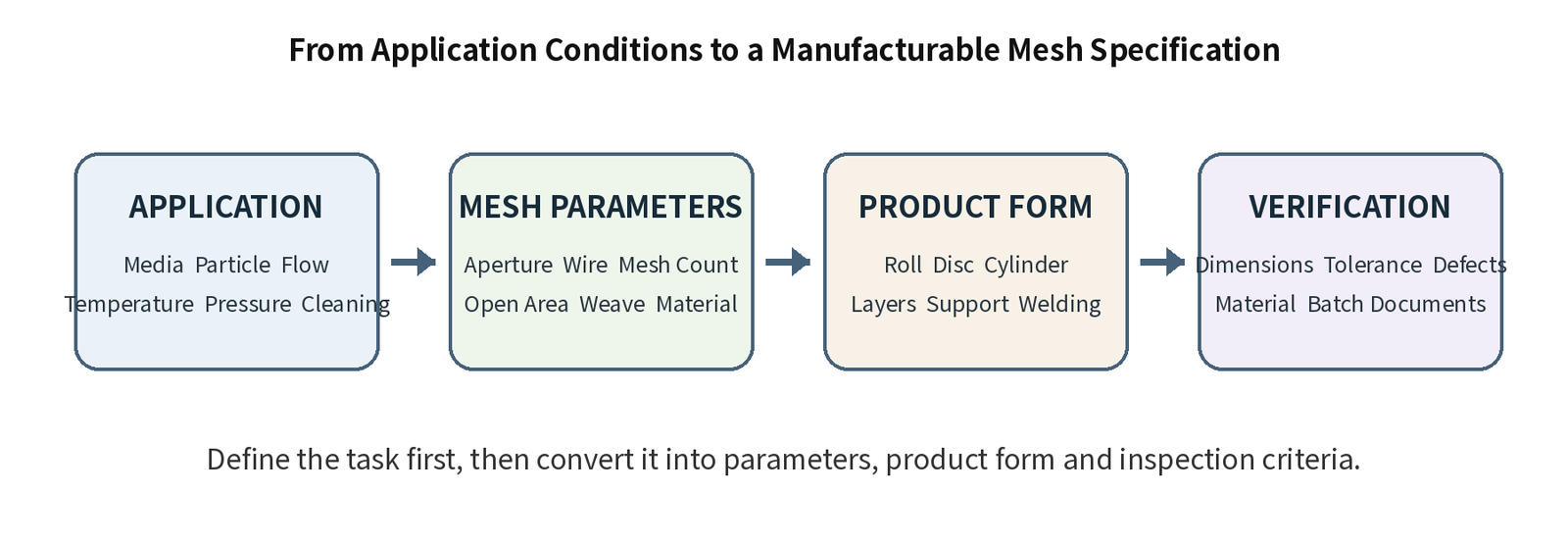
A wire mesh specification is a set of related requirements: aperture, wire diameter, mesh count, open area, weave, material, dimensions, tolerances and finished form. A single mesh count or undefined micron rating does not fully define an industrial woven wire mesh.
An existing drawing, mesh specification or reference sample is a useful starting point for manufacture. Send what you have together with the required quantity; missing dimensions, material or inspection details can be clarified during the discussion.
When the specification is still being developed, the operating conditions below help connect the task with a manufacturable mesh and component. Different wire diameters at the same mesh count produce different theoretical apertures and open areas, so count alone is not a complete specification.
By Jack Sun. Our company is based in Anping County, Hengshui, Hebei, China, a center of the wire mesh industry. Jack Sun has long worked in wire mesh weaving and industrial filter manufacturing. This guide explains how manufacturing and purchasing requirements connect; product performance must be verified for the intended conditions.
1. Build the Specification from Operating Conditions
- Medium: liquid, gas, powder, granules or high-viscosity melt.
- Particles: size distribution, shape, hardness and permissible downstream contamination.
- Normal/peak flow and direction.
- Initial differential pressure and maximum system allowance.
- Continuous/peak temperature, thermal cycles and duty.
- Corrosive constituents, concentration and cleaning chemicals.
- Function: filtration, screening, support, flow conditioning or protection.
- Cleaning: backflushing, ultrasonic, chemical or thermal.
- Delivery form: roll, sheet, disc, cylinder or complete filter.
These inputs change the selection priorities. A clean low-viscosity fluid, abrasive slurry and polymer melt do not place the same demands on aperture, wire strength and layered structures.
2. Define Filtration or Screening Requirements
Screening classifies particles by geometry, but passage also depends on shape, orientation, vibration and loading. Filtration can involve irregular, compressible or agglomerated particles and a developing filter cake. Geometric aperture does not automatically define measured efficiency.
State whether the goal is classification, equipment protection or a specified cleanliness. Identify the critical particle sizes, required efficiency and permitted passage. Define whether efficiency is based on particle count or mass.
A ’20 µm’ requirement can mean different things to buyer and supplier. Nominal or absolute ratings need an explicit definition and test method; a calculated aperture alone cannot establish universal absolute retention.
3. Aperture, Wire Diameter and Mesh Count
For regular square-aperture mesh, the nominal geometric relation is w≈25.4/M−d, where w and d are in mm and M is the nominal count per linear inch. Confirm the counting convention, require 25.4/M greater than d, and calculate each direction separately if warp and weft differ.
The estimate does not replace measured aperture/tolerance and is not a direct rating formula for Dutch weave, knitted mesh, perforated sheet or distorted openings.
| 100-mesh geometric example | Wire diameter | Estimated aperture | Theoretical square open area |
|---|---|---|---|
| Example A | 0.10 mm | 0.154 mm = 154 µm | 36.8% |
| Example B | 0.15 mm | 0.104 mm = 104 µm | 16.8% |
These are geometric examples, not stock or supply promises. The same count does not fully define aperture or flow area. Thinner wire increases theoretical aperture at fixed count; thicker wire narrows it and changes metal content and mechanical behavior.
Purchasing documents should include count, wire diameter, nominal aperture, weave and the agreed tolerance/standard basis.
4. Open Area, Flow and Mechanical Strength
For equal square apertures, OA=[w/(w+d)]²×100%, with matching units. For rectangular apertures, multiply the clear-width-to-pitch fraction for each direction. Do not apply the square formula to Dutch weave.
Open area is a projected geometric ratio, not the effective area of a framed assembly. Pressure drop also depends on viscosity, flow velocity, weave, thickness, layers, loading and cake formation.
Thicker wire can support mechanical stability, handling and fabrication, while reducing geometric flow area at a given count. Balance retention/aperture, permissible flow loss and strength rather than maximizing one parameter.
Compare pressure-drop data at the same medium, temperature, flow, area basis and loading state. Calculation cannot replace a flow–pressure-drop curve or strength validation.
5. Choose the Weave Type
| Type | Main specification boundary |
|---|---|
| Plain weave | Common one-over/one-under interlacing; specify the manufacturable count/diameter combination. |
| Twill weave | Common two-over/two-under interlacing; can accommodate relatively heavier wire in some combinations. |
| Dutch weave filter cloth | Different wire sizes/densities and tortuous paths; use defined cloth specifications and appropriate retention tests. |
Plain Dutch, twill Dutch and reverse Dutch constructions need their own detailed parameters. Their filtration rating is not obtained by substituting mesh count into the square-mesh aperture formula.
6. Select the Material
304 stainless steel is a candidate for many general industrial conditions; chloride concentration, temperature and exposure can require a different choice.
316L can be a candidate for more demanding corrosion conditions. Its low carbon content helps reduce sensitization-related risks in welding, but the grade alone does not promise seawater resistance, compatibility with every acid/alkali or a universal maximum temperature.
Nickel, copper, Monel and other alloys have distinct conductivity, corrosion and temperature behavior. Specify the exact grade and conditions, including cleaning. Evaluate frames, supports and welding materials for compatibility as well as the mesh.
7. Define Sizes and Finished Form
| Delivery form | Requirements beyond mesh parameters |
|---|---|
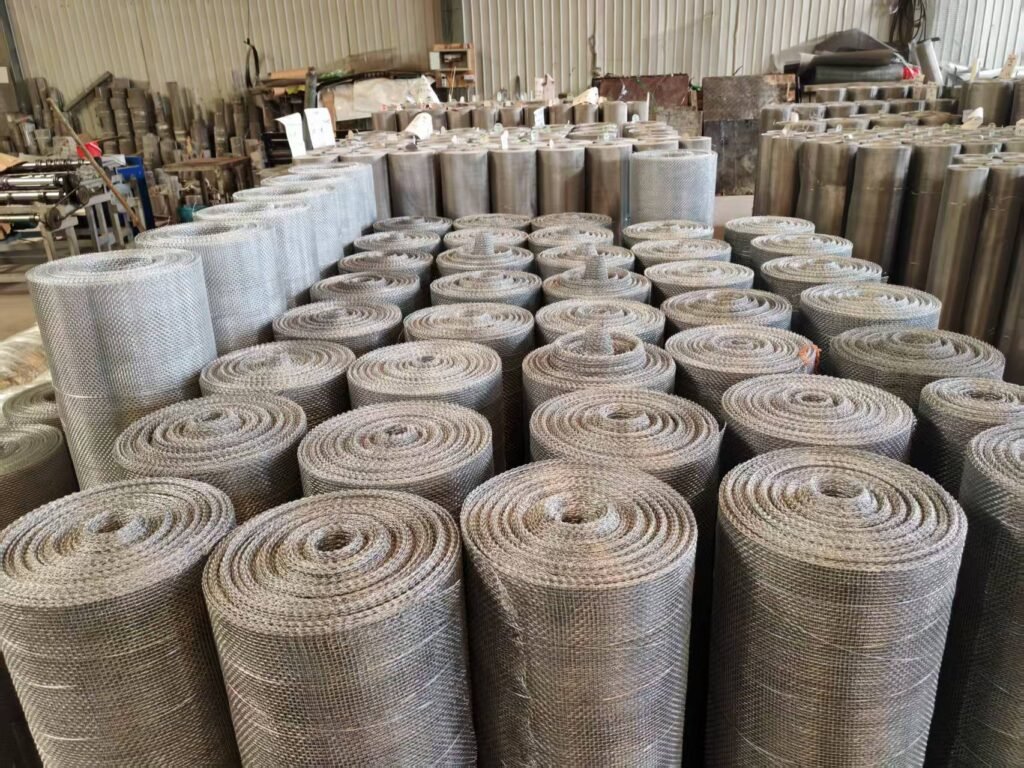
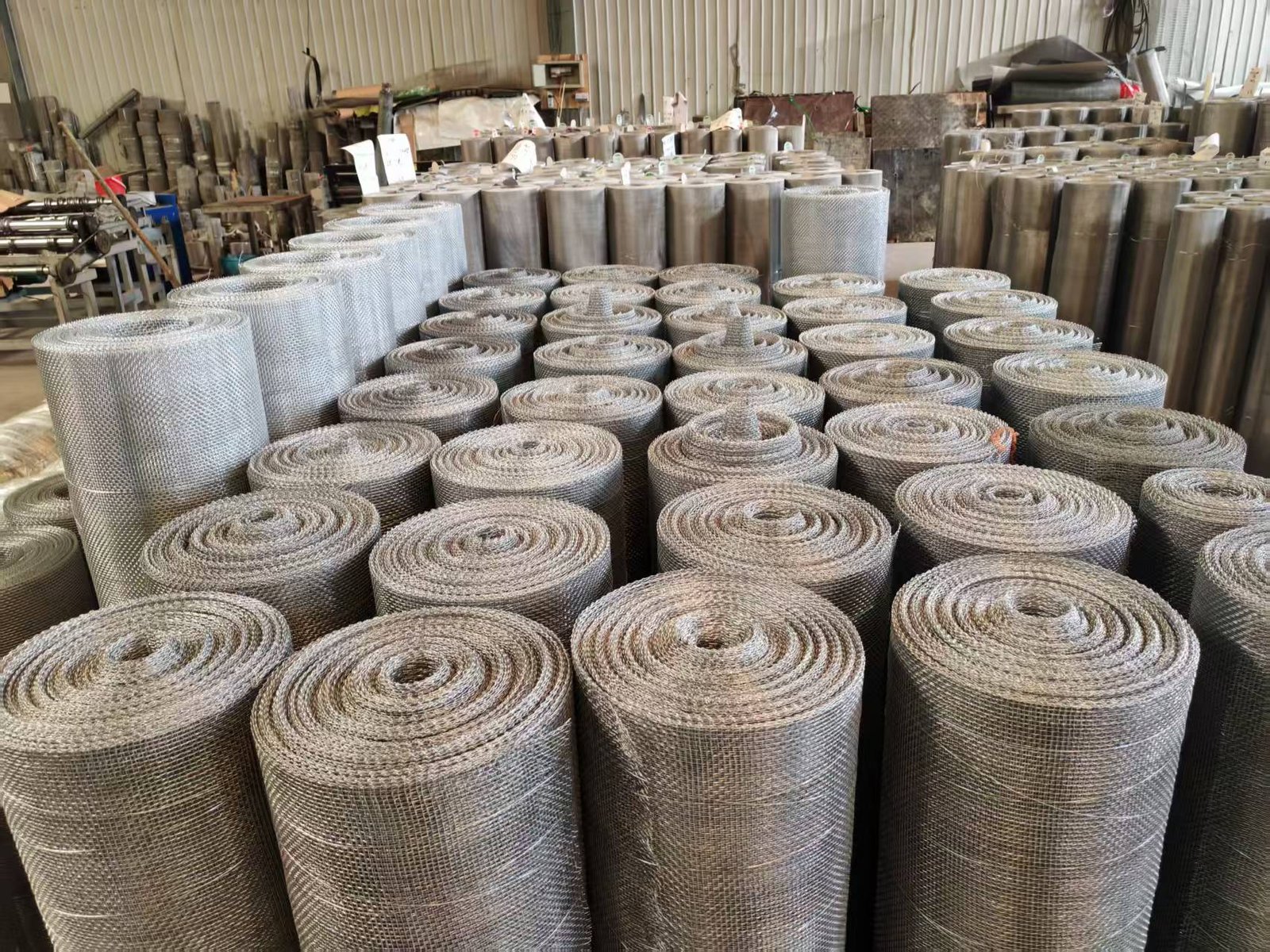
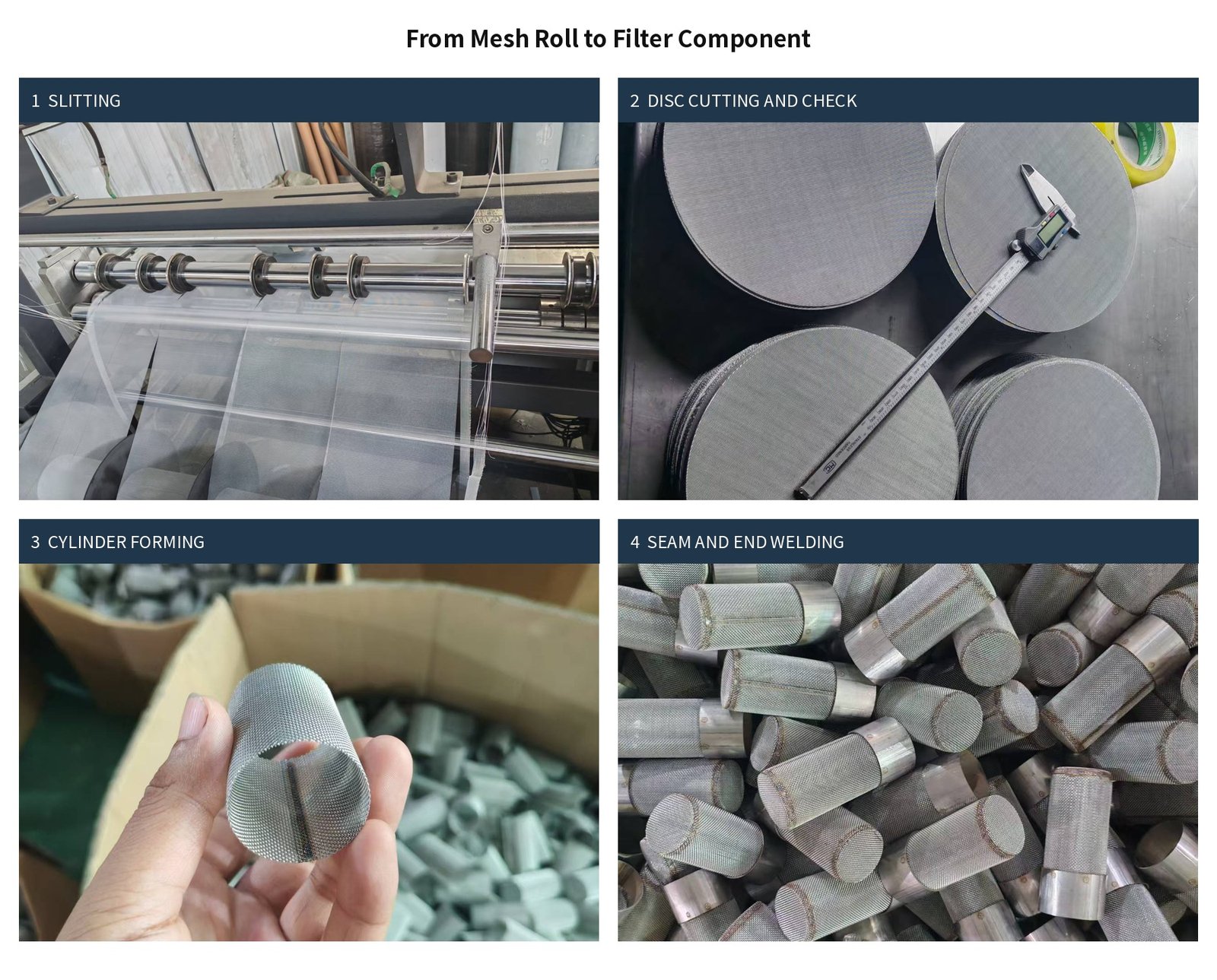
| Roll | Width, length, quantity, edge condition, joint limits, flatness, winding and packaging. |
| Cut sheet or filter disc | Outline, diameter, holes, burr direction, loose-wire limits and edge retention. |
| Cylinder or framed mesh | Diameter/length, roundness, seams, frame material, support and installation. |
| Multilayer screen pack | Material/count/diameter of every layer, order, support and fixing method. |
The finest layer alone does not define a multilayer component. Supports and protective layers influence pressure drop, strength and total thickness. Fabrication can introduce edge damage, distortion or joining risks, so final-component requirements must be separate from roll inspection.
8. Tolerances, Inspection and Documents
ISO 9044:2016 covers industrial square-aperture woven wire cloth made from steel, stainless steel or nonferrous metals, with technical requirements and tests. It excludes after-weaving coated cloth, precrimped and welded screens. Other uses can require additional agreed requirements.
ASTM E2016-22 covers industrial woven wire cloth; ASTM E2814-22 addresses industrial woven wire filter cloth. Confirm that the chosen edition matches the actual structure and purpose.
- Material grade and required material documents.
- Mesh count, wire diameter and aperture with agreed measurement positions.
- Width, length, finished dimensions and tolerances.
- Broken wires, weaving errors, abnormal openings, contamination and edge defects.
- Cylinder roundness, seams, frames and connections.
- Sampling, identification, packaging and traceability.
Avoid an undefined ‘industry standard’ requirement. Record the measurement method, sampling and acceptance criteria before production.
9. Complete Specification Checklist
This checklist is a reference for confirming the order, rather than a requirement to supply every item before first contact. An approved drawing or existing specification can define the manufacturing starting point; add operating details where selection or performance needs further review.
For a sample with incomplete markings, see how to measure mesh count, single-wire diameter and clear aperture. Keep measured values and sample condition separate from nominal or calculated values.
| Group | Information to provide |
|---|---|
| Application | Equipment and function: filtering, screening, support, conditioning or guarding. |
| Duty | Medium, particles, flow, differential pressure, temperature and cleaning. |
| Mesh | Material, weave, count, wire diameter, nominal aperture and open area where applicable. |
| Component | Delivery form, drawing, layer arrangement, frame/support and connections. |
| Acceptance | Critical tolerances, inspection method, documents, marking and packaging. |
If information is incomplete, send a sample, mating housing, failure photographs or operating data. These help identify missing requirements but cannot establish a filtration rating from appearance.
10. Common Specification Mistakes
- Only mesh count: aperture and open area remain uncertain without wire diameter.
- Treating aperture, a Dutch-weave rating and actual particle retention as the same quantity.
- Choosing only mesh material while ignoring frames and welds.
- Pursuing the smallest aperture without flow, loading and cleaning limits.
- Assuming a conforming roll guarantees a conforming fabricated filter.
- Leaving measurement positions, tolerances and acceptance criteria undefined.
11. Frequently Asked Questions
What information defines a wire mesh specification?
Application, medium, particles, material, aperture/count, wire diameter, weave, sizes, tolerances and finished form. Filtration also requires flow, pressure-drop allowance, temperature and cleaning.
Is mesh count the same as filtration accuracy?
No. Aperture also depends on wire diameter, while performance depends on weave, particles, flow and cake formation.
Should I specify aperture or mesh count?
Aperture is often more direct for particle passage, but include count, wire diameter and nominal aperture together to reduce ambiguity.
Can Dutch weave use the square-mesh formula?
No. Select its actual weave, manufacturer specification and defined retention-test basis.
Which standard should I choose?
Confirm structure and use first. ISO 9044 or ASTM E2016 may suit industrial square-aperture cloth; filter cloth may also call for ASTM E2814.
12. Conclusion and Standards
A complete wire mesh specification converts a real operating duty into manufacturable and verifiable parameters. Define the medium, particles and task; choose aperture, wire diameter, count, weave and material; then define the final structure and inspection plan.
Explore woven wire mesh and the wire mesh size calculator. For components, see fabricated wire mesh filters.
- ISO 4783-1:1989 — guide to aperture and wire-diameter combinations.
- ISO 9044:2016 — industrial woven wire cloth technical requirements and tests.
- ASTM E2016-22 — industrial woven wire cloth specification.
- ASTM E2814-22 — industrial woven wire filter cloth specification.
Discuss Your Wire Mesh Specification Requirements
- Application-based customization: provide operating conditions, installation space and functional targets to establish an initial specification and prototype.
- Drawing-based customization: provide materials, dimensions, tolerances, connections and agreed acceptance requirements.
- Sample-based customization: provide the existing part and mating components; evaluate wear, contamination and permanent deformation before confirming a replacement.
Related Guides
For the detail behind a specification, review mesh count, wire diameter and micron opening, plain, twill and reverse Dutch weave and open area and pressure-drop limits. For acceptance planning, distinguish defect investigation and prevention from order-specific quality control and release records.