By Jack Sun · Filtalloy
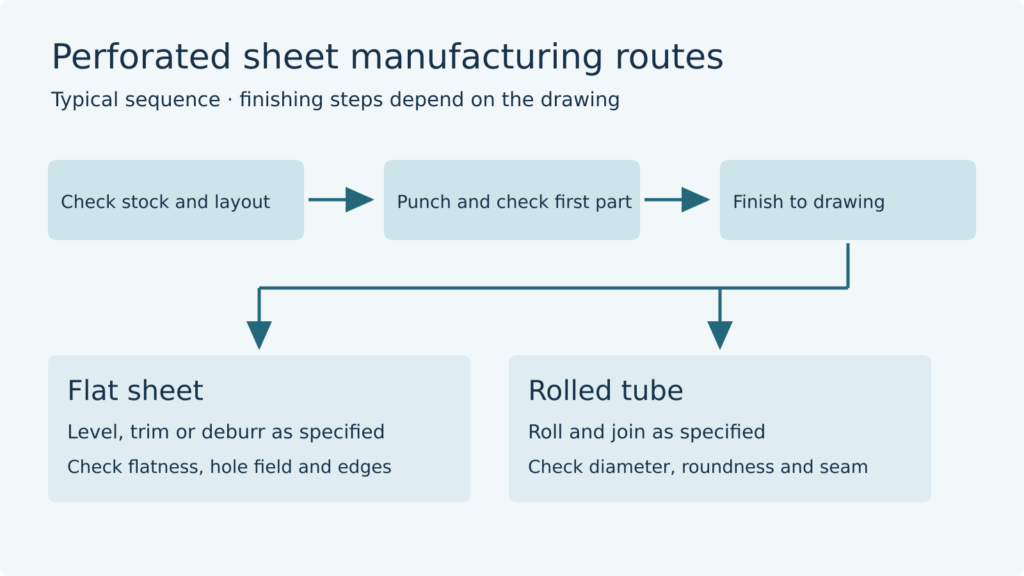
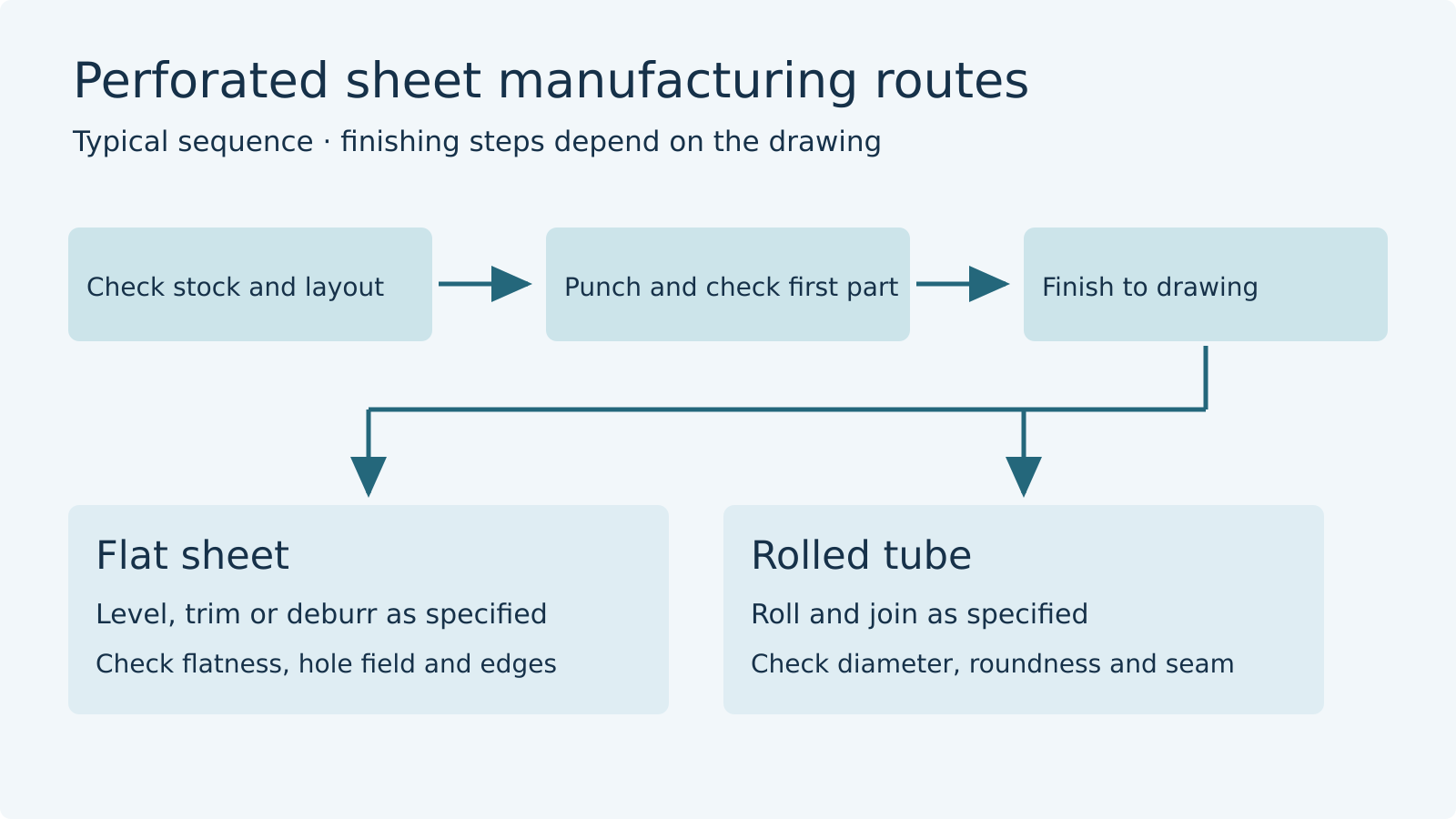
In mechanical perforating, a punch and die shear holes in sheet metal. The sheet is then leveled, cut or formed as required. Finishing and inspection follow the job drawing, especially where holes serve as openings for screening or the sheet must mate with a seal.
Sheet and pattern preparation
Start with the material grade, thickness, hole geometry, pitch, pattern direction and solid margins. Locate the first row from a specified finished edge. Leave room for clamping and trimming, and account for the orientation of slots or staggered rows before releasing the pattern.
How a punch and die form the hole
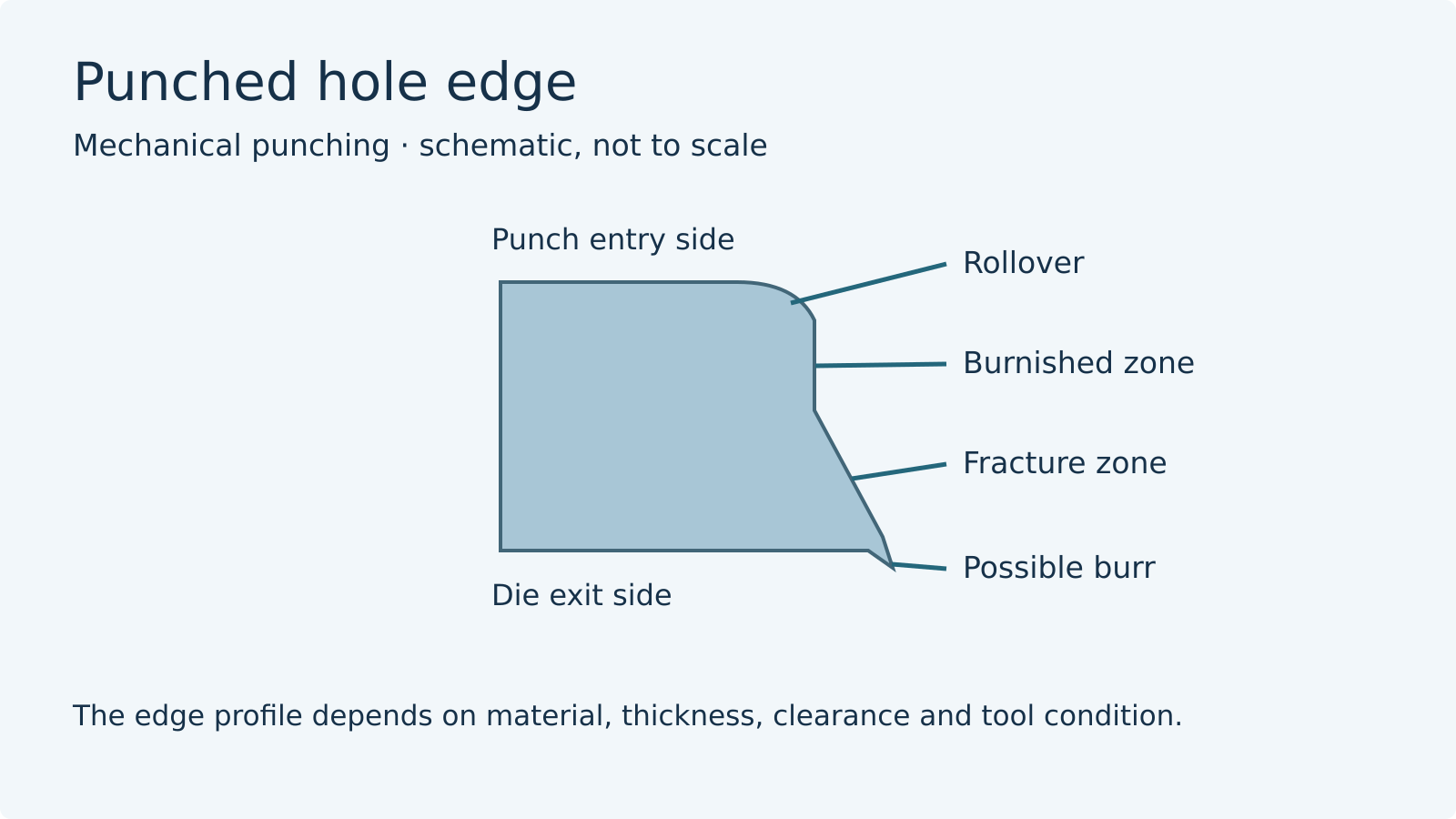
The punch pushes into the sheet while the die supports it. A typical mechanically punched edge can show entry rollover, a burnished band, a fracture zone and an exit-side burr. Tool clearance, material, thickness and wear affect those features. Confirm the punch-entry side and the burr side on the first piece, especially if the sheet contacts a gasket or a finer filter layer.
Where CNC punching helps
Programmable positioning helps repeat hole layouts and revise pitch, margins or mounting-hole positions within the setup’s tooling and clamping limits. Depending on the machine configuration, tool selection and material handling can also be automated. A first-piece inspection remains necessary to verify orientation and the location of the pattern from the finished edge.
For small lots or frequently changing hole contours, compare available tooling with cutting alternatives. Laser-cut edges should be evaluated for the characteristics of that process, including any heat effects.
Leveling, cutting and forming
Removing material can redistribute stress and leave a sheet out of plane. Leveling can bring a flat part within its agreed tolerance. Trim to the finished outline and check the solid margins. For a tube, check how the pattern falls at the seam, then inspect roundness, seam and end dimensions after rolling and joining.
Finishing for the application
- Deburring and edge finishing. Protect sealing surfaces, contact layers and handling edges. Recheck small openings or slots where edge work may affect fit.
- Cleaning and degreasing. Prepare the part for welding or coating, or meet an agreed residue requirement for a filtration assembly.
- Stainless steel treatment. Descaling or pickling may be needed for certain welded surfaces. Chemical passivation is a distinct operation that can be specified where required. ASTM A967/A967M
- Galvanizing or coating. For guards and exposed panels, verify coverage at cut edges and openings. Inspect after finishing if the final opening or fit is critical.
- Epoxy powder coating. Consider it for indoor guards, ventilation panels and suitable filter support plates. Confirm pretreatment, dry-film thickness, adhesion and finished clear opening. Small holes and slots can narrow or bridge, and mating surfaces may need masking. For exterior exposure, specify a coating system validated for the environment.
Finished-part inspection
Record hole diameter or slot width, pitch and direction, the hole field and solid margins, burr side and flatness or formed dimensions. If a gasket bears on the solid margin while the perforated area has a clear-opening requirement, list these as separate inspection items. With a used sample, photograph the installation and identify service distortion before converting measurements into a new drawing.
Frequently asked questions
Can the same punch be used when only pitch changes?
Possibly. Check the hole profile, material and thickness, and confirm the new layout leaves enough room at the edges and clamps. Verify the first piece.
Why specify the burr side?
It identifies which surface will face the gasket, filter medium or flow path and where deburring is required.
Jack Sun has long worked in metal wire mesh weaving and industrial filter-element manufacturing. Filtalloy is based in Anping, Hengshui, Hebei, China.