By Jack Sun · Filtalloy
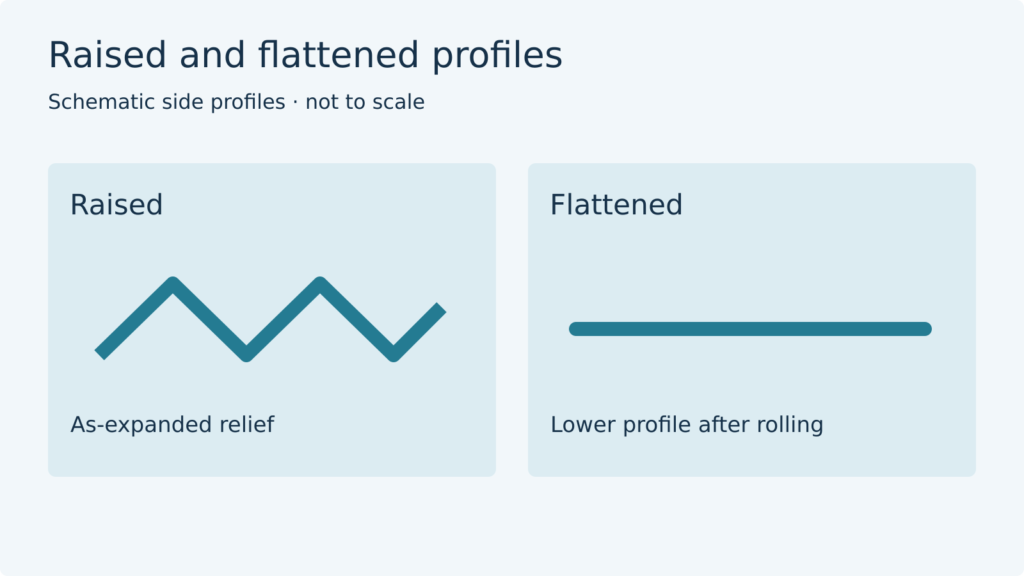
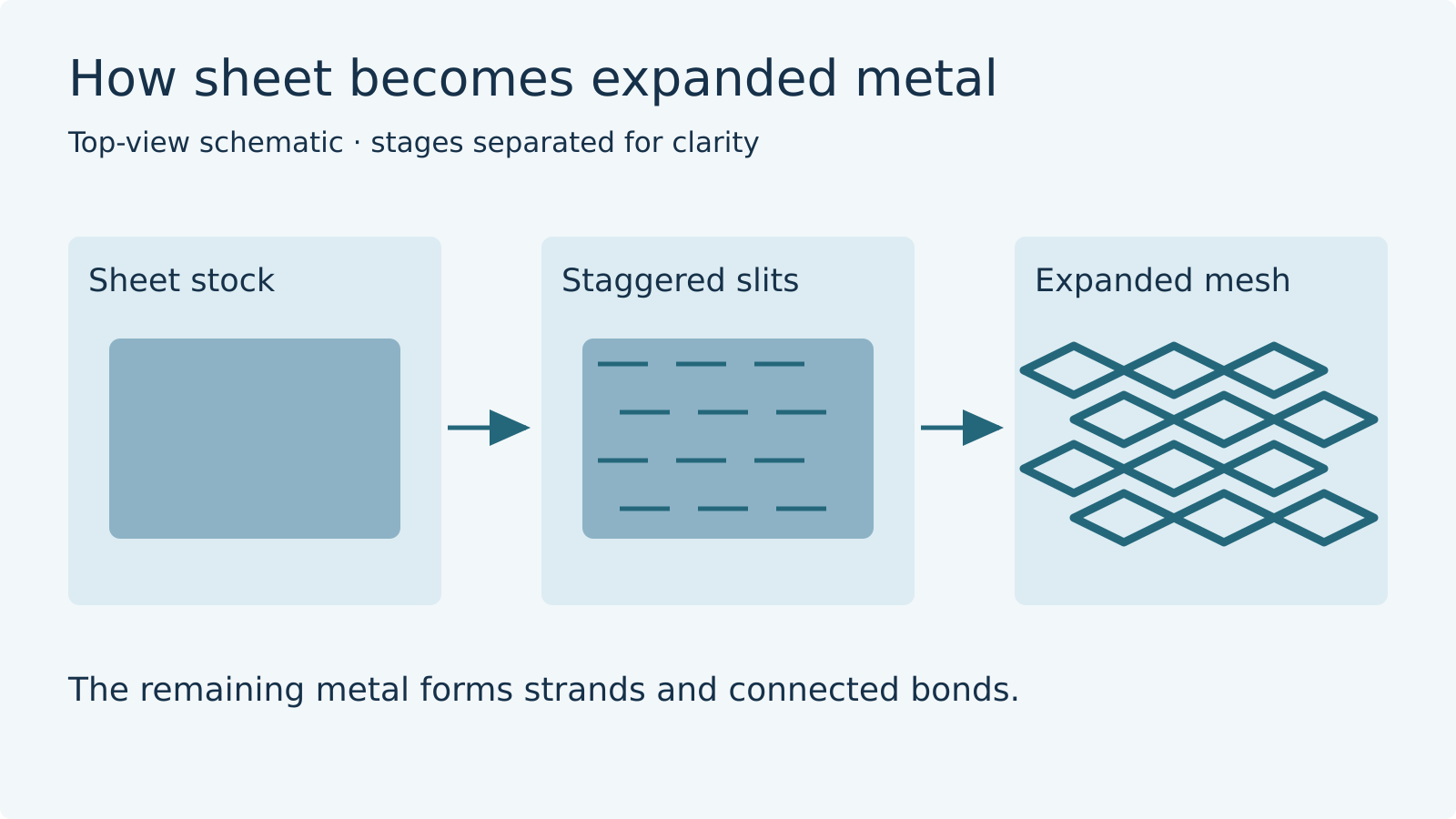
Expanded metal is made by slitting and stretching sheet metal in a repeating pattern. The openings spread as the sheet is formed, leaving strands and bonds connected in a single piece. The resulting raised mesh can be roll-flattened when the installation calls for a flatter profile.
How a sheet becomes an open mesh
The tooling makes staggered slits and displaces the sheet to open the pattern. Metal between the openings becomes the strands, and the junctions between them are the bonds. Sheet thickness, material formability, tooling and feed settings affect the resulting geometry. Check pitch and the clear opening separately when the opening is functional.
Raised and flattened expanded metal
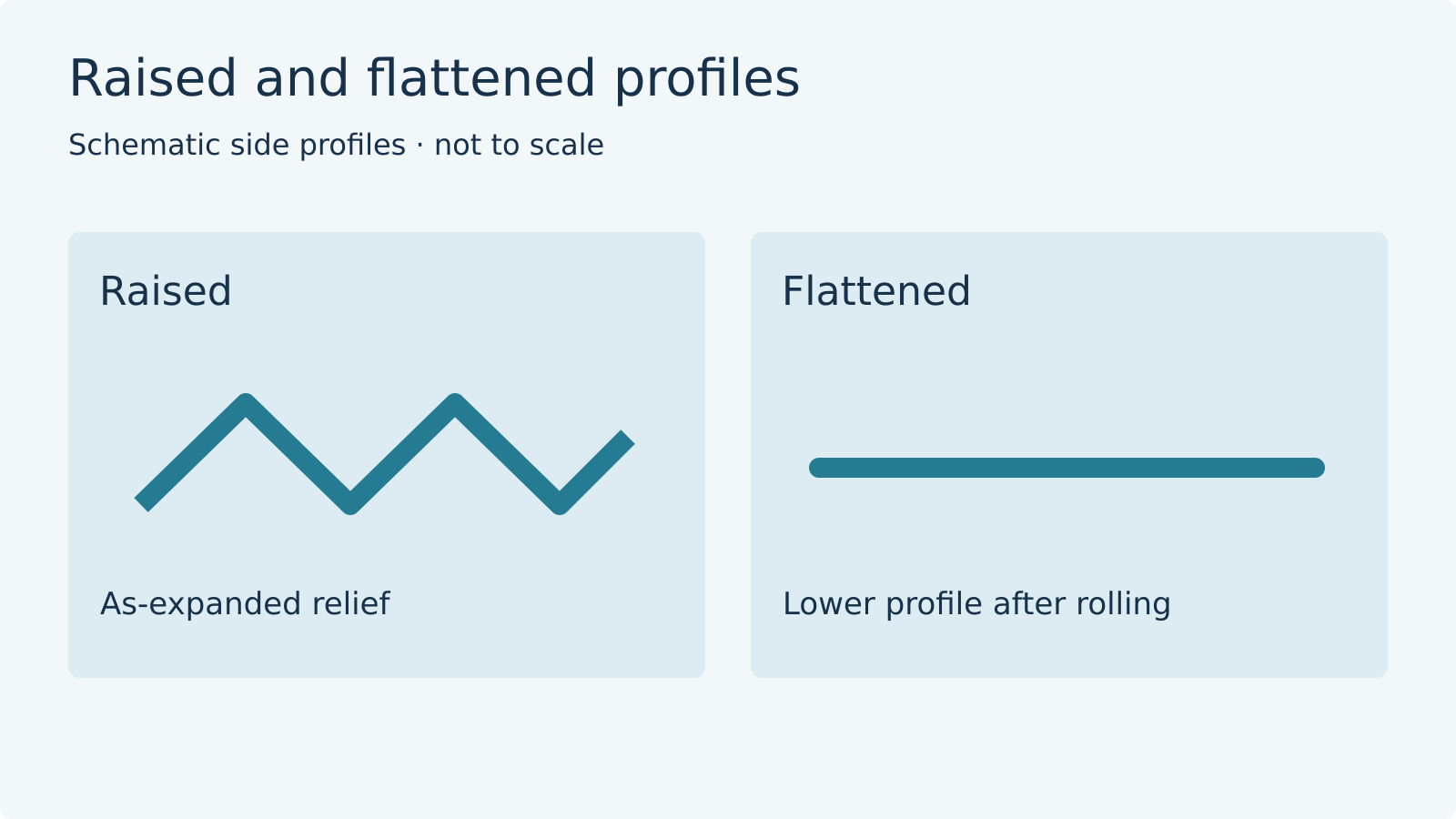
Raised mesh retains the three-dimensional strand and bond profile created during expansion. Flattening passes the raised sheet through rolls to reduce that profile. Recheck the final opening and outside dimensions after flattening. For a part that sits in a narrow channel or between layers, specify the finished overall height in addition to the original sheet thickness.
How cutting changes the edges
Cutting across the pattern can leave partial openings and projecting strand ends. Specify the pattern direction and acceptable edge condition on the drawing. If the job requires a fixed outside size and complete openings along all edges, check the pitch and cutting positions before setting both requirements.
Finishing for the application
- Trim, deburr or bind edges. For filter supports and accessible guards, check that strand ends do not catch or press into adjacent media.
- Bend, roll or frame. For cylindrical supports, verify roundness, seams and the media contact surface. For framed panels, check the fit after the edge has been finished.
- Clean and degrease. Remove process oil and debris where welding, coating or an agreed cleanliness requirement calls for it.
- Galvanize or coat. Check cut edges, bonds and clear openings after finishing. Local buildup can matter when the apertures are small or when the mesh must fit in a frame.
What to inspect on the finished mesh
Record the material grade, starting sheet thickness, raised or flattened condition, long and short pitch directions, finished size and any functional clear-opening or overall-height limits. For a filter support, also inspect the contact surfaces and edge condition after forming. How to measure expanded metal
Frequently asked questions
Why measure finished height when the original sheet thickness is known?
The raised profile has an overall height determined by the formed strands and bonds. That dimension controls fit in a channel or layered assembly.
Can raised and flattened pieces of the same outline be interchanged?
Check overall height, contact surfaces and openings in the finished condition before making the substitution.
Jack Sun has long worked in metal wire mesh weaving and industrial filter-element manufacturing. Filtalloy is based in Anping, Hengshui, Hebei, China.