By Jack Sun · Updated October 22, 2026
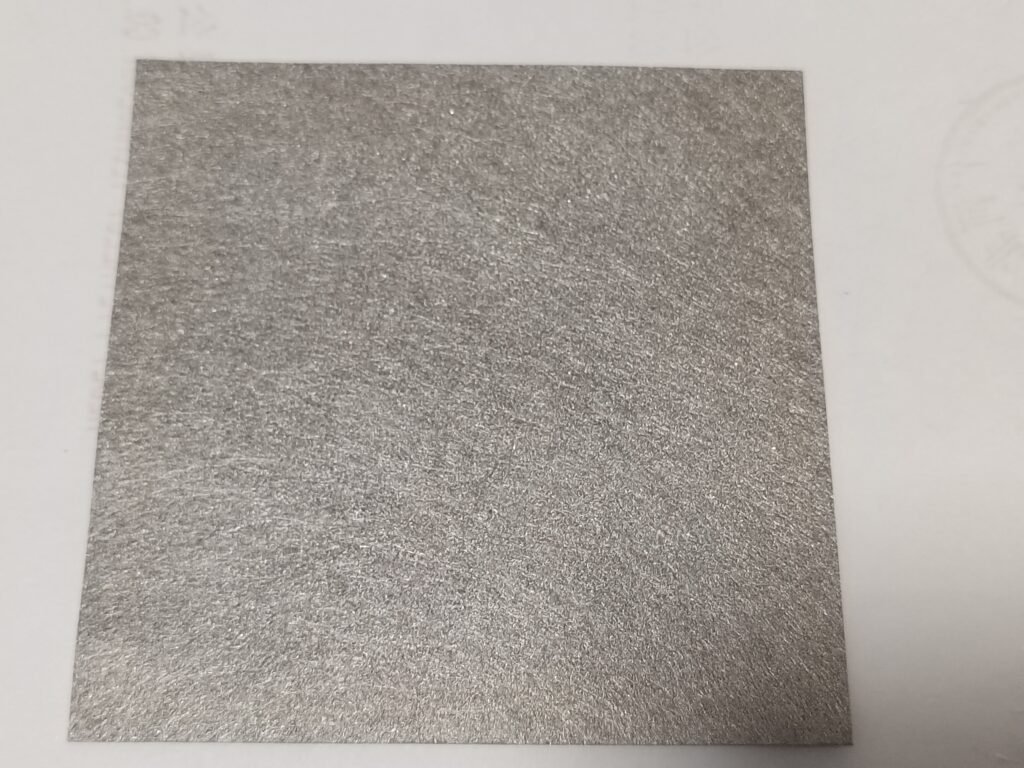
Sintered fiber felts with the same porosity can still have different flow resistance. Porosity describes the fraction of a defined volume occupied by voids. It does not fully describe how those voids connect, their direction or the path a fluid must follow.
A specification table may list porosity, thickness and air flow together. These values help explain one another, but they are not interchangeable. For water, oil or another liquid, one air-flow figure cannot by itself establish pressure drop at the intended operating flow.
This article concerns the initial resistance of clean media. Resistance growth during loading and suitability after cleaning need separate assessment.
What porosity, air permeability and permeability mean
Read the reported quantity and units before comparing a column labelled “permeability.”
| Quantity | What it describes | What it cannot establish alone |
|---|---|---|
| Porosity | Void volume as a fraction of a defined total volume | Pore connectivity, filtration efficiency or operating pressure drop |
| Air-flow or air-permeability result | Air volume passing per unit area and time under stated conditions | Liquid flow under unspecified conditions |
| Permeability coefficient | The structure’s resistance within the applicable flow model | Every loss in a complete cartridge and housing |
For example, L/(dm²·min) is a volume flow per area. Its interpretation needs the pressure difference, gas conditions, specimen and flow direction. It is a different quantity from intrinsic permeability commonly expressed in m².
ISO 4022:2018 provides a fluid-permeability measurement framework for interconnected porous sintered metals, including viscous and inertia permeability coefficients. [1] Its public scope does not turn an isolated air-flow value into a complete coefficient determination.
For individual report fields and test conditions, see sintered fiber felt specifications and test data.
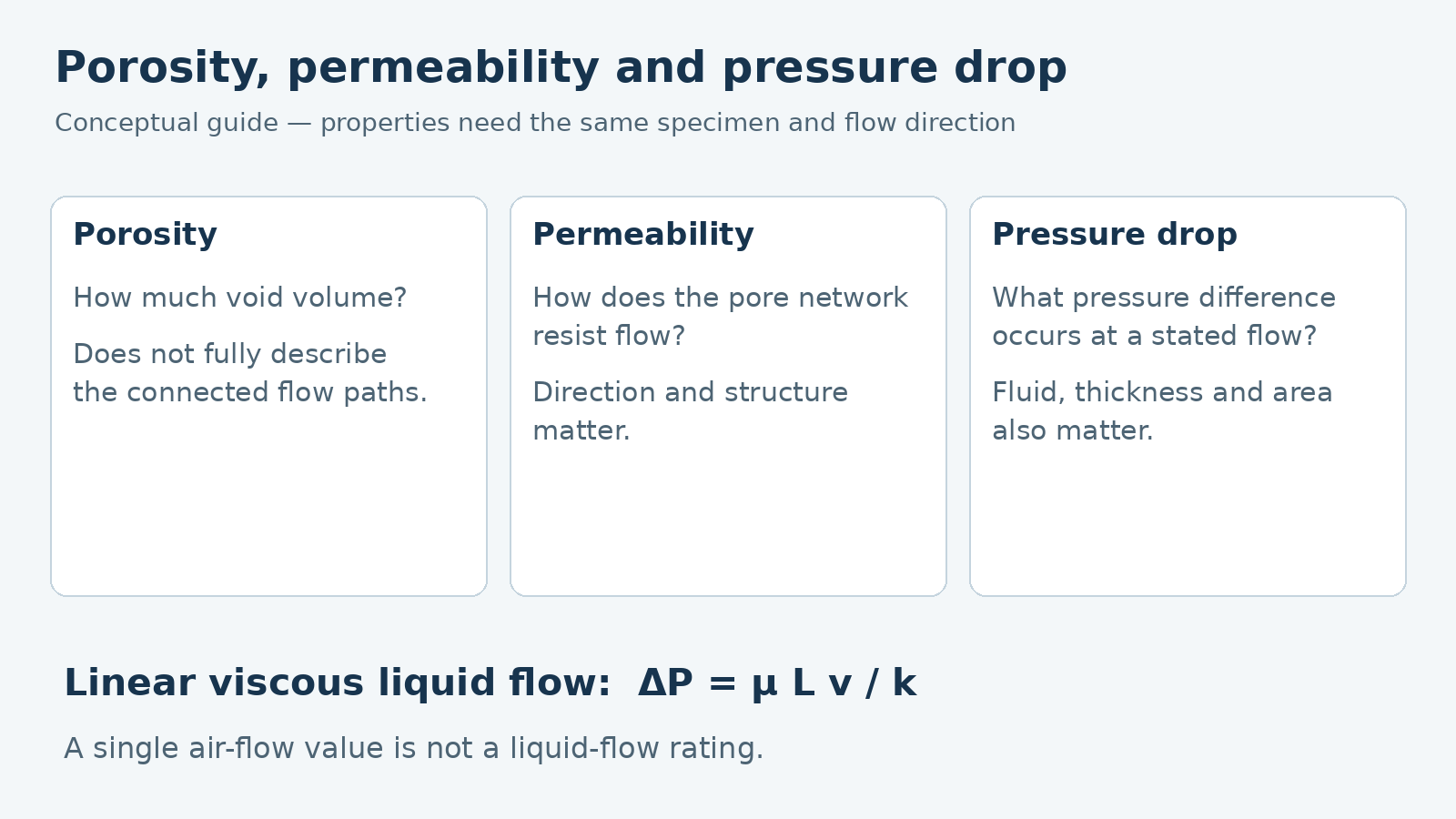
Why equal porosity does not mean equal resistance
Fluid needs connected passages, rather than void volume alone. Two structures with equal total void fraction may differ in constrictions, path length, connectivity and orientation.
As a conceptual example, two networks can occupy the same void volume while one provides relatively direct paths and the other forces fluid through narrower or more winding passages. This illustrates the distinction; it is not a measured pore map of a Filtalloy grade.
Research on metal fiber sintered sheets examines flow both parallel to the sheet and through its thickness, and discusses the influence of fiber arrangement on permeability. [2] A result measured along a sheet should therefore not be used without explanation for flow through it.
Fiber diameter and layer arrangement also matter. Changing fibers or layup can change pore geometry and thickness together. “Both have 80% porosity” is insufficient evidence of equivalent flow behavior.
Layup, compaction and sintering establish the delivered structure. If processing changes both thickness and pore geometry, the resulting pressure-drop difference cannot all be attributed to thickness. The manufacturing relationships are explained in how layup and sintering shape metal fiber felt.
How thickness, flow and viscosity affect pressure drop
For clean, steady, single-phase Newtonian liquid flow in a verified linear viscous range, Darcy’s relationship connects the variables:
ΔP = μ × L × v / k, with v = Q / A.
ΔP is media pressure drop in Pa; μ is dynamic viscosity in Pa·s; L is thickness in m; v is superficial velocity in m/s; and k is permeability in the relevant direction in m². Q is actual volume flow in m³/s and A is the effective flow-through media area in m².
Within those assumptions, increasing viscosity, velocity or thickness increases pressure drop, while greater permeability reduces it. Comparing thickness also requires comparable structure and permeability. Extending the flow path in the same medium is different from choosing a thicker felt with another structure.
Superficial velocity uses the defined effective media area, not the local velocity inside each pore. Do not automatically multiply that area by porosity again: this can deduct area twice.
As an illustrative proportional relationship, doubling velocity doubles the model’s viscous pressure drop when all other conditions remain unchanged and the linear range has been verified. It is not a performance guarantee for a product grade.
Why pressure drop may stop increasing linearly
When inertia becomes important, a linear term alone can be inadequate. Metal-fiber research uses a Forchheimer relationship with a velocity-squared contribution to describe higher-flow behavior. [2]
A low-flow test point should not be extrapolated indefinitely. Nor is there one universal transition velocity for every felt: structure, fluid and the relevant flow scale influence the assessment. Several measured flow points provide a more useful range than an isolated number.
What air tests can tell you about liquid service
Air testing can help compare the flow characteristics and consistency of the same construction under aligned conditions. The air-flow result is not, by itself, a rated water or oil flow.
A proposed conversion needs two questions answered: does the original measurement support a usable material parameter, and does the target flow remain within the model’s assumptions? Converting volume units answers neither question.
Liquid viscosity must correspond to operating temperature. Gas results also need a flow-reference basis and absolute-pressure information where relevant. Standard volume flow and actual volume flow should be aligned, and significant gas compressibility needs appropriate treatment.
Mott’s rolled porous-metal sheet data distinguish gas and liquid coefficients and identify test fluids and temperatures. [3] This illustrates the need to define each result. Its material, coefficients and curves are not general conversion data for our fiber felt.
If only an air-flow value is available, it can first support grade identification and test consistency. A project requiring a defined liquid pressure drop may then need an appropriate measured curve or sufficient measurements for a valid model. An existing drawing and specification are useful starting points for that discussion.
Moving from flat media to a complete element
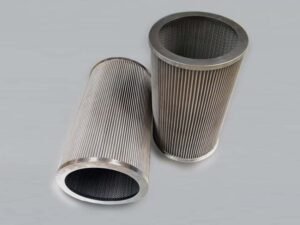
A flat-specimen test describes the resistance inside its specimen and fixture boundary. Support mesh, pleat passages, sealed edges, a center tube and end passages add features when the media becomes a cartridge. Pressure taps at the housing inlet and outlet may include housing losses as well.
Higher media air permeability therefore does not guarantee lower total pressure drop in a similarly sized cartridge. Check usable area, construction and measurement locations.
For complete pleated elements, see reading metal-cartridge pressure-drop curves. For the relation between media and assembly evidence, see the pleated fiber felt filter validation plan.
A traceable flow–pressure-drop record is more useful than “low resistance” alone. Specimen identity, structure, fluid, temperature, flow direction and pressure-tap boundary show what the result can answer.
Frequently asked questions
Does higher air permeability mean coarser filtration?
Not necessarily. It describes air passage under stated conditions. Particle retention requires its own test and rating definition. Compare both properties without substituting one for the other.
Does a thinner caliper reading establish lower resistance?
No. Thickness and structure need to be considered together. Equal drawing thickness can still correspond to different fibers, layers or compaction states.
Does lower pressure drop prove successful cleaning?
A lower reading can also result from changes in flow, viscosity or flow paths. Cleaning comparisons need aligned conditions and separate integrity and cleanliness checks.
Connecting structure with flow evidence
Porosity describes void fraction, air testing describes passage under defined conditions, and permeability coefficients connect structure to a flow model. Keeping the specimen, direction and conditions together makes those measurements useful.
Available forms and materials are listed on our sintered metal fiber felt page. The next design question is how that medium is used in a pleated felt structure.
Technical sources
- ISO 4022:2018 — fluid permeability of permeable sintered metal materials. Public scope and status.
- Huang et al., Investigation of transport property of fibrous media: 3D virtual modeling and permeability calculation, 2017. Structure, direction and flow-model research; not Filtalloy test data.
- Mott, PDS3 Rolled Sheet Permeability, issued June 25, 2010. Manufacturer-specific gas and liquid data.
About the author: Jack Sun has long worked in metal wire mesh weaving and industrial filter-element manufacturing. Filtalloy is based in Anping, Hengshui, Hebei, China, known for wire mesh manufacturing.