By Jack Sun · Filtalloy
If localized damage recurs after cleaning, identify which part is affected and what contacted it during production, shutdown and cleaning. Those records help determine whether the priority is the alloy, the joint or the cleaning and drainage process.
List the actual exposure
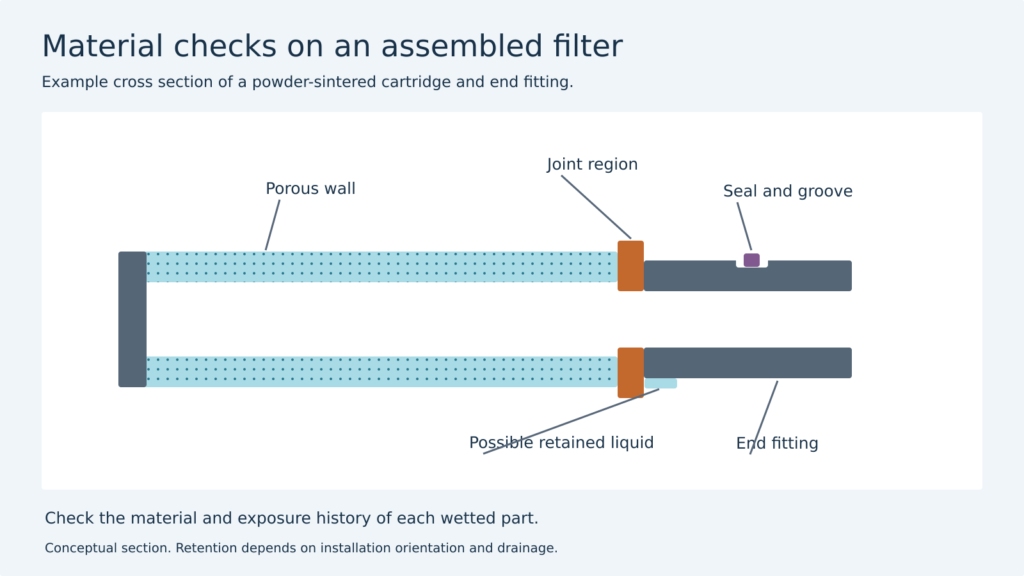
Record the process fluid, known impurities or additives and normal and peak temperatures. During shutdown, note retained liquid or condensate. For cleaning, record concentration, temperature, contact time, rinsing and drainage. A fitting groove can remain exposed to cleaning liquid after the rest of the element drains.
Shortlist stainless steel, bronze and titanium
For stainless steel, confirm the exact grade and check the applicable evidence for chlorides, temperature and stagnant crevices. For bronze, confirm the copper alloy and any restrictions on metal carryover. For titanium, check the grade against both process and cleaning fluids, including any dissimilar fittings. Review dense-coupon data as a starting point and validate representative porous or joined parts where the application requires it. ASTM G31-21(2025) guides immersion corrosion testing and does not cover a specific evaluation of localized attack, cracking or flow effects. ASTM G31
Check the complete assembly
List the actual grades of the porous body, end fittings and joint materials, plus the seal material and geometry. Where dissimilar metals contact an electrically conductive liquid, consider galvanic interaction alongside other plausible causes. Preserve the original condition of the affected area before deciding how to inspect it.
Solvent service: materials and inlet resistance
For porous metal parts at a solvent feed pump inlet, compare compatibility of the porous body, fitting and seal with process solvents, mixtures during changeover and rinse fluids. Include residue or cleanliness criteria where required. After a material change, check inlet resistance at representative solvent, temperature and target flow even when dimensions and nominal filtration grade match. Keep liquid level and piping comparable when testing a replacement. If supply remains unstable, check submergence, kinks and connections before attributing the restriction to the filter.
Investigate damage near a fitting
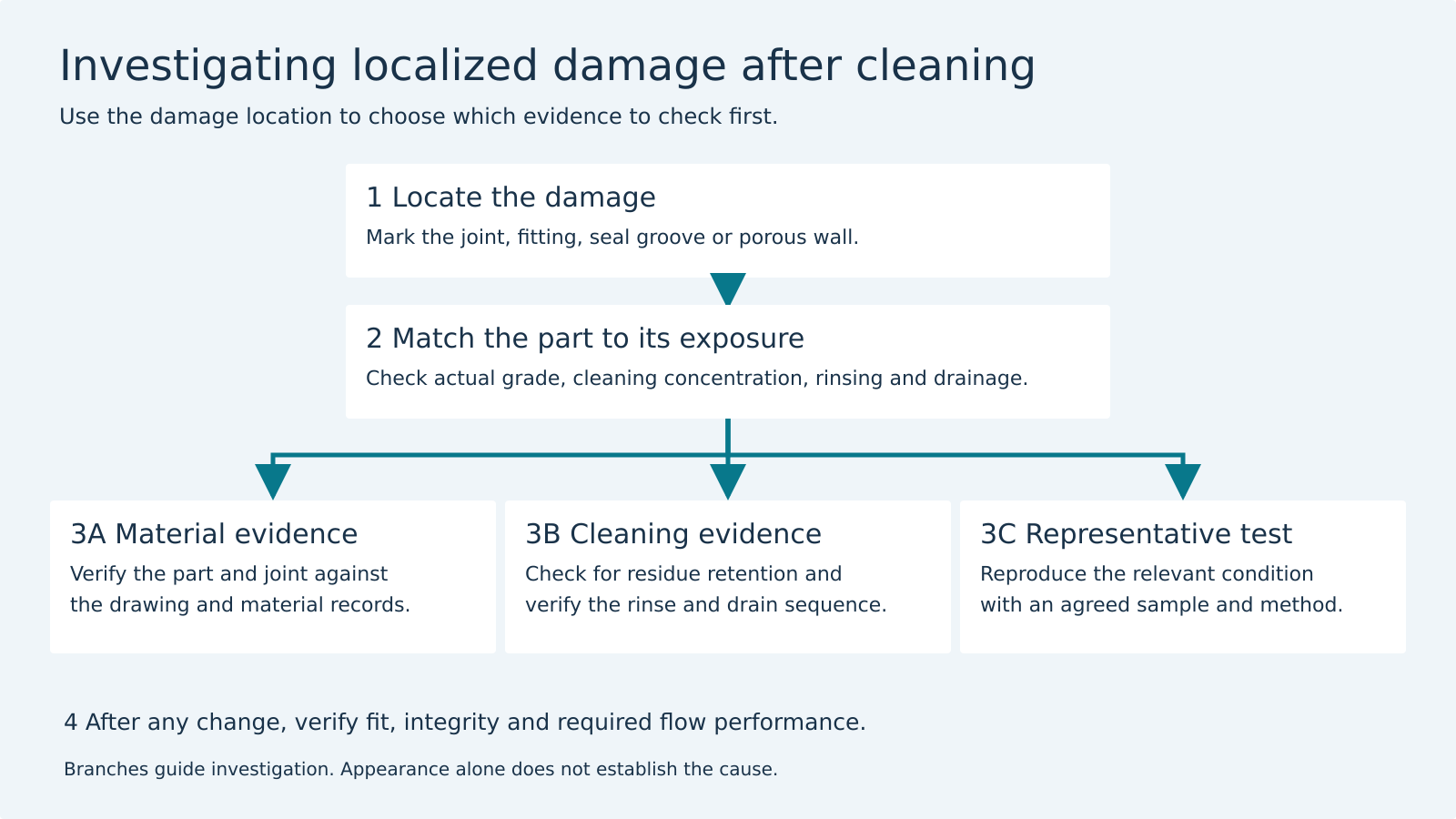
Photograph the damage and identify the joint, fitting or seal groove. Check component traceability and cleaning history, then test the most plausible explanation with a representative part or revised rinse and drainage conditions. After an approved change, verify fit, integrity and required flow performance.
Drawings and acceptance
Start with a drawing or old sample, quantity, known grades and damage location. Separate material identity, assembly dimensions, integrity and target-flow pressure drop on the inspection record. Where corrosion drove the change, include an appropriate validation method and criterion.
Powder-sintered porous metal products · How sintered powder filters work
Jack Sun has long worked in metal wire mesh weaving and industrial filter-element manufacturing. Filtalloy is based in Anping, Hengshui, Hebei, China.