By Jack Sun · Filtalloy
Compare clean, before-cleaning and after-cleaning resistance under matched conditions. Before returning the element to service, also check its structure, seal and the integrity, residue or retention requirements of the application.
Identify the location of the problem
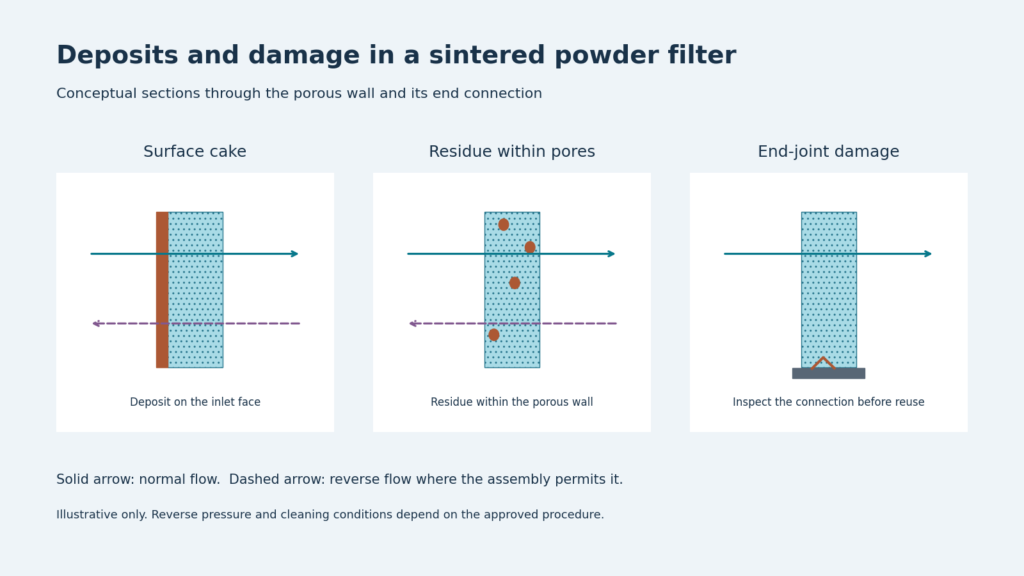
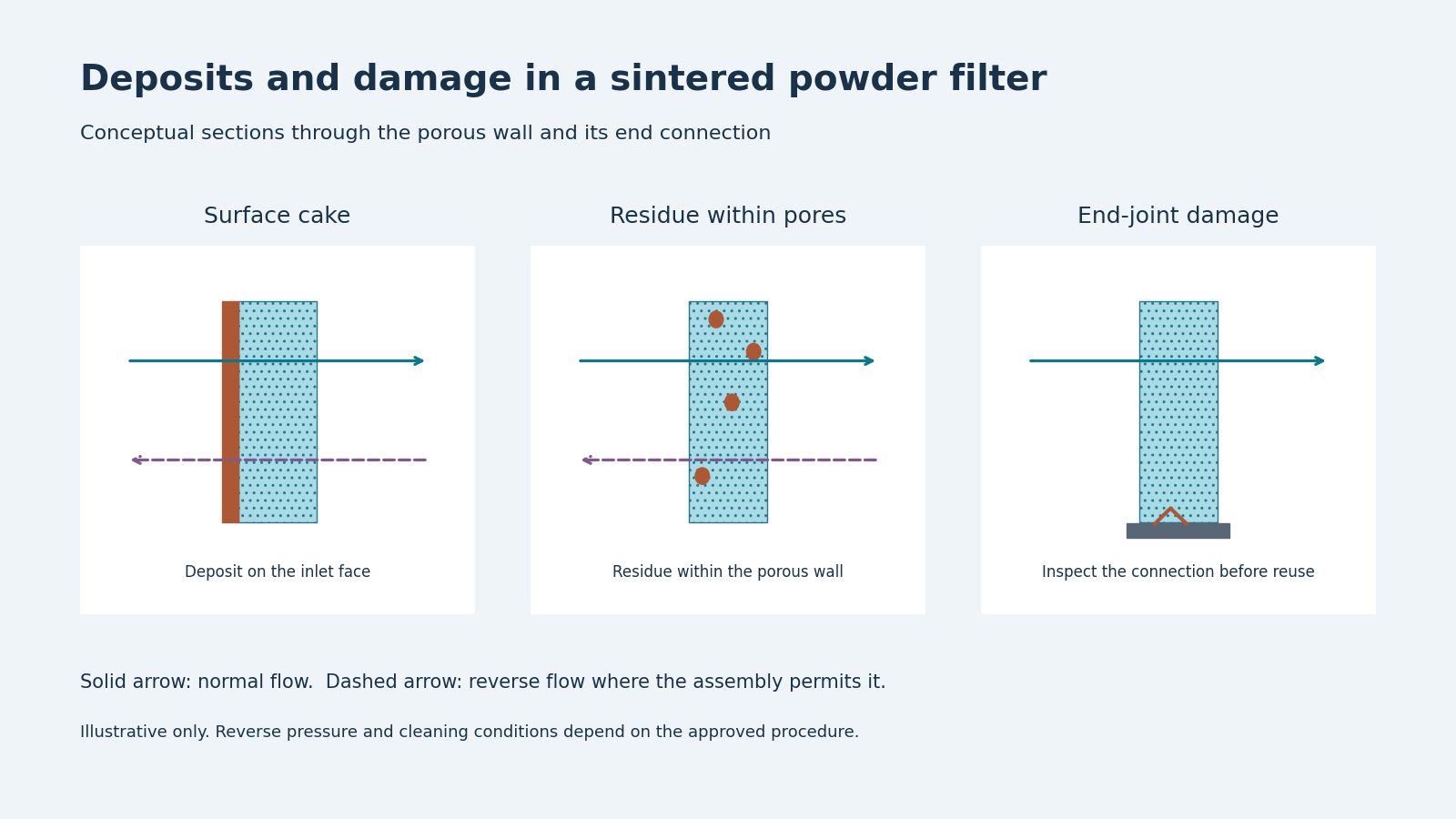
Record flow, fluid temperature, pressure taps, the operating event and the element ID. Surface cake can be visible; pore residue and restrictions at joints or supports may be harder to see. Isolate an element with a damaged wall, loose end fitting or sealing surface and assess the damage before reuse.
Choose a compatible cleaning route
Consider surface flushing for removable deposits, and reverse flushing only where the element and support permit reverse loading and displaced contamination has an exit. Where residues require soaking or circulation, validate compatibility with the porous body, fittings and seals. Confirm rinsing and residual contamination requirements. Use the approved reverse differential pressure for the actual assembly.
Compare three pressure readings
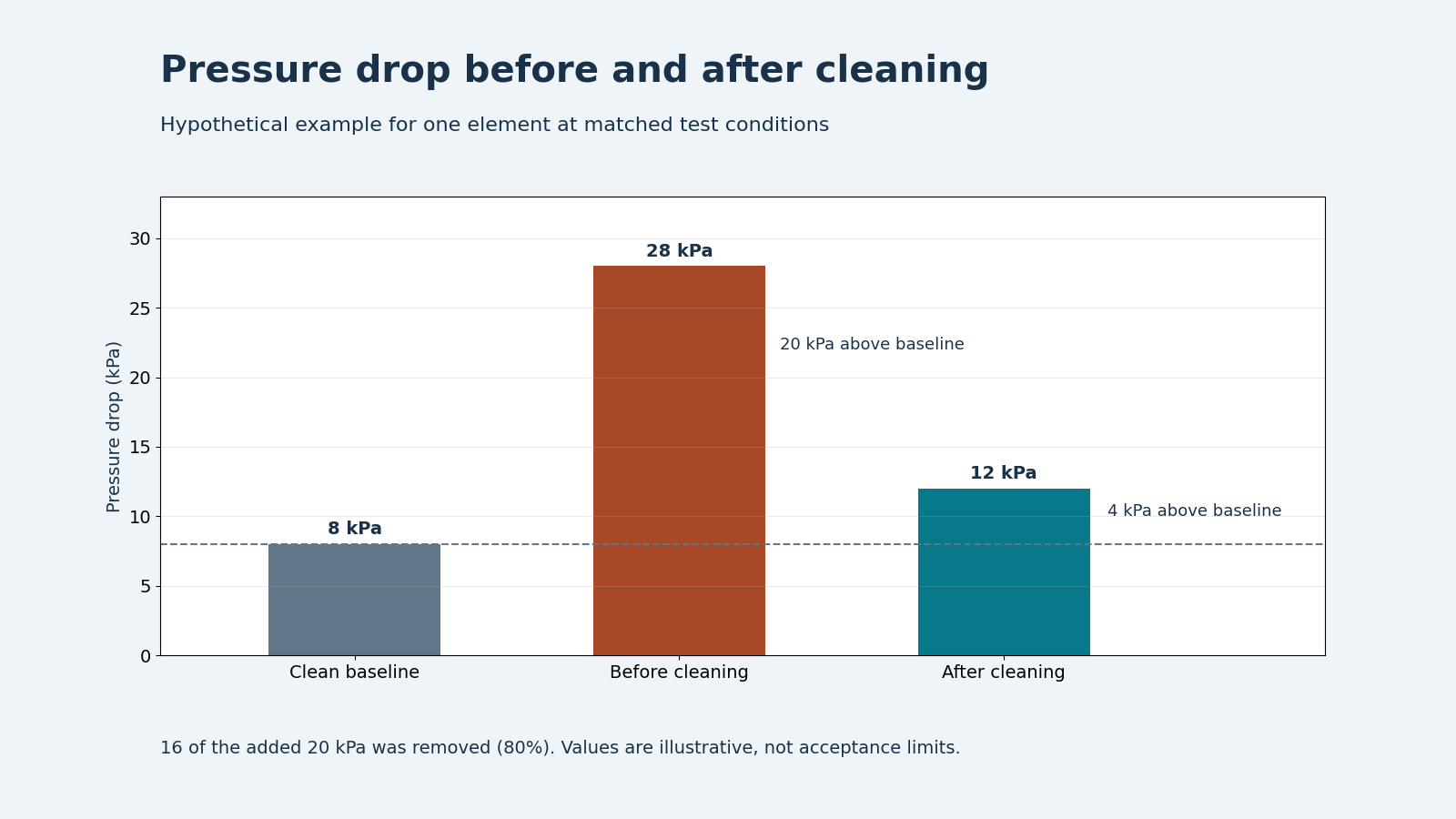
In a hypothetical matched test, the clean baseline is 8 kPa, before cleaning 28 kPa, and after cleaning 12 kPa. The process removed 16 kPa of the 20 kPa rise, or 80% of the added pressure drop. Report the remaining 4 kPa above baseline and compare the measured 12 kPa with the project’s limit. Without a valid baseline, report the measured before-and-after difference and apply any independent limit. Cleaning pressure drop recovery calculator
Decide whether to reuse, retest or replace
Release the element only when its required checks pass. Retest under comparable conditions if resistance remains high or the conditions changed. If resistance is unexpectedly low or downstream particles increase, check instruments, seals and media integrity. Isolate damaged elements and repair and revalidate where permitted, or replace them. Track the element and cleaning cycle in the record. Load–wash cycling research
Frequently asked questions
Can a filter be backwashed in place?
Confirm reverse loading, support and the path for removing contamination.
How many cleaning cycles can the element tolerate?
Use the approved process and the records for the actual element. A single recovery reading cannot establish cycle life.
Powder-sintered porous metal products · How sintered powder filters work
Jack Sun has long worked in metal wire mesh weaving and industrial filter-element manufacturing. Filtalloy is based in Anping, Hengshui, Hebei, China.